
Holy basil (tulsi) leaves: Uses, health benefits, medicinal properties and side-effects
Arun Sharma
The benefits of tulsi leaves (holy basil) in treating and preventing diseases are well known. This article explores the uses of tulsi leaves and their various health benefits and side effects
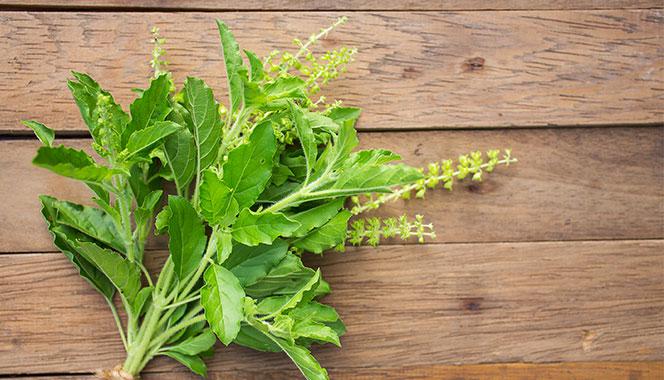
Nature is blessed with the gift of healing. It shares some of these with us in the form of wonderful medicinal plants. The holy basil is one such herb. It is appreciated by people around the world and used in various ways.
What is holy basil (tulsi)?
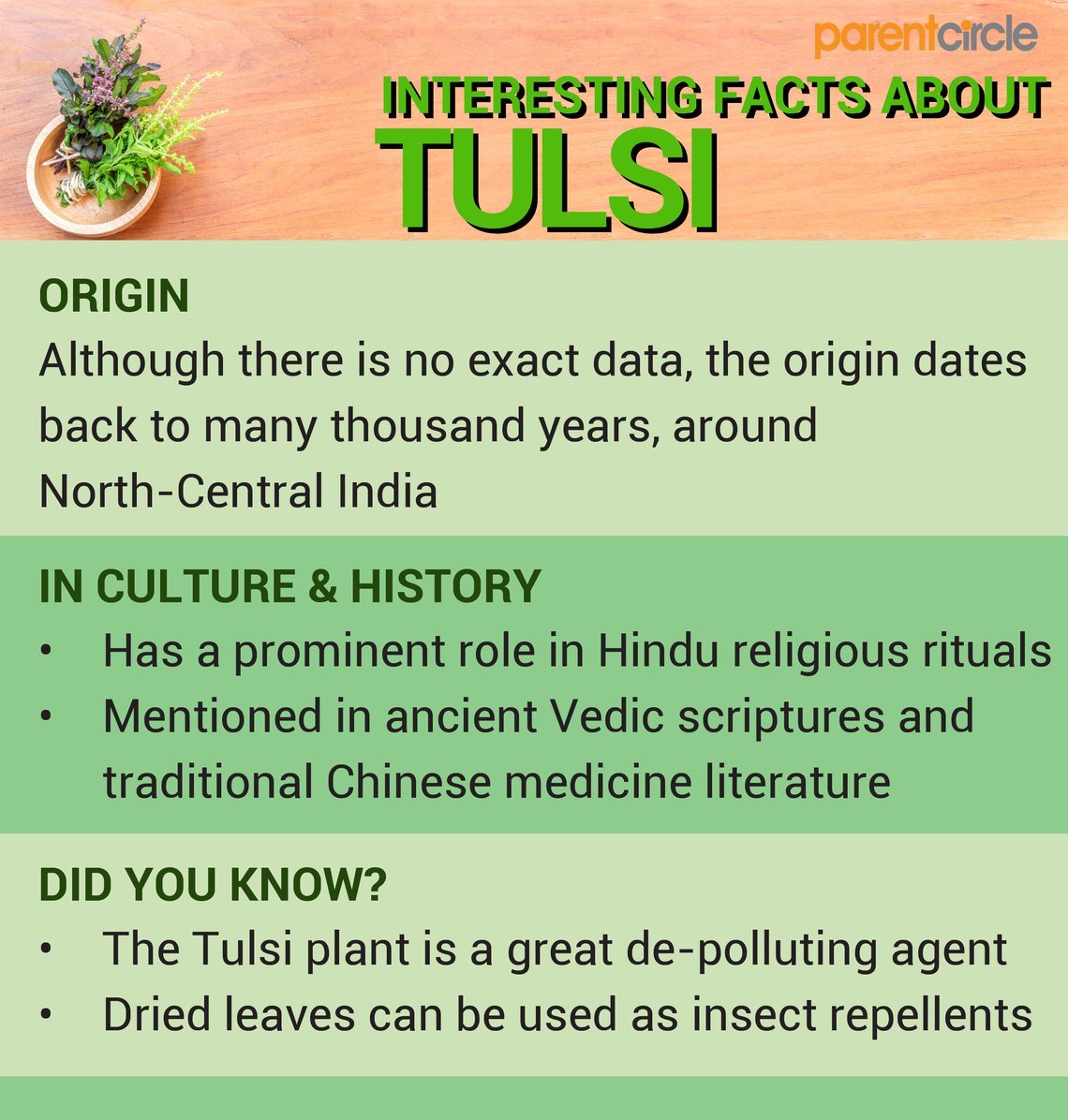
According to popular belief, the holy basil is said to have originated in India, from where it was first brought to the Middle East. From there, it spread to Europe and then to America.
There are more than 60 known varieties of basil found globally. Belonging to the family Lamiaceae, the scientific name of holy basil is Ocimum tenuiflorum (or Ocimum sanctum).
Besides the holy basil, some of the other familiar and widely-used varieties of basil are:
- Christmas basil
- Sweet basil
- Genovese basil
- Lettuce leaf basil
- Dark opal basil
- Lemon basil
- Cinnamon basil
- Purple basil
- Greek basil
- Thai basil
- Italian large leaf basil
- African blue basil
- Spicy bush basil
- Summerlong basil
Holy basil nutrition facts (per 100 mg of fresh basil leaves)

Health benefits of holy basil leaves

While modern science is engaged in research on holy basil, quite a few of its benefits were known to humans even in ancient times.
Throughout the world, various preparations made using holy basil leaves are used by traditional medicine practitioners to cure ailments.
In Chinese traditional medicine, the holy basil is used, among others, for promoting blood circulation and treating stomach spasms and various kidney ailments.
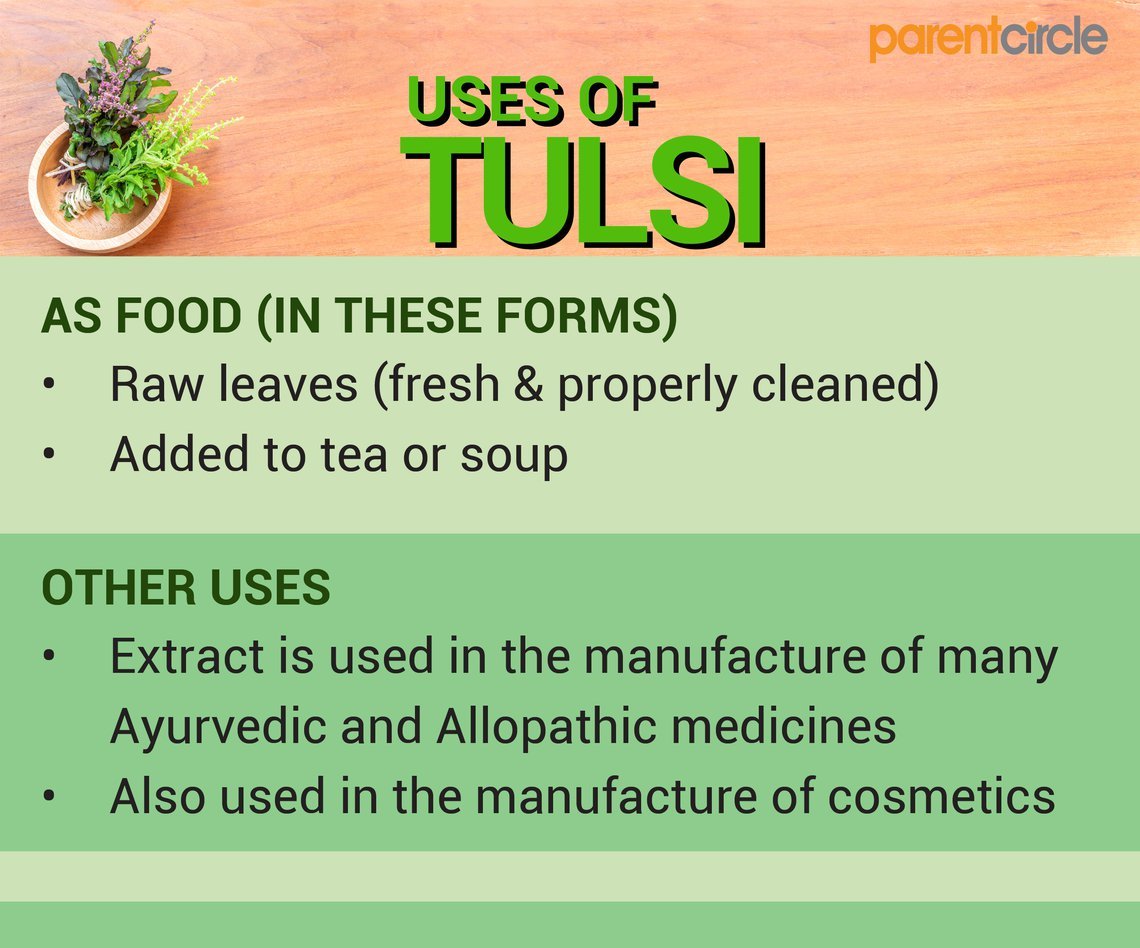
In Ayurveda, holy basil leaf uses range from treating various respiratory ailments to chronic skin conditions. Chewing the leaves of holy basil is also prescribed to purify the blood.
Benefits of eating tulsi leaves
Here are 10 benefits of eating tulsi leaves that you must know:
1. Treatment of asthma, cough and cold
The holy basil helps in treating asthma and relieves symptoms of respiratory disorders. Tea made using 5 to 7 leaves of holy basil together with ginger, black pepper, cloves and cardamom is effective in providing relief.
2. Prevents bad breath
Lack of oral hygiene can lead to bacterial growth in the mouth which can induce bad breath or halitosis. Leaves of holy basil have disinfectant properties and act as a mouth freshener. So, chewing them helps in destroying germs and bacteria present in the mouth. They also promote the healing of oral ulcers.
3. Promotes dental health
Due to their germicidal and astringent properties, consuming holy basil leaves helps in killing bacteria that cause dental cavities, plaque and tartar. Furthermore, the astringent action helps in tightening the gums around the teeth, thus preventing premature teeth loss.
4. Boosts immunity
A study by Mondal et al titled 'Double-blinded randomized controlled trial for immunomodulatory effects of Tulsi (Ocimum sanctum Linn.) leaf extract on healthy volunteers', published in the Journal of Ethnopharmacology in 2011 showed that consumption of tulsi leaves extract leads to a significant increase in the levels of immune cells.
5. Protects internal organs
Our body is not immune to the adverse effects of pollution. Marc Maurice Cohen's study, 'Tulsi - Ocimum sanctum: A herb for all reasons', published in The Journal of Ayurveda and Integrative Medicine (2014), shows that holy basil protects our body from damage-causing effects of pesticides, industrial chemicals and heavy metals. It also helps our body eliminate harmful compounds by increasing the activity of liver detoxification enzymes.
6. Prevents cancer
Cohen also states in her study that the holy basil helps prevent cancers caused by toxic compounds. It also reduces the growth of tumours and induces the death of precancerous and cancerous cells.
7. Reduces risk of kidney stones
In Ayurveda, a mixture of honey and the juice of holy basil leaves is prescribed to get rid of kidney stones. Also, tulsi helps reduce uric acid levels in the body, thereby preventing the formation of kidney stones.
8. Skincare and healthy hair
One of the important holy basil uses is to prevent and treat a number of skin and hair conditions. Tulsi extract has antibacterial properties. When mixed with beauty preparations and applied to the skin and scalp, it helps fight infections and keeps our skin healthy and hair shiny.
9. Reduces stress
During times of stress, our body secretes cortisol, which is also called the stress hormone. However, prolonged elevated cortisol levels are harmful to the body. Consuming holy basil leaves is known to reduce cortisol levels.
10. Prevents premature ageing
Tulsi has essential oils and vitamins A and C. These help ward off the damaging effect of free radicals, which cause ageing, by eliminating them.
Side effects of tulsi
- Oral side effects of chewing basil leaves: According to botanists, basil leaves are said to contain high levels of mercury and iron. Chewing them can be harmful to your teeth, although there is not much evidence to prove this.
- May interfere with anticoagulant drugs: Based on various studies, tulsi oil is found to have blood-thinning properties. To avoid any adverse effects, it is best to avoid consuming tulsi while on other anticoagulants such as warfarin and heparin.
- Male infertility problems: According to a study, 'Effect of tulsi (Ocimum Sanctum Linn.) on sperm count and reproductive hormones in male albino rabbits', by Sethi et al, published in the International Journal of Ayurveda Research (2010), it was found that consuming tulsi in excessive doses can cause a reduction in sperm count and sperm motility in animals. Although the same is not proved in humans yet, it is prudent for men with infertility problems to prevent this side effect by reducing the intake of the herb.
- Complications during pregnancy: Basil leaves contain a high concentration of estragole which causes uterine contractions in women and can cause a miscarriage. It can also affect the regularity of menstrual cycles.
- Nausea and breathing difficulties: The holy basil is part of the Lamiaceae (mint) plant family and contains eugenol, which is a bioactive compound. Excessive consumption of tulsi leaves can lead to eugenol overdose, resulting in symptoms of nausea, dizziness, breathing difficulty and abdominal pain.
How to plant the holy basil at home
You don't need to be an expert to grow this magical herb. It can grow well in areas where the weather is warm. Here's how you can plant holy basil at home for your everyday dose of goodness:
- Fill a pot with soil, leaving at least 1 inch of free space at the top.
- Moisten the soil with water, taking care not to make the soil soggy.
- Sow the tulsi seeds an inch deep in the soil.
- Continue to moisten the soil with water using a sprinkler or spray until the seeds germinate. This usually takes around 1 to 2 weeks.
- Place the pot in an area where there is no direct sunlight for at least 6 to 7 hours and the temperature is about 24 to 26°C.
- Once the seedlings develop 2 to 3 sets of leaves, you can transplant them in separate pots.
- Expose the plants to short periods of sunlight in the morning, and gradually increase the duration.
How to harvest and store holy basil leaves
Wash the leaves on the plant a day before you decide to pluck them. This is because wet leaves tend to rot. Snip a few stems with a sharp knife, leaving the bottom two or three sets of leaves to let the plant grow.
Discard leaves with bugs and damage. Place the leaves in a thin cloth bag and suspend them in a dry place. Check the leaves every day, and when they have dried, transfer them to a dark-coloured container with an airtight lid. You can now use these dry basil leaves in any way you like.
































Comments
Narendra Kumar Jul 14, 2021
Edit
Comment Flag
Cancel Update