
Must-Have Dried Fruits And Nuts To Boost Your Child’s Health and Immunity
Shirley Johanna
In the third part of our series on immunity-boosting foods, we look at how nuts can nourish the body and also keep infections and diseases at bay
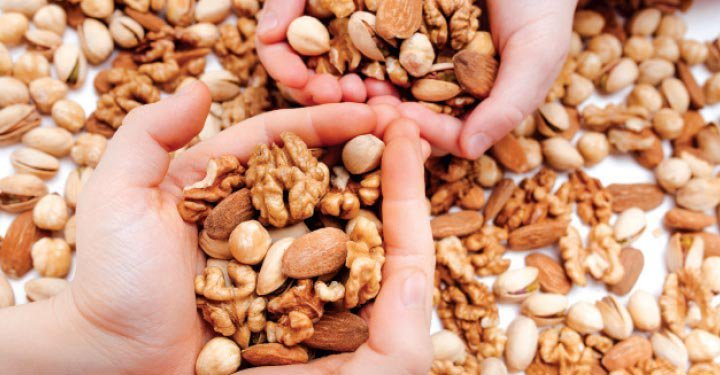
Did you know that nuts are one of the healthiest snack options? They are easily available, ready to eat, easy to store and can be added to salads, yoghurt and porridge for extra crunch. Nuts are also packed with calories. So, it's best to eat limited portions say, a handful of your favourite nuts. Read on to discover the different kinds of nuts and how they can boost your child's immune system.
Almonds
The almond cultivated in Kashmir and other regions, including the Mediterranean, is a tree nut native to Central Asia. Known as the king of nuts, almonds offer several health benefits from fighting viral infections to improving heart health.
Benefits
- Improves our digestive health by increasing the levels of good bacteria as almonds have prebiotic properties. (The good bacteria use the non-digestible fibre in the nuts.)
- Boosts the immune system to fight viral infections as almond skin contains flavonoids.
- Supports healthy brain function, thanks to the presence of two key nutrients: riboflavin and L-carnitine.
- Prevents free radical damage and reduces the risk of cancer because of its rich vitamin E content.
- Improves heart health thanks to the presence of plant-based protein, good fats, fibre, vitamin E and magnesium.
Easy ways to consume
- Almonds are very nutritious, making them a great mid-morning snack. They are also satiating, which means eating these nuts will make you feel fuller longer. If your child is very young and cannot eat a whole almond, you can soak the almond in water for a while. Then remove the peel and cut the almond into small pieces before giving it to your child, to avoid choking.
- Almond milk is a great alternative to cow's milk, especially if your child is lactose intolerant.
- The next time you bake cookies for your child, add some crushed almonds for extra crunch!
- If your child does not drink milk, blend a glass of milk with almonds, saffron and cardamom to make it delicious and flavourful.
- You can also make these popular Indian sweets—badam kheer, badam barfi or badam halwa for your child. Try making them with jaggery or palm sugar, instead of white sugar.
- Almonds can make your curries thick and creamy. You can add some almond paste to paneer dishes to make them taste even better.
Walnuts
Walnuts are a miniature human brain look-alike that boosts brain health. The common walnut, also called the Persian or English walnut, originated in Central Asia and the Mediterranean region.
Benefits
- Fights oxidative stress and reduces inflammation thanks to the presence of antioxidants like polyphenols.
- Improves cognitive functionsincluding memory, attention, concentration, thinking and creativity because of the presence of vitamin E, folate and ellagic acid.
- Promotes a healthy nervous system as walnuts are rich in omega-3 fatty acids.
- Improves digestive health by increasing the strains of good bacteria in the gut.
Easy ways to consume
- Walnuts are usually eaten raw or roasted. To make your desserts healthy, add some chopped walnuts.
- Make your child's breakfast even more delicious by adding chopped walnuts to oatmeal.
- The next time you make brownies or nutrition bars at home, add a generous amount of walnuts.
Pistachios
The pistachio member of the cashew family has a mildly sweet flavour. The carotenoids present in the nuts give them the yellow and green hues. Did you know that Iran accounts for over half the world's production of pistachios?
Benefits
- Supports several bodily functions, including blood sugar regulation as it is rich in vitamin B6.
- Helps keep your heart healthy as it has high levels of potassium.
- Prevents craving for unhealthy foods, thanks to their high protein and fibre content.
- Protect and maintain healthy cells in the eyes because of the presence of antioxidants lutein and zeaxanthin.
Easy ways to consume
- When we hear the word pista, the first thing that pops into our mind is pista malai kulfi. You can make this at home using whole milk, pistachios, other nuts (almonds or cashews), cardamom powder and sugar. Your little one is sure to enjoy this frozen treat.
- Kesar-pista kheer is a popular Indian dessert that nobody can say no to! Try making this kheer at home with these healthy green nuts.
- You can also make pistachio burfi, a spiced pistachio fudge that is cooked with pistachios, grated coconut, cardamom and sugar.
- Chopped pistachios can be used as a topping for homemade yoghurt, to make it even more tasty and healthy.
- Creamy pistachio soup, made with flour, vegetable stock, butter and pistachios, is another way of adding this amazing nut to your child's diet.
- Pistachios can also be added to many Indian curries (e.g., navratan kurma).
Peanuts
Peanuts or groundnuts are the most commonly available nuts. Highly nutritious, they are considered both oilseed and food crops and can be easily added to any cuisine. India is one of the world's leading peanut producers.
Benefits
- Helps protect the cells from oxidative stress because they are rich in vitamin E, a powerful antioxidant.
- Maintains muscle and nerve health, thanks to their rich magnesium content.
- Helps in the formation of red blood cells and healthy blood vessels because of the presence of copper.
- Helps strengthen the immune system and detoxifies the liver because of the presence of arginine, an amino acid.
Easy ways to consume
- Roasted peanuts are eaten as a snack. Peanut chikki (roasted peanuts and jaggery) is sure to become your child's favourite snack.
- Peanuts are used in curries and sabzis for taste and crunch.
- They are also a key ingredient in salads, chaats, poha, rice dishes (e.g., bisibele bath) and upma.
- Most children love peanut butter. It can be used as a spread or can be paired with cut apples and carrots as a delicious mid-day snack.
- Roasted masala peanuts (with garam masala, chaat masala and curry leaves) are usually a favourite among children. Peanut chaat made of tomatoes, onion, coriander, chilli, chaat masala and peanuts is another excellent snack.
Cashews
The cashew tree, which produces sweet and buttery cashew nuts, is native to Central America and the Caribbean. Like most tree nuts, cashews can help prevent heart disease and some types of cancer. Did you know that India is the leading consumer of cashew nuts in the world?
Benefits
- Develops immune cells and helps produce antioxidant enzymes thanks to the presence of zinc.
- Reduces the risk of cardiovascular disease and stroke as cashews are rich in monounsaturated and polyunsaturated fatty acids.
- Prevents nutritional anaemia as it contains two key minerals, copper and iron.
- Helps maintain good eye health because of the presence of zeaxanthin, a powerful antioxidant pigment.
Easy ways to consume
- If your child is not a fan of raw cashews, you can give roasted salt and pepper cashews.
- You can add cashew nuts or paste to curries and stir-fries.
- Add generous amounts of roasted cashews to rice preparations like biryani and pulao.
- If your child has a sweet tooth, you can make one of the most famous Indian sweets, kaju katli, which has cashews, milk, ghee and sugar. Cashews are also an essential ingredient in many Indian desserts (e.g., basundi and paal payasam).
- Homemade cashew butter can be used as a spread while cashew milk can be an alternative to dairy milk.
- You can also add cashews to Kanchipuram idlis spiced with cumin, ginger powder and pepper.
Shirley Johanna is an M. Phil in Nutrition and a feature writer at ParentCircle.



























Comments
Edit
Comment Flag
Cancel Update