
How to Read Food Labels: A Simple Guide To Making Healthier Food Choices For Children
Shiny Lizia M
Packaged foods are a regular part of family life, but do you know what those labels really tell you? Learn how to check ingredients, serving sizes, key nutrients, added sugar, and allergen information so you and your child can make more informed food choices
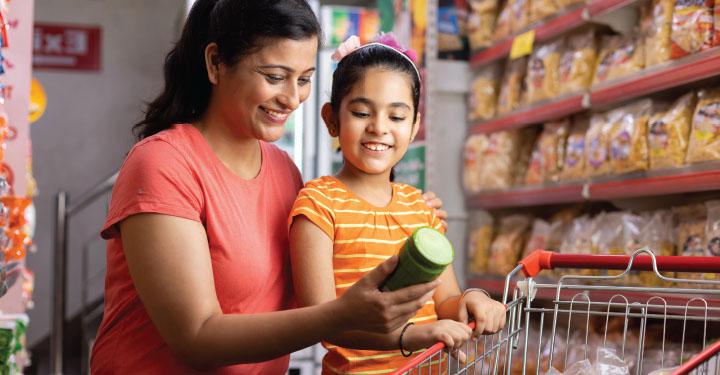
Packaged foods are now a regular part of many families' diets, and children are often allowed to choose what they eat. Hence, parents need to help them understand what is in the foods they buy and eat.
Why reading food labels matters
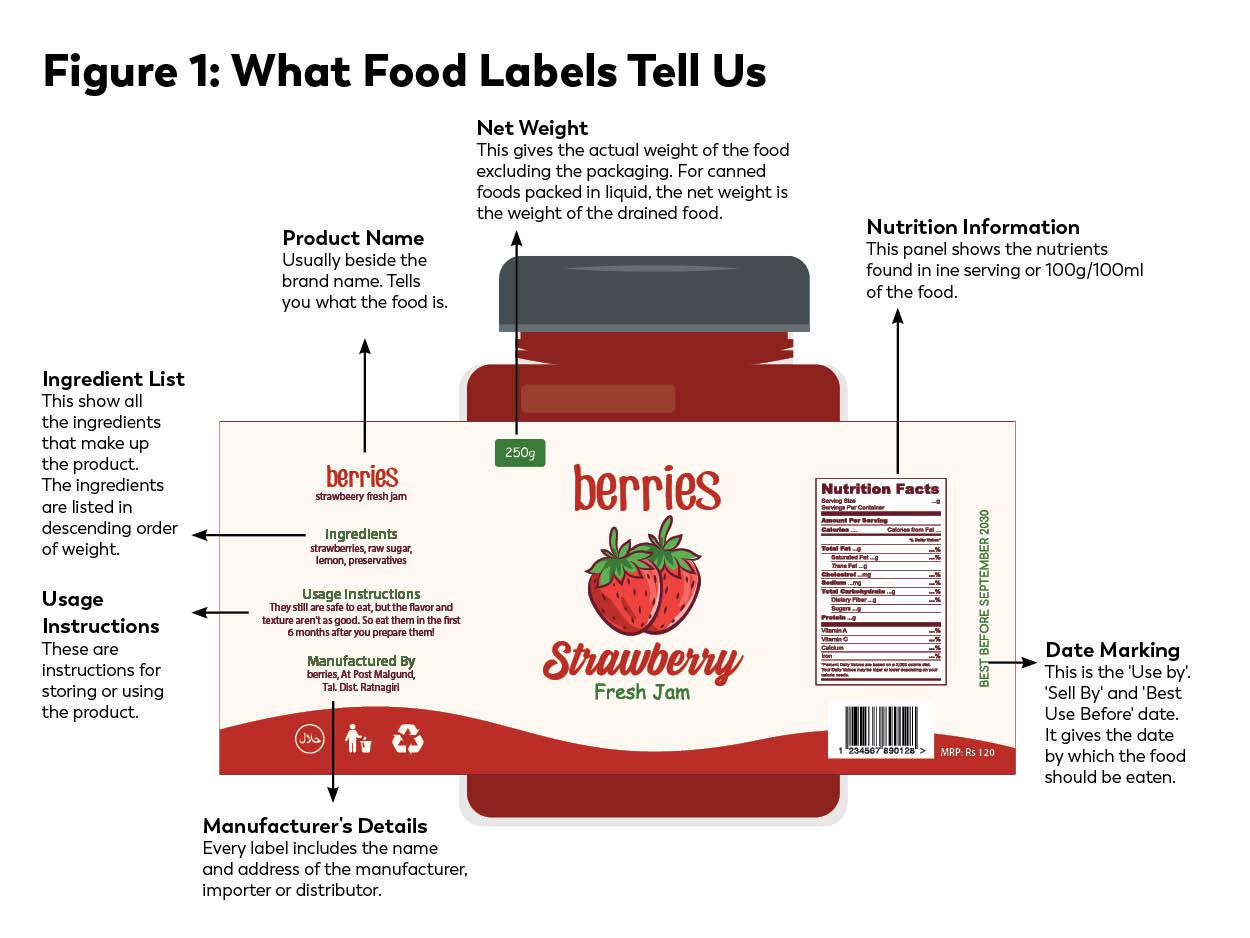
Food labels provide useful information beyond the product's price, net weight, and expiry date. They tell us about the ingredients, nutrients and other important details about the product.
What food labels tell you
A food label:
- Lists the ingredients used in the product
- Provides information about the nutrients present and their quantities
- Provides information about specified allergens present in the food
- Shows the date of manufacture, best before or expiry/use-by date
- Provides instructions for storage, including after opening, where applicable
- Gives instructions for preparation or cooking, where required
- Provides information about the manufacturer or brand owner, helping consumers contact them with questions or complaints
Essentially, food labels provide consumers with basic information about what is in the food they eat and how best to handle it (refer to Figure 1).
How to understand nutritional information
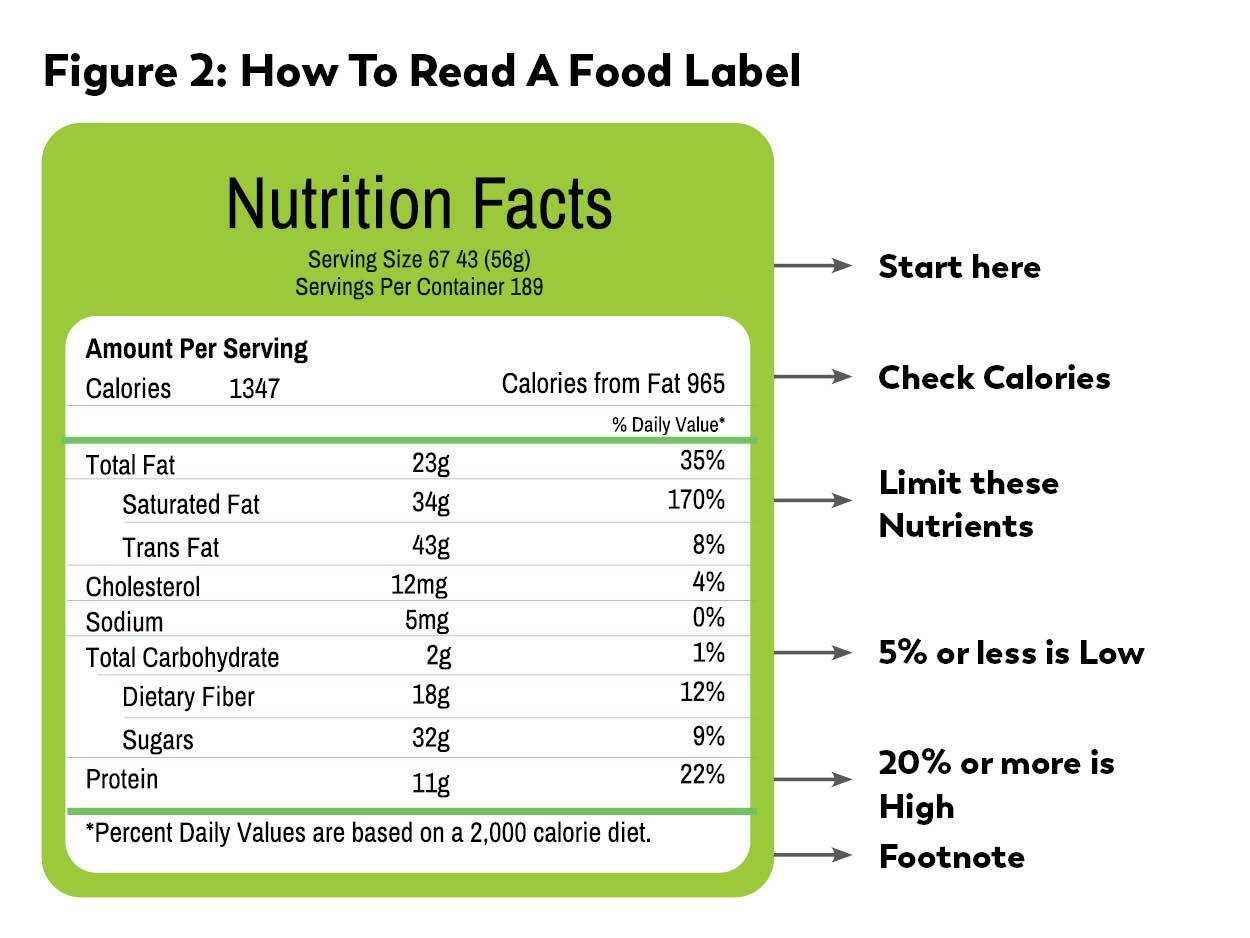
Nutrition information on packaged foods provides details about the nutrients present in the food. Some labels may also show the percentage contribution to the Recommended Dietary Allowance (RDA).
However, these reference values should not be treated as your child's individual daily nutritional requirements. Children's nutritional needs vary according to their age, growth, body size and activity levels.
Use the information on the label to understand what a product contains and to compare similar foods, rather than using it as a guide to your child's complete daily nutritional needs.
For broader guidance on healthy eating and nutrition for children, parents can refer to the ICMR-NIN Dietary Guidelines for Indians 2024, which gives guidance across age groups, including children and adolescents.
Understand serving size
Check the quantity or serving information to which the nutrition values on the label relate.
For example, if the nutrition information is given for 100g of a product and your child eats 200g, they have consumed twice the amount listed on the label.
Serving information can therefore help your child understand how much they are actually eating.
Reading labels makes your child do some math, too!
Know which nutrients to look for
When comparing similar packaged foods, look at the nutrients listed on the nutrition panel. Some nutrients are important parts of a child's diet, while others are best consumed in limited amounts.
Look for nutrients such as protein, fibre, iron and calcium as part of the overall nutritional picture.
At the same time, check the amounts of added sugar, saturated fat and sodium, and compare similar products where possible. Trans fat should be kept as low as possible.
Remember that no single nutrient tells you whether a food is healthy. A food may be a good source of one nutrient but contain higher amounts of another. So, encourage your child to look at the whole nutrition panel and ingredient list and compare similar products before making a choice.
If an RDA percentage is provided on the label, it can help you understand and compare the nutritional information. However, don't use it as a measure of how much of that nutrient your child personally needs each day.
Parent tip: When shopping with your child, choose two similar products and ask them to compare the nutrition panels. Which one has more protein? Which one has less added sugar? This makes label reading a simple, practical learning activity.
Check the ingredient list
Ingredients are generally listed in descending order by weight or volume, as applicable. This means ingredients appearing earlier in the list are generally present in larger amounts.
Look at where added sugar appears in the ingredient list. If it appears among the first few ingredients, consider comparing the product with similar options that contain less added sugar.
Added sugars can appear under different names, such as sucrose, glucose, dextrose, maltose, corn syrup, rice syrup, and molasses. However, the position of an ingredient alone does not establish whether a food is “healthy” or “unhealthy.”
Most importantly, don't judge a food by one ingredient alone. Look at the entire label and consider how the product fits into your child's overall diet.
Understand food additives
Food additives are substances added to food for specific technological purposes, such as maintaining quality, improving stability, or providing colour or flavour.
Food additives may therefore appear in the ingredient list. Their presence alone does not determine whether a food is healthy or unhealthy.
When reading a label with your child, focus on understanding the ingredients and their purpose, rather than assuming that an unfamiliar ingredient is necessarily harmful.
Parent tip: Encourage your child to read the ingredient list rather than judging a product by its packaging or by words such as “natural” or “healthy” on the front of the pack.
Check food allergen information
If your child has a known food allergy, checking the allergen information on packaged foods is especially important.
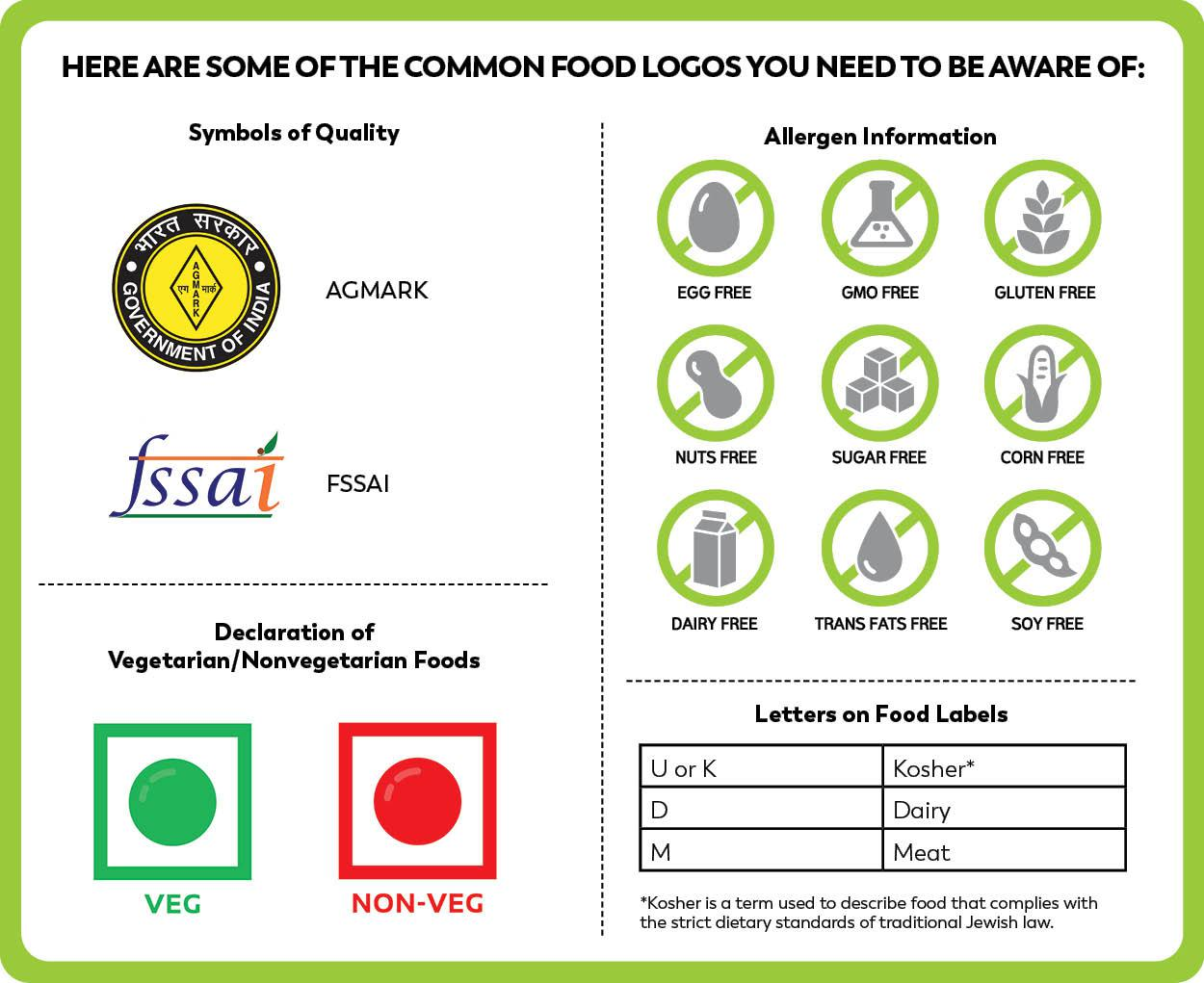
In India, FSSAI requires specified allergenic ingredients to be declared on food labels when present. These include:
- Cereals containing gluten, such as wheat, rye, barley and oats, and their products
- Crustaceans and their products
- Milk and milk products
- Eggs and egg products
- Fish and fish products
- Groundnuts and tree nuts and their products
- Soybeans and their products
- Sulphites at concentrations of 10 mg/kg or more
Teach your child to look for the allergen declaration and ingredient list when appropriate.
If your child has a diagnosed food allergy, do not rely on assumptions about a product's safety. Check the label every time, as ingredients and formulations can change.
If you are unsure whether a food is safe for a child with a known food allergy, consult your child's doctor or dietitian.
Help your child become a label reader
Frequent label reading can be a useful skill, especially as children grow older and begin making more of their own food choices.
A qualitative study of 44 Indian adolescents aged 10–19 years from rural Varanasi found that participants often checked packaged food labels for the brand, expiry date, and cost but had difficulty understanding nutrition information. Many also said that food labels in local languages would be easier to understand.
Helping your child understand what the information on a food label means can therefore be just as important as teaching them to read it.
Start with one or two things at a time. For example, ask your child to compare the ingredient lists of two similar products or identify which one has less added sugar. As they become comfortable, introduce other parts of the label.
Parent checklist: Read the label before you buy
- Check the quantity or serving information used for the nutrition values.
- Read the ingredient list.
- Compare similar products before choosing one.
- Check key nutrients such as sugars, sodium and saturated fat.
- Look at protein and fibre as part of the overall nutritional picture.
- Check the allergen declaration if your child has a known food allergy.
- Don't rely only on claims or health messages on the front of the pack.
- Check the date marking, storage instructions and other required product information.
- Involve your child in reading labels and comparing products.
FAQs
What should I check first on a food label?
Start with the quantity or serving information used for the nutrition values and the ingredient list. Then check key nutrients such as sugars, sodium, and saturated fat. If your child has a known food allergy, also check the allergen declaration.
Why is the ingredient list important?
Ingredients are generally listed in descending order by weight or volume, as applicable. Therefore, ingredients appearing earlier in the list are generally present in larger amounts.
How can I teach my child to read food labels?
Start by comparing two similar packaged foods. Ask your child to look at the ingredient list and nutrition information and identify one or two differences, such as which product contains less added sugar or more protein.
Reading food labels becomes easier with practice. Start by:
- Checking the ingredient list
- Understanding the nutrition information and comparing similar products.
Involve your child in this simple habit so they learn to look beyond attractive packaging and make more informed food choices.
Remember, no single ingredient or nutrient tells the whole story. What matters is how the food fits into your child's overall diet.
Shiny Lizia Manohar, PhD, is a nutrition researcher and postdoctoral fellow in the Nutrition and Metabolism Branch at the International Agency for Research on Cancer (IARC), World Health Organization. She previously served as a Lecturer in Clinical Nutrition at Sri Ramachandra Institute of Higher Education and Research, Chennai.
Need more information? Trusted resources
- FSSAI – Food Safety and Standards (Labelling and Display) Regulations, 2020 and amendments — the key regulatory reference for current Indian food-labelling requirements.
- FSSAI – Food Labelling — useful information on food-label requirements and consumer awareness.
- FSSAI – Eat Right India — consumer-focused information on healthy and safe food choices.
- ICMR-NIN – Dietary Guidelines for Indians 2024 — current Indian dietary guidance, including guidance relevant to children and adolescents.
- ICMR-NIN – Nutrient Requirements for Indians, RDA and EAR — reference information on Indian nutrient requirements.
This article was featured in the August 30, 2026, edition of The Free Press Journal.
Last updated on: August 12, 2026

























Comments
Edit
Comment Flag
Cancel Update