
Making Sense Of Food Labels: How Parents Can Choose Healthier Foods For Kids
Smitha Suresh
Understanding food labels helps you make informed choices about your child’s nutrition. This guide breaks down what labels mean—so you know exactly what you're feeding your kids
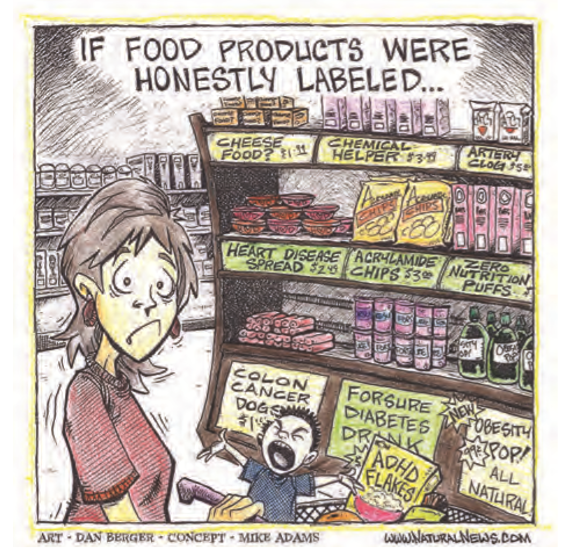
When you're shopping for your child’s snacks or lunchbox items, do words like 'natural,' 'wholesome,' and 'fortified' confuse you? And what do they really mean? Learning how to read and understand food labels can help you make healthier choices for your child and feel more confident about what you put on their plate.
Why food labels matter for your child’s health
If you're interested in providing sufficient nutrition to the family, choose packaged foods based on their nutrition labels.
Let your goal be to minimize the use of processed, packaged foods in the kitchen, as fresh food is available in abundance. Packed foods like wheat flour, brown rice, dal, and legumes are standardized in their nutrient content and are not considered processed foods.
How to read the nutrition facts panel
As a nutritionist, I believe this about processed foods:
The myth: Nutrition labels, ingredients lists, and health claims on food products are designed to inform consumers about what is contained in the product.
The reality: Instead, these labels are used by food manufacturers to confuse consumers and mislead them into thinking that their products are healthier (or of a better quality) than they are.
Here is a guide that will help demystify some of the confusion and myths behind the labels on packaged foods:
Ingredients list: What to watch out for
Read the list of ingredients on the label and avoid picking up anything that contains:
- Added sugar as a major ingredient
- Sugar substitutes such as mannitol, xylitol, high fructose corn syrup (HFCS is fortunately not commonly found in Indian processed foods), and artificial sweeteners like aspartame
- More than 1g of saturated fat per serving
- More than 1g of cholesterol
- More than 2g of total fat per serving
- (Partially) hydrogenated vegetable oil, also known as trans fat
- Sodium nitrate and nitrite
- Artificial colours and flavours
- Products containing monosodium glutamate (MSG) or more than 100mg of salt per serving if you or any member of your family has high blood pressure or a history of heart disease. Food with high salt content is unhealthy for your children, too.
- Some processed foods list wheat flour as an ingredient. Don't be fooled, as it is still only maida.
Details on the nutrition label
Serving size
This tells you the size of the serving for which the nutrient measurements are listed. Usually, manufacturers have a standard serving size, which makes it easier to compare quantity vis-à-vis nutrition value. For example, most labels will have 'cups' or 'pieces' listed as the serving size, and this is followed by the metric amount in grams. It will also tell you how many servings are in the box.
With this information, you can compare the serving size with the quantity you would eat. For example, a small packet of Marie biscuits may contain three servings, but suppose you eat the entire quantity? You should do some quick mental math. If you consume the whole packet, you have had three times the amount of nutrients listed on the food label.
Protein
You require approximately 0.8g of protein per kg of body weight per day. So, sift through different brands of the same item and choose the one with the highest protein content per serving. Snack foods and fried foods like chips have no significant quantity of protein. Take the hint and avoid these.
Carbohydrates
This can be divided into simple and complex carbs, and this classification should appear on food labels as well. Always choose those that have a higher amount of complex carbs (whole grains) such as whole wheat, ragi, and oats. If simple carbs are higher, it could also mean that this product has a high amount of sugar (in which case, avoid it).
Fat
Fats are classified into MUFA (monounsaturated fatty acids), PUFA (polyunsaturated fatty acids), SFA (saturated fatty acids), cholesterol, and trans fatty acids (trans fats). Cholesterol and SFA should ideally be below 1g per serving. If it is higher, choose a different brand and do not compromise on this, as these types of fats are unhealthy. Trans fat is always best avoided, while the total fat per serving should be less than 2g if you are committed to making healthy choices.
Vitamins and minerals
Again, on the label, manufacturers use the term 'percentage of daily value' to define this. Do not buy a product by looking at this part of the label; you will get enough vitamins and minerals by eating fresh food.
If the percentage of daily values of iron, calcium, vitamin A, C, or D of a product is more than 25-30%, be wary, the food has probably been fortified. It is almost impossible for processed food to naturally contain such high amounts of micronutrients. Eating such highly fortified foods regularly may cause toxicity. This is not the case with nutrients naturally found in fresh foods like fruits and vegetables.
Calories
You may find a label listing all nutrient values (instead of just the vitamins and minerals) as a percentage of your daily requirement for the same. You should not be guided by this, as manufacturers base their calculations on a 'fixed' calorie intake, whereas calorie requirement varies from person to person. So, percentage nutrient values will also vary.
The percent daily value amounts are based on these nutrition guidelines:
- 65% of calories can come from carbohydrates.
- 20% of calories can come from fat, with most fats coming from sources of unsaturated fats.
- 15% of calories can come from protein.
The total calories that are recommended for adults are 1800 - 2000 per day, but this can vary. Do not get too caught up in counting calories - just look at the overall health value.
The percent daily value
Figuring out this information can be complicated. But as a consumer, you can easily gauge whether the food is high or low in a particular nutrient:
- If a food has a daily value of 5% or less of a nutrient, it is considered to be low in that nutrient.
- A food is a good source of a nutrient if the percent daily value is between 10% and 19%.
- If the food has 20% or more of the daily value, it is considered an excellent source of that nutrient.
Fibre
A food product containing at least 3g of fibre per serving is considered to be reasonably high in fibre. Note that foods claiming to be high in fibre also tend to be high in fat and sugar for palatability, especially breakfast cereals, and biscuits.
Health claims
Not always do they ring true. A 6-month-old child was found to be anemic, despite having iron-fortified infant formula, highlighted well on the tin! And then, do you favor sunflower oil because its manufacturers claim that the product has zero cholesterol? The fact is that any product of vegetable origin does not contain cholesterol!
Carefully read the labels as you buy processed foods and decide for yourself whether these are genuinely healthier food choices or not. You will notice that no processed food is ideal. Not only will you spend less money on them, but you will also choose those foods that do the least damage to your health.
Smitha Suresh is a renowned nutritionist and child specialist from Chennai http://wellnessasacontext.blogspot.in/
Last updated on: August 7, 2025
Have insights, questions, or tips to share? Join the discussion on nutrition here.




























Comments
Edit
Comment Flag
Cancel Update