
Understanding The Impact Of Mouth Breathing And How To Address It
Divya Ramesh
author parentcircle author parentcircle author parentcircle author parentcircle author parentcircle author parentcircle author parentcircle author parentcircle author parentcircle author parentcircle
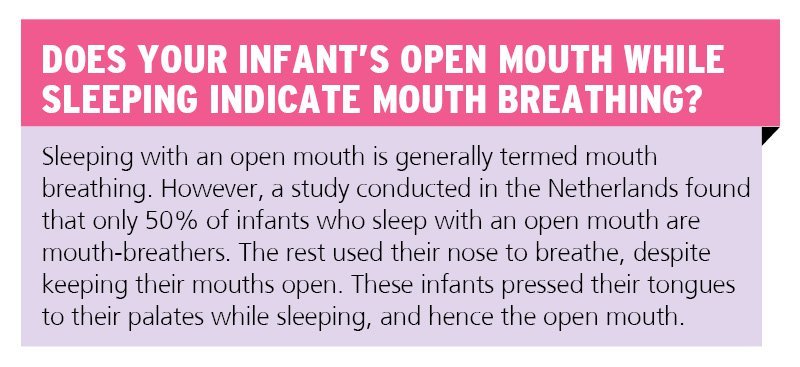
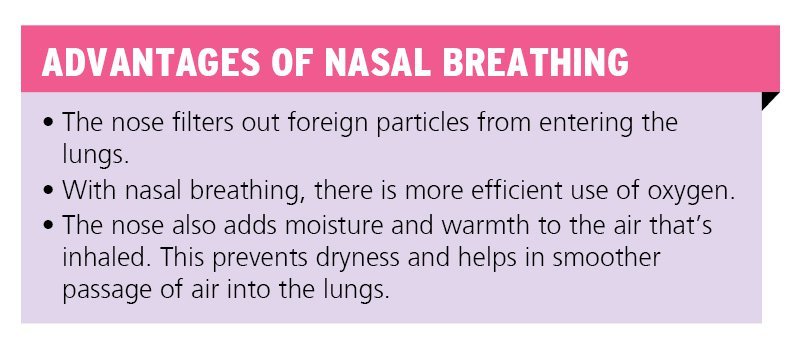
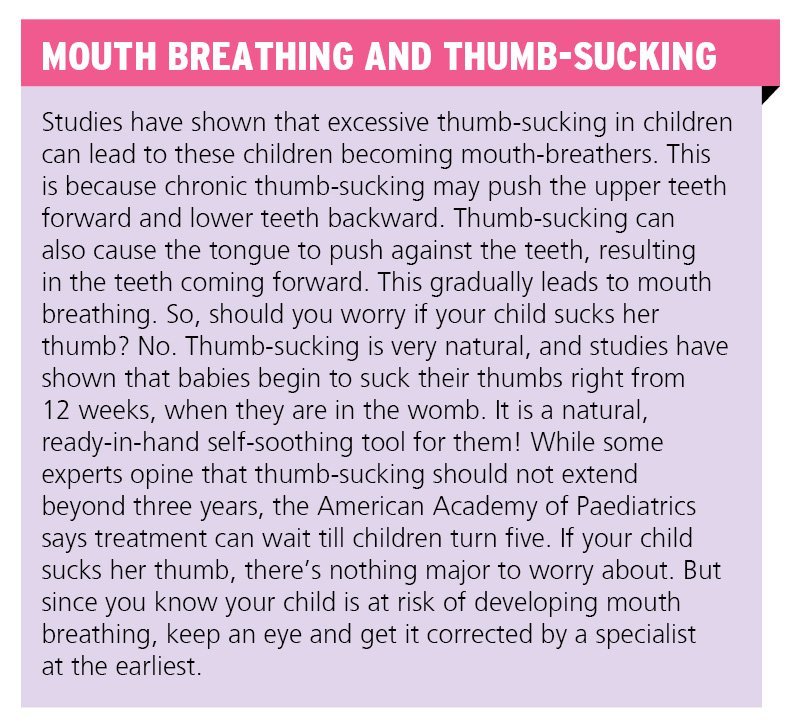
Do you find your child's mouth mostly open, whether they are sleeping, playing, watching TV or reading? Should you correct this habit? Find out.

Meera looks at her 11-month-old sleeping baby with a smile. She notices her daughter's mouth is slightly open. Her daughter seems to be breathing through her mouth. Meera tries to close her mouth gently. But within seconds, her mouth is open again. Meeras' smile begins to fade. She is reminded of something she read recently, that mouth breathing can result in crooked teeth. Now, she is worried. She wonders if mouth breathing can cause other problems too. Will her teeth jut out? Will it affect her sleep and health? Questions galore.
Let's help Meera navigate through the maze of questions. But first, let's see what leads to mouth breathing.
What causes mouth breathing?
When the nasal airway gets blocked, that is, when oxygen cannot pass smoothly through the nasal passage, your child will start breathing through their mouth. But, why are blocks likely to be present in the nasal passage? Here are some common causes:
- Congestion (caused by a common cold, allergies, or a sinus infection)
- The shape of the nose/jaw
- Benign growth of tissues in the nasal lining
- Enlarged tonsils (tonsils are a pair of soft tissue masses present at the back of the throat)
- Enlarged adenoids (when the lymphoid tissue found between the back of the nose and the throat is abnormally enlarged, it is called an adenoid)
- Deviated nasal septum (nasal septum is the thin wall that separates the left and the right nostrils)
- Sleep apnea
Health effects of mouth breathing
If your child is breathing through their mouth because of a cold or while exercising, you have nothing to worry about. But if your child is breathing through their mouth chronically, it needs to be addressed. Though not always the case, mouth breathing can result in:
- Crooked teeth
- Improper facial development
- Tooth decay and cavities
- Bad sleep and chronic fatigue
- Speech problems such as a lisp
Signs of mouth breathing
Apart from the most obvious sign of an open mouth while asleep and awake, there are other signs parents need to watch for:
- Sleepiness/fatigue throughout the day
- Snoring
- Bad breath
- Increased irritability
- Frequent crying/waking up at night
- Crowded teeth
- Dry mouth/lips
Can mouth breathing be corrected?
The answer is YES. Treatment of this condition depends on the reason your child is breathing through their mouth. For example, if your child has swollen tonsils or issues related to the nasal septum or adenoids, and that's making nose-breathing difficult, an ENT specialist can help. If your child has an allergy, certain nasal sprays or antihistamines can clear the congestion. A physical therapist can also suggest exercises and teach your child the right technique for breathing. If your child is breathing through their mouth only while sleeping, a simple measure like increasing the height of their pillow by placing an extra one, can help. In short, mouth breathing is treatable. The earlier the diagnosis, the easier the treatment.
Mouth breathing is quite common and doesn't always lead to all the health problems discussed in this article. However, it is best to get the habit corrected in your child.
This article has been reviewed by Dr Satish Laddad, a paediatrician, and founder and director of Docterz, Mumbai.





























Comments
Edit
Comment Flag
Cancel Update