
How To Ensure Your Child Gets Enough Iron: Essential Tips, Nutrient-Rich Foods, And Signs Of Deficiency
Shirley Johanna
Iron is essential for a child’s growth, energy levels, and brain development, but many children don’t get enough. Ensure your child gets the right amount through nutritious foods
Iron is an essential mineral for normal growth and development. It plays a key role in blood production by making hemoglobin, a protein in your red blood cells (RBCs) that carries oxygen from your lungs to organs and tissues, and it transports carbon dioxide from organs and tissues back to the lungs. Without enough iron, your body cannot make the hemoglobin it needs, and iron-deficiency anemia occurs. The RBC levels become low, and as the tissues and organs do not get the oxygen they need, you may feel tired and weak.
Why iron is important
In addition to its role in producing hemoglobin, iron is essential for:
- Muscle metabolism
- Connective tissue health
- Nerve development
- Cell functioning
- Physical growth
- Hormone production
If not corrected, low iron levels can lead to iron deficiency anemia, one of the most common nutritional disorders among children, teenagers, and pregnant women. According to the National Family Health Survey (NFHS-4) conducted in 2015-16, 56% of 6—to 59-month-old children are anemic in India. Left untreated, iron deficiency anemia can cause growth and developmental problems.
Children and adolescents have increased iron needs because they are going through a period of rapid growth and development
Iron needs of children
During pregnancy, a lot of iron is transferred from the mother to the fetus via the placenta, especially during the last trimester. Iron deficiency in pregnant mothers or premature birth deprives the baby of the iron reserves. This depleted source of iron in the baby may lead to iron deficiency after 3 months of age. When the need for supplemental iron is not met by 6 months of age, the baby could develop severe iron deficiency after 9 months.
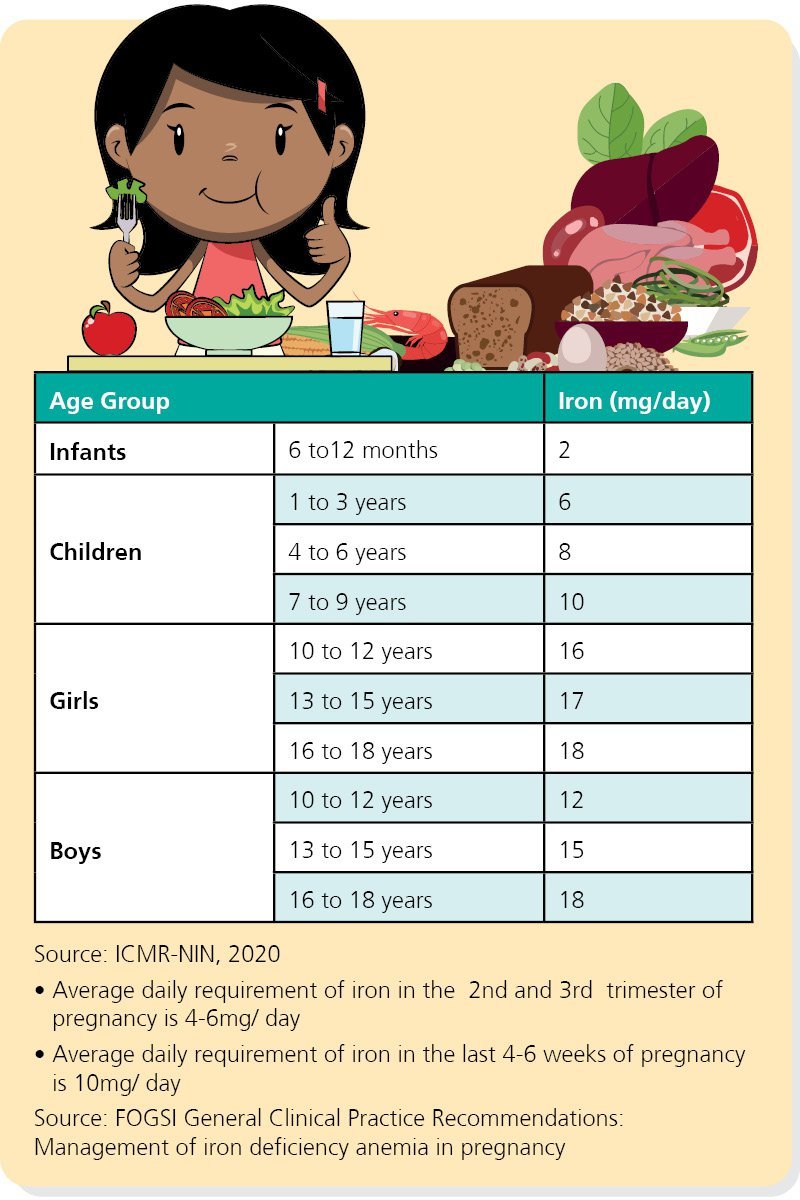
Children and adolescents have increased iron needs because they're going through a period of rapid growth and development. It's best to get the recommended amount of iron through a healthy, nutritious diet. The Indian Council of Medical Research-National Institute of Nutrition (ICMR-NIN) has established the recommended dietary allowances (RDA) for iron required by Indians (see the table below).
Diagnosing iron deficiency
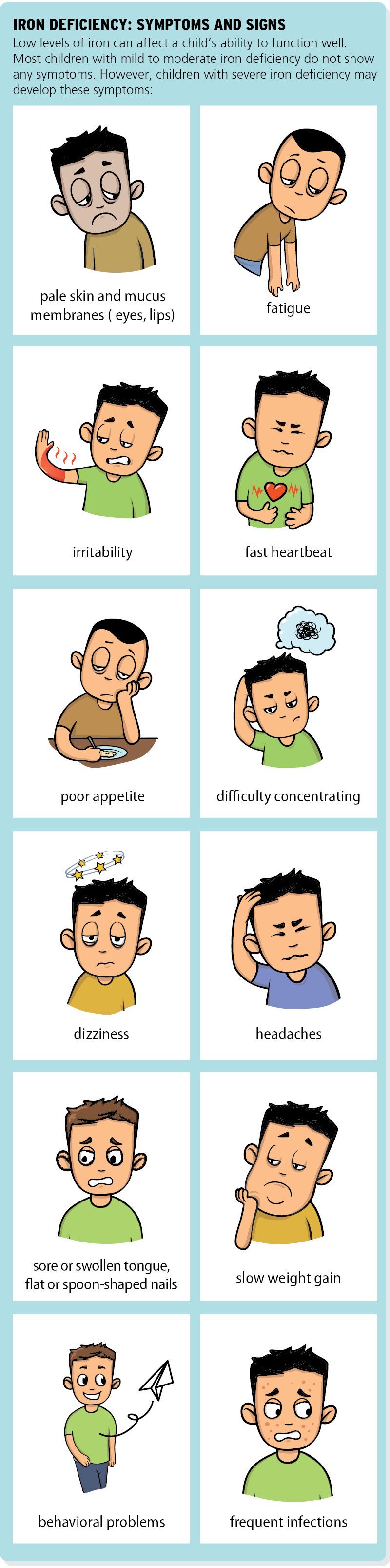
One of the first symptoms of iron deficiency is fatigue. If your child looks pale, feels dizzy, and is tired all the time, see your pediatrician, who may recommend blood tests to check the iron and hemoglobin levels. They may even recommend a complete blood count (CBC) test to evaluate the blood cells: RBCs, white blood cells, and platelets.
Treatment
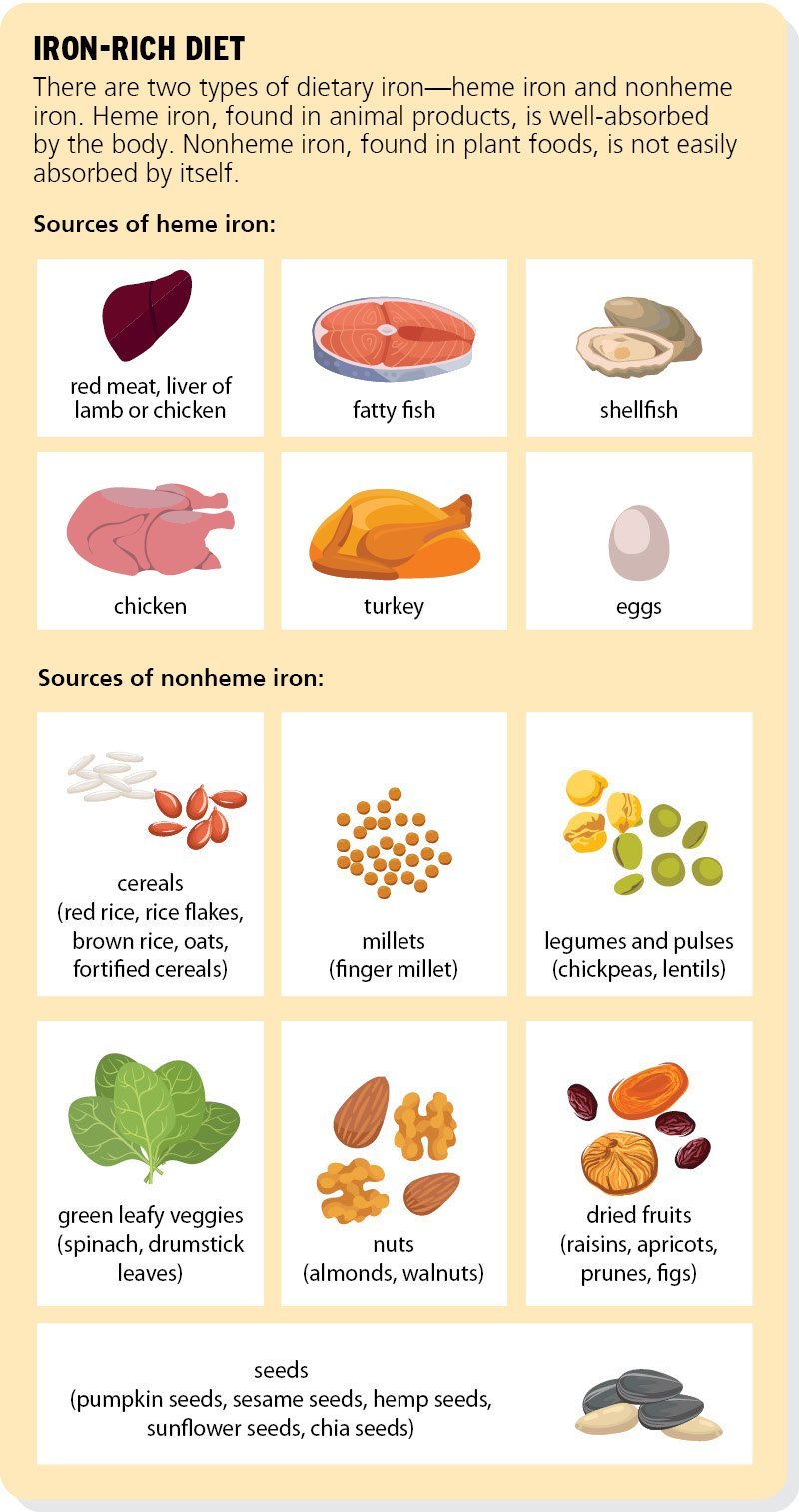
Treatment depends on your child's symptoms, age, and severity of the condition. Eating iron-rich foods and taking iron supplements (only if recommended by a physician) can help treat iron deficiency.
Iron supplements
Needless to say, it's always best for your child to get iron from food. However, when the iron levels are very low, your pediatrician may prescribe iron drops or pills to boost iron levels.
Note: Never give your child iron supplements without consulting your pediatrician.
Tips to improve iron levels
- Eat a variety of iron-rich foods.
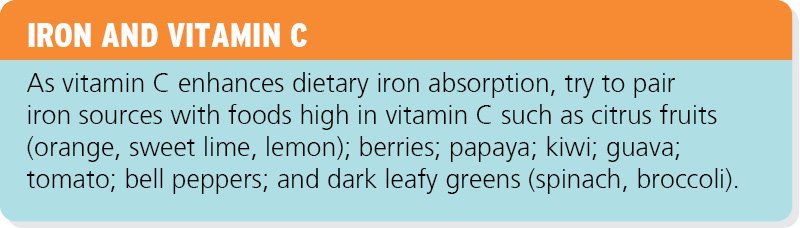
- Include vitamin C-rich foods in the diet.
- Avoid combining calcium-rich foods or supplements and iron-rich foods, as calcium hinders iron absorption.
- Avoid drinking tea and coffee during mealtimes because the tannins in these beverages may inhibit iron absorption. Try to avoid tea and coffee one hour before and after meals.
- Legumes, nuts, and grains contain phytic acid, which binds to minerals like iron to form phytates. Studies have shown that phytates interfere with iron absorption. However, soaking, fermenting, sprouting, and cooking these foods can help destroy the phytates.
- Use cast-iron cookware to increase iron content in food.
Iron deficiency can be prevented by following a healthy, balanced diet that includes good sources of iron. Don't ignore iron deficiency, as it can affect your child's growth and development. If your child shows symptoms of iron deficiency, see your pediatrician for possible treatment options.
The article has been reviewed by Dr. Ravindra Chittal, consultant pediatrician, Hinduja Hospital, Khar, Mumbai.


























Comments
Edit
Comment Flag
Cancel Update