
Building Strong Bones: The Importance Of Calcium For Your Child's Growth And Development
Shirley Johanna
Discover why calcium is essential for your child's growth, strong bones, and overall development, plus the best ways to ensure they get enough of it!

Calcium is a mineral that is essential for growth and development in young children and teenagers. It's the key building block for strong bones and teeth. About 99% of the total body calcium is found in bones and teeth. Calcium-rich foods are a must-have in your child's diet. However, studies show that many children are not getting the recommended daily amount of calcium. Read on to learn how this mineral can help build healthy bones in your child.
Why your child needs calcium
When we are in our late twenties, our bones reach their maximum strength and size (called peak bone mass). According to the National Institutes of Health (NIH) in the US, up to 90% of peak bone mass is acquired by age 18 in girls and age 20 in boys, which makes youth the best time for your kids to invest in their bone health.
As the body uses calcium to build strong bones during childhood and adolescence, your child needs a diet rich in calcium. Providing your child with a variety of calcium-rich foods will help prevent osteoporosis, a disease that causes bones to become weak and brittle, and fractures in later years.
But that's not all. Calcium also helps in maintaining muscle and nerve health, clotting the blood, and the secretion of hormones and enzymes.
Calcium deficiency
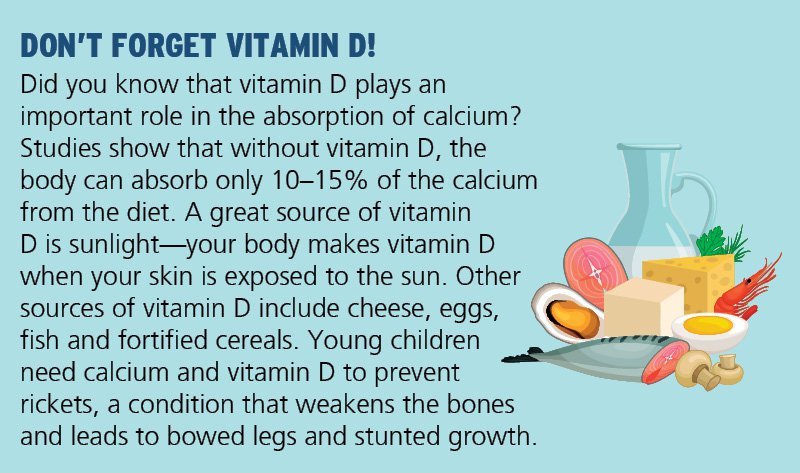
When blood calcium levels are low due to poor calcium intake, your body will take calcium from the bones to be used in other areas of your body. When this continues, the bones become weak and brittle. While some children may not show any signs of calcium deficiency, others may have symptoms such as brittle nails, dry skin, weakened tooth enamel, and muscle cramps.
In the long run, calcium deficiency can result in low bone density or osteopenia. Osteopenia, if not detected and treated, can lead to osteoporosis, which causes the bones to thin and thus, increases the risk of fractures.
Easy ways to include calcium in your child's diet
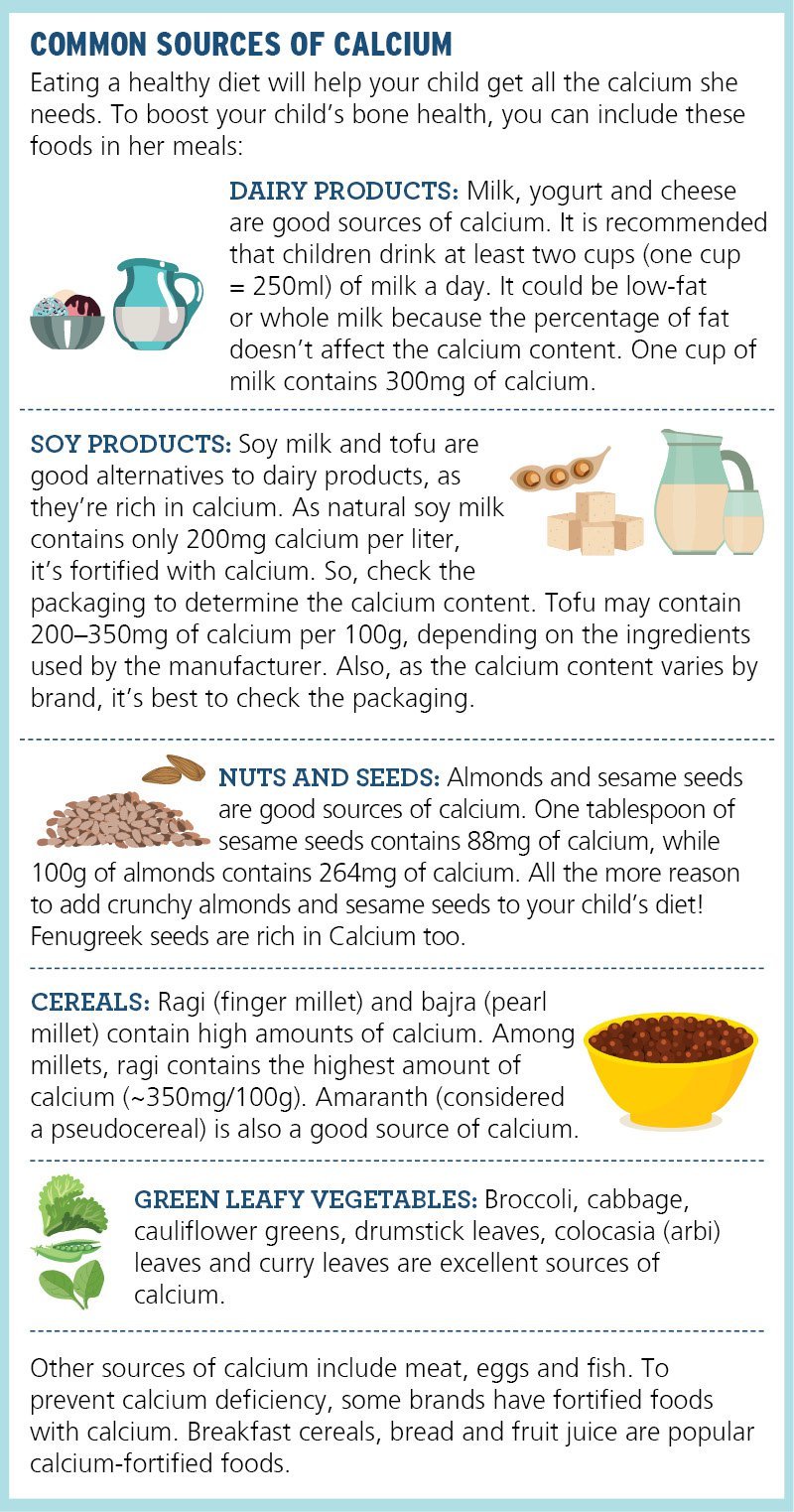
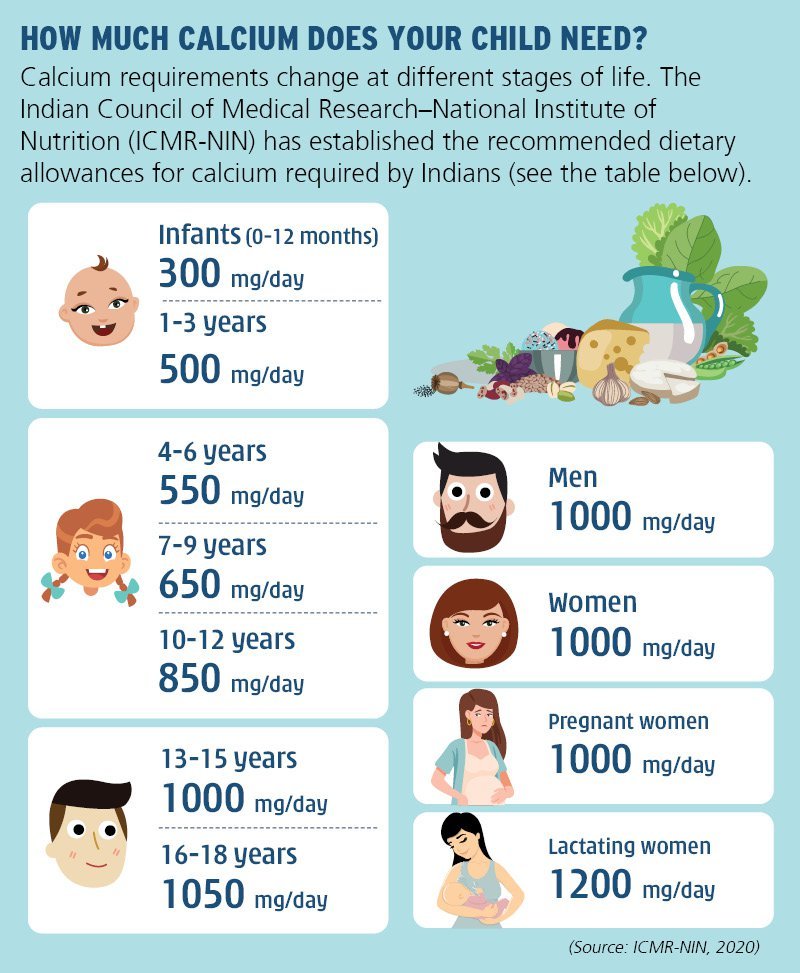
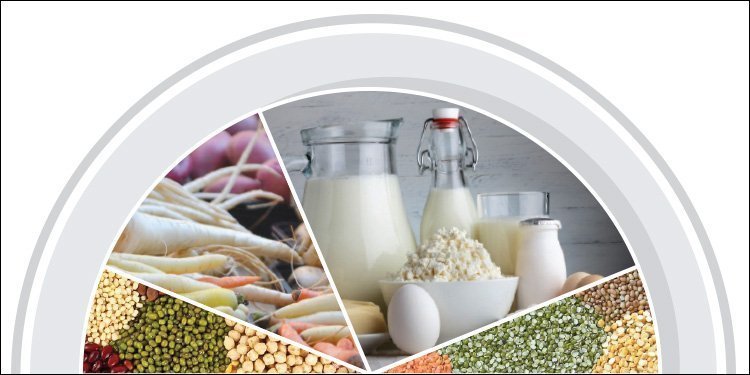
Newborn babies get calcium from breast milk and formula. For young children, a healthy diet rich in dairy can provide the required amount of calcium. However, preteens and teens may require more calcium-rich foods in their diet.
Here are some easy ways to ensure that your child is getting the recommended amount of calcium through their meals:
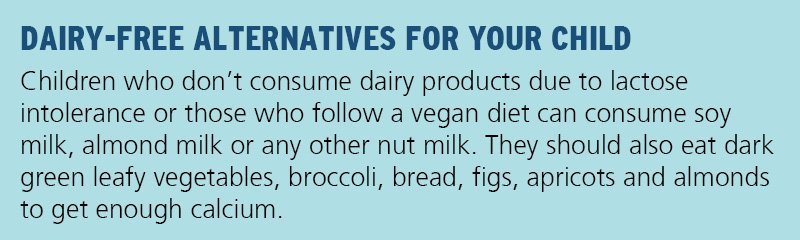
- Add milk, soy milk, or almond milk to smoothies and breakfast cereals.
- Get your child to eat drumstick leaves by providing interesting options such as green paratha.
- Use ragi instead of rice to make idli, dosa, or roti.
- Add sesame seeds to soups, salads, and sabzi.
- If your child has a sweet tooth, you can make til laddoos (sesame seed balls) by combining roasted sesame seeds and jaggery. Occasionally, you can give your child milk-based desserts, such as puddings, custards, and rice kheer.
- Add grated cheese to pasta, eggs, and vegetables for delicious calcium-rich meals.
Ensuring that your child eats a healthy, balanced diet is a good place to start. Also, engage your child in physical activity because exercise is great for bone health! Involve your child in meal planning so that they enjoy their food. Although the best way to get calcium is through food, if you're considering calcium supplements for your child, it's best to consult your pediatrician.
This article has been reviewed by Dr Neha Sanwalka, who holds a PhD in health sciences and specializes in pediatric nutrition, bone health, and growth monitoring.





















Comments
Edit
Comment Flag
Cancel Update