Your child's soft and delicate skin deserves a loving care. Read on to learn skincare ideas for children-from infants to adolescents, and to understand some common skin conditions.
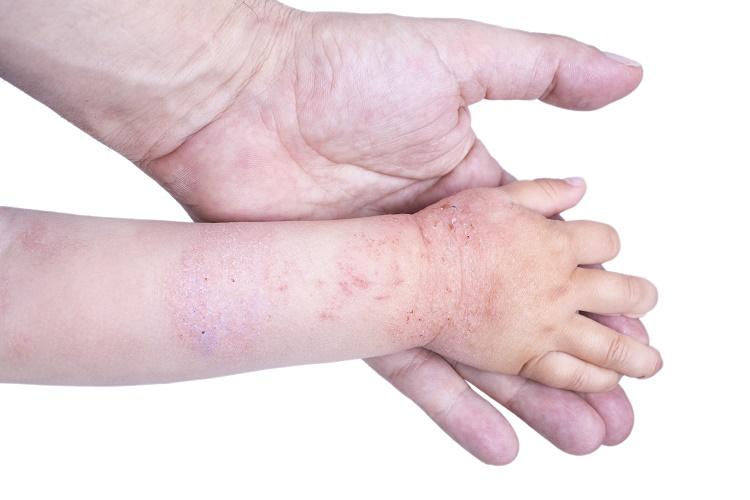
Depending on the age group, children face varied skin conditions - diaper rash, cradle cap and infant eczema, and later, prickly heat, atopic dermatitis, papulosa urticaria, pyoderma, seborrhoea, the list goes on.
Skin care for babies & kids need a lot of attention. Their immunity will not be fully developed, and the skin will be tender, easily prone to problems. As a first precaution, parents of newborns should remember to follow a safe and healthy skin care routine for themselves and use products that are free of fragrance and colouring agents, paraben, plant oils and extracts.
As a second step, while choosing products for babies it is of the utmost importance to ensure that they don't contain fragrances, dyes, and preservatives such as paraben, sodium lauryl sulphate and SLES, formaldehyde, triclosan, toluene, etc. Instead, use mild cleansers which are detergent-free with a ph 5.5 balance.
Many parents think using organic or herbal products will protect their children from harmful chemicals, but not too many clinical or laboratory studies have been done on these products and they do not necessarily guarantee higher safety quotients.

It appears as red scaly, flaky skin on the scalp and sometimes the face and neck. Over time, it will clear up but to hasten the process,
This is very common among babies and children. Sometimes, in the zeal to keep the baby clean, he is bathed too frequently, and this removes the natural oils that protect his skin and aggravates dryness and eczema. In case of severe dry skin, bathe the baby only on alternate days. Clean the diaper areas and skin around the mouth as needed.
Eczema should be treated by a specialist, with diligent follow-up by parents.
It is extremely important to clean and moisturise your baby's skin every day. Regular bathing helps retain the moisture of the skin. The bathwater should be lukewarm. Cleansers reduce hydration of the skin, and moisturisers used immediately afterwards help counteract this.
Using moisturiser from childhood will delay onset of wrinkles. For children below ten years, moisturisers with light liquid paraffin, Vitamin E and aloe vera are safe for regular use. Products with specific ingredients like filaggrin, which is a skin protein, ceramides and activated zinc should be used in the treatment of infant eczema, atopic dermatitis or dry skin condition as they help restore the damaged skin.
Adolescents who experience changes in the skin such as oiliness and acne should use oil-free moisturisers which do not clog the pores.
Babies can suddenly develop red bumps on the skin or rashes. Infants and toddlers can become allergic to perfumes, dyes and plant oils/extracts in skin care products. They may get a diaper rash from a particular brand of diaper or even the wipes used, despite maintaining hygiene.
In older children, red itchy skin rashes on exposed areas are common up to seven years of age. They could develop because of allergy to mosquito or other insect bites or even contact with certain plants and pollen. This problem is known as papular urticaria or insect bite reaction. As a preventive, it is best to apply insect repellent on your child's skin and dress her in clothes which cover her limbs completely before she undertakes outdoor activities.
Every parent dreads the summer season! Children have plenty of time for outdoor activities and they usually come back with itchy red rashes. In infants, these rashes can occur due to being over-clothed. As their sweat ducts aren't fully mature, the sweat tends to accumulate and results in inflammation and rashes.
Simple ways to bring quick relief are:
Boils and pustules may sometimes develop in children, usually because of a wound getting infected. However if it recurs regularly it could be a sign of malnutrition, zinc deficiency or improper treatment.
Never squeeze out the pustule or use band-aids on them. Use an antibiotic cream and keep the area clean. If there are multiple such pustules, and the child develops fever, loss of appetite and/or listlessness, seek medical help immediately.
To every adolescent these issues are a matter of life and death! In consequence, parents are made to run from pillar to post, providing them a range of treatment from home remedies to medical help.
These skin problems occur due to hormonal changes taking place at puberty. Instead of waiting for the problems to resolve naturally, it is always better to treat them quickly, as scarring and pigmentation will then be prevented.
Taken all in all, skin care in children is an important factor in ensuring good health. Teach your child to take care of his own skin.
Dr Raina Nikhil Nahar is a Consultant Cosmetologist and Dermatologist at the Nanavati Super Speciality Hospital, Mumbai
Join our Circles to share, discuss and learn from fellow parents and experts!
Looking for expert tips and interesting articles on parenting? Subscribe now to our magazine. Connect with us on Facebook | Twitter | Instagram | YouTube
Comments
Anjali Paul Jul 31, 2018
Edit
Comment Flag
Cancel Update