We are not only what we eat, but also 'how' we eat. Do you know that your child doesn't get the required dose of nutrition, if he doesn't chew his food right? Chewing plays a vital role. Learn more.


As parents, you put a conscious effort to ensure your child eats well and that you serve nutritious food day after day. But do you also ensure that your child chews her food properly? If the answer to this question is 'No' then let us tell you now that all your effort is in vain. As digestion does not begin in the stomach but in your mouth; and chewing your food thoroughly improves digestion.
Yes, we get it, in today's fast-paced life of rushing through meals and always being on the run, your child skips chewing food properly and washes it down quickly with water. But note that, no matter how nutritious the food is, improper chewing leads to poor absorption of nutrients from the food and your child remains unhealthy. It also leads to digestive problems such as bloating, flatulence, weight gain and more. Yes, this simple but useful act of chewing is linked to a child's health.
Therefore, chewing your food well is extremely important. We cannot reiterate this enough. The way you chew, how long you chew - all these little factors can significantly impact your child's health. Let's find out how?
Chewing is important because the saliva in your mouth helps break down the food into smaller particles that enable the stomach to metabolise it more easily. Saliva contains digestive enzymes that help in this food breakdown process, and aid in proper digestion and nutrient absorption.
Also, saliva lubricates the food well, thereby putting lesser pressure on the oesophagus tube and passing food smoothly to the stomach. Further, the chewing action releases stomach acids and juices in the gastrointestinal tract, priming the digestive system to carry out the rest of the digestion process.
Additionally, the more your child chews his food, the lesser his body loses energy and retains more nutrients. This is important, as children require these essential nutrients for their overall growth and development.
Note: Most of us think that chewing is a skill that needs a good set of teeth. This is only partially true, as strong gums are the base for chewing skills. This means that babies can start chewing with gums as soon as they are nine months old and can gradually improve that skill even after their teeth erupt.
Chewing, like other skills, is an important developmental milestone in babies. Depending on how and when your baby is introduced to various types of food (in different consistencies and textures) and how she takes to it, the milestone may be achieved sooner than you think.
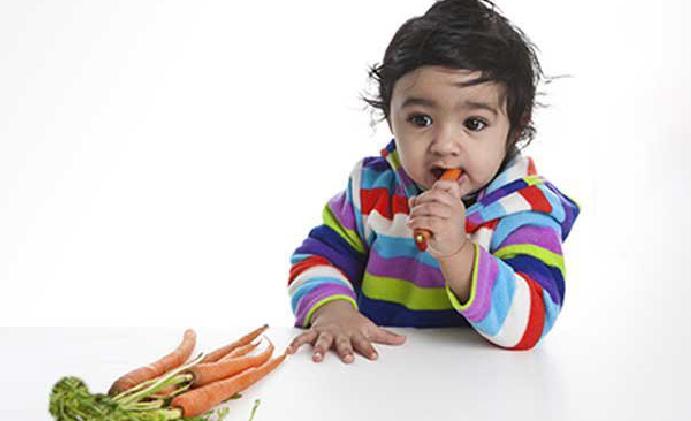
Further, the number of times your child chews food depends on the food item as well. For instance, soft squishy fruits and boiled veggies are easier to chew than say a piece of chewy chicken or roti. Besides food, babies learn to gnaw on their fingers, toys, teethers and other objects around them. The little ones are constantly exploring and feeling the shape, texture and size of these objects through the act of chewing.
Now, let us look at some tried and tested ways to make your baby chew food properly:
Teaching your kids to chew food takes effort, patience and discipline. Older children may need to be coaxed harder to learn this skill, which should have been ideally taught earlier when they were babies or toddlers. Here are a few tips to try:
Before you go ahead and try these steps, remember that chewing is also a part of growing up and one shouldn't be too hard on babies and children to learn the proper technique in a hurry. How and when you encourage your child is also important. You can start by offering the right textures at the right time and being a role model so your child can learn from you. In due course, your child will learn to chew her food properly and reap the benefits of it all. Happy chewing!
About the expert:
Written by Priya Kathpal on 17 January 2019.
Nutritionist Priya Kathpal has a Master's degree in Dietary Food Service Management with a PG Diploma in Dietetics, Bsc Applied Nutrition and is also a certified sports nutritionist. With over 10 years of experience in fitness industry, she has been involved in clinical and sports nutrition consultations in corporate, gym, fitness centres, clinic set up and R&D team of sports nutrition products.
Join our Circles to share, discuss and learn from fellow parents and experts!
Looking for expert tips and interesting articles on parenting? Subscribe now to our magazine. Connect with us on Facebook | Twitter | Instagram | YouTube
Comments
Pravasini May 20, 2022
Sadhana Feb 17, 2023
@Pravasini
I have similar problem with my daughter. Is there any solution you found for this? Kindly help me
-
1Edit
Comment Flag
Cancel Update