
PCOS Explained: Causes, Treatments, And Lifestyle Changes For Better Management
Varsha Venkatesh
Here's what you should know about polycystic ovary syndrome (PCOS), a common health condition caused by an imbalance of reproductive hormones.

Tara, a 16-year-old student with a talent for programming, noticed an alarming change in her appearance, and it wasn't for the best. She had become overweight at 85 kilograms and had unwanted hair growth on her face. Her periods came at intervals of 4 to 6 months, leaving her disturbed and confused. At first, she suffered in silence and finally spoke to her mother about the changes. She asked to visit a beauty parlor to make some cosmetic changes, but her mother knew better. Since her mother Farida had been through quite the same symptoms in her youth and having conceived with medical treatment, she arranged a gynecological consultation for Tara. A detailed history, clinical examination, an ultrasonogram, and a few hormonal tests later, Tara was diagnosed with PCOS, one of the most common endocrine disorders among women of reproductive age. According to a study of 3,500 women conducted by AIIMS and SIMS, 20 to 25% of women in India have PCOS.
What is PCOS?
"Polycystic ovary syndrome, or PCOS, is a hormonal condition that may affect women at any age after puberty. In PCOS, the ovaries tend to be bulky with multiple follicles and a compromised ovulation process," explains Dr Nozer Sheriar, Consulting Obstetrician and Gynecologist at Hinduja Hospital, Khar, Mumbai. The ovaries produce excess estrogens and unusually high levels of androgens (male sex hormones), which compromise the ovulation process and cause excess hair growth. Such ovulation problems can affect fertility in women with PCOS.
Symptoms of PCOS
Some common visible symptoms of PCOS are:
- Acne and oily skin
- Hirsutism (excess facial and body hair)
- Hair loss and thinning of scalp hair
- Irregular periods, no periods at all, or prolonged periods
- Weight gain (especially in the abdominal area) or obesity
- Dark skin patches on the back of the neck, in the underarms, or under the breasts
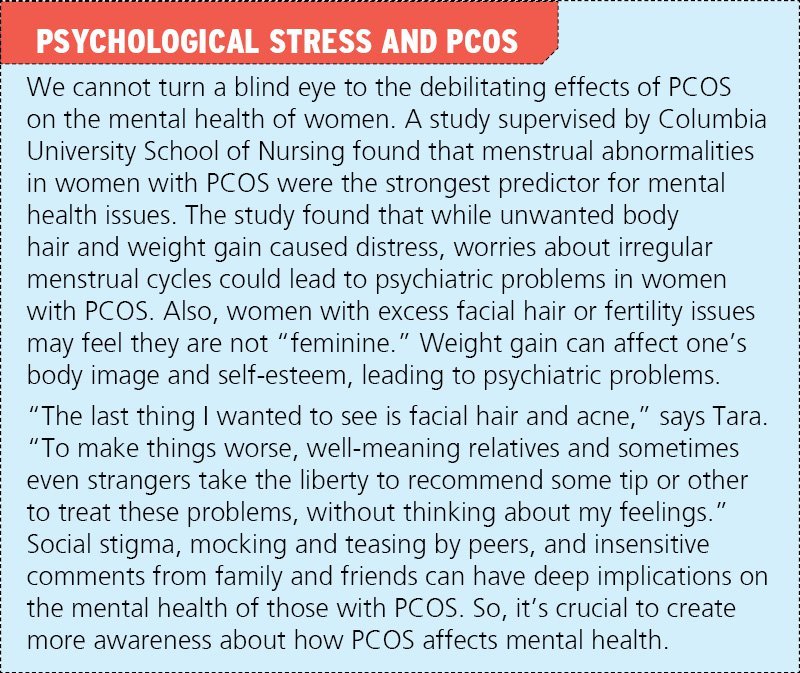
Along with these symptoms, women with PCOS may experience mental health problems such as:
- Fatigue
- Depression
- Anxiety
- Irritability and mood swings
- Body image and self-esteem issues
- Anger
Risk Factors for PCOS
"Women with PCOS may develop other health problems in later life. Often, they struggle with the symptoms for many years before PCOS is diagnosed. This delay puts women with PCOS at a higher risk of developing other health problems," warns Dr Sheriar. When symptoms are not recognized and treated, women with PCOS are at increased risk of developing complications, including:
- Infertility
- Insulin resistance
- Metabolic syndrome with low good cholesterol levels, high blood pressure, and high blood sugar levels that could lead to diabetes or heart problems.
If left untreated, PCOS can lead to the development of endometrial cancer.
Causes
Although the exact cause of PCOS isn't known, genetics plays an important role. Also, leading a largely sedentary lifestyle and eating a carb-heavy diet that promotes weight gain are the most common reasons for developing PCOS.
The other common manifestations of PCOS are weight gain, acne, and growth of facial hair
When to See a Doctor
"Typically, PCOS starts during puberty. Therefore, at the onset of puberty, girls who experience menstrual disturbances should seek help immediately," advises Dr Sheriar. Watch out for irregular periods, heavy bleeding, stopping of periods, or prolonged menstrual cycles.
"The other common manifestations of PCOS are weight gain, acne, and growth of facial hair," says Dr Sheriar. "A simple blood test will reveal elevated androgen levels. Androgens are responsible for excess hair growth."
In women who have trouble getting pregnant, PCOS can be an incidental diagnosis. An ultrasound may reveal multiple follicles (mistakenly reported as cysts or enlargement of the ovaries, and in such cases the ovaries fail to release eggs regularly, leading to fertility problems.
"With PCOS, preventive health care should be the focus," says Dr Sheriar. "Schools should raise awareness about menstrual health via education and workshops. This will help girls identify health disruptions and seek intervention early on."
Sex education and family life education go a long way in opening a conversation with adolescents. Youngsters may then talk about their bodies without embarrassment. They also provide an opportunity for students to learn about the importance of adopting healthy habits like eating mindfully and maintaining an active lifestyle from a young age.
Managing PCOS with Lifestyle Modifications
"When the average weight and body mass index (BMI) of adolescents today are compared with that of previous generations, we see a significant increase in obesity among teenagers," says Dr Sheriar. "If the BMI is grossly elevated, the first line of effective intervention for managing PCOS is lifestyle modification which includes exercise and diet. Women with PCOS can reap big health benefits by eating clean and moving more."
The following first-line strategy can significantly modify the course of PCOS
1. Follow a healthy low-carb diet
According to Dr Sheriar, about two-thirds of the women with PCOS are overweight and have insulin resistance. So, the primary goal should be to regulate their insulin levels by making dietary changes. By eating a low-carb, low-calorie diet (with lots of vegetables, fruits, and good sources of protein) and avoiding sugary and processed foods, girls and women with PCOS can lose weight and thereby control their insulin levels. Having organic foods, free of pesticides and growth hormones, can also help reverse the condition over time.
2. Do some moderate exercise
As excess body weight exaggerates the expression and degree of PCOS symptoms, aerobic exercise is recommended. Staying physically active can do wonders for one's overall health and well-being. Choose an activity that pumps up your heart rate and brings you joy so that your workouts don't feel like a chore. As Dr Sheriar says, find what you love—dancing, aerobics, cycling, or swimming and start including it into your daily routine.
Help is Available
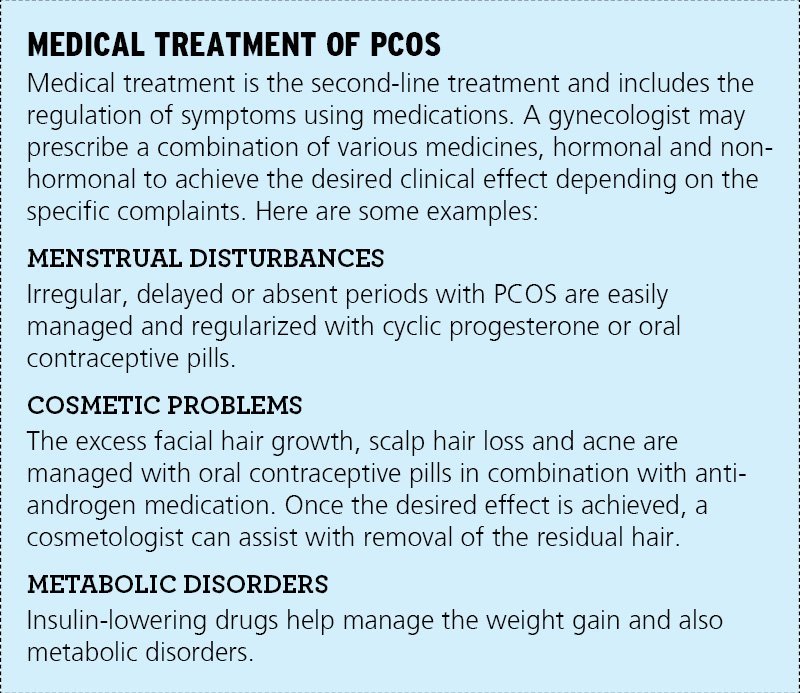
Fortunately, there's significant help and hope for women living with PCOS. Health professionals are ready to listen to women, support them, and provide them with the right resources to help them manage their condition. For psychological support and reassurance, women with PCOS can consult psychologists or counselors.
Overall, one must take a holistic approach to managing PCOS at the physical and mental levels. Studies have shown that mindful yoga may lower testosterone (a major androgen) levels and alleviate symptoms of anxiety and depression in women with PCOS. Also, breathing exercises and meditation can be incredibly important for relaxation and overall health.
Within just 6 months on a supervised diet, aerobic exercise, and an insulin sensitizer the now 17-year-old Tara has lost 15 kilograms. On treatment with a low-dose oral contraceptive pill, her periods are regular, her skin is clear and her facial hair growth has reduced. She is back to being young, happy, and confident, and continues to be a talented computer geek.
Doctors specializing in PCOS can help reverse the condition with science-backed diet and lifestyle changes, along with medications. So, if you think someone you know may have PCOS, get the person to visit a gynecologist immediately. It could change their life.
Kindly note: The drugs mentioned in the article need to be taken only under strict medical supervision.
This article has been reviewed by Dr Nozer Sheriar, an experienced obstetrician and gynecologist in Mumbai.
























Comments
Edit
Comment Flag
Cancel Update