
6 Fun Ways To Get Your Child To Eat Fruits And Vegetables. A Trip To Good Health And Taste
Shiny Lizia M
Fruits and vegetables are colorful gifts that nature offers as visual and tasty treats to children. This article aims to teach you some fun ways to make your child love fruits and vegetables
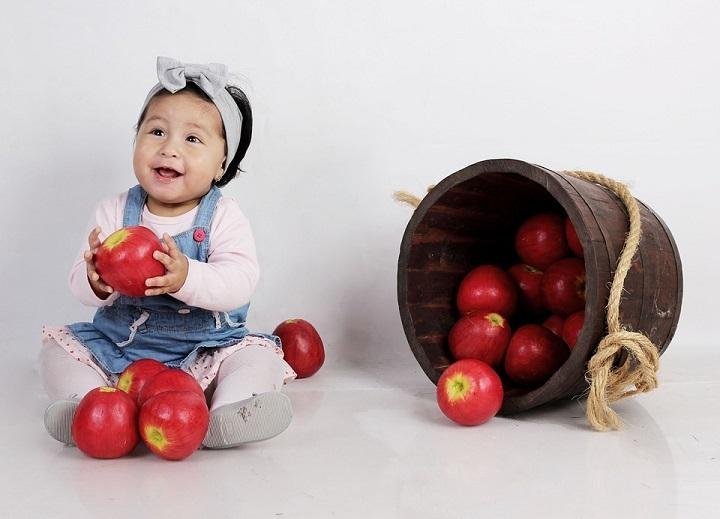
Fruits and vegetables stimulate your child's senses and appetite by adding a variety of colors, flavors, and textures to their meals. All fruit and vegetables are good sources of fiber and potassium. They help strengthen the body's immune system. They contain both soluble and insoluble fiber. Soluble fiber lowers blood cholesterol, while insoluble fiber promotes healthy bowel functions. The vitamins and minerals in fruit keep your child's kidneys working normally decreasing their risk of kidney stones, and helping your child build bone mass. A diet rich in fruit can reduce your child's lifetime risk of certain types of cancer such as throat, esophageal, and stomach.
Daily requirement
Even though the health benefits of fruits and vegetables are well established, their intake remains low worldwide, particularly among children and adolescents. Five-a-day is a catchphrase coined to popularise the WHO recommendation to eat five servings of 80 grams a day, adding up to 400 grams of fruit and vegetables in a day. The dietary guidelines of Indians, proposed by the Indian Council of Medical Research, recommend 100 g of roots and tubers (potato, carrot, yam, etc.); 50 g of green leafy vegetables; 100 g of other vegetables, and 100 g of fruit, per day for children aged four to six years. The data is interesting but getting your child to eat this quantity is sure to be a challenge. So, what do you do?
The weaning period is the time to start introducing fruits and vegetables to your baby's diet. You can cook, puree, or mash soft vegetables and fruits in the desired texture for your child. This practice helps the child to get accustomed to the different flavors of fruits and vegetables
Here are some brilliant ideas to get your child to eat their fruits and vegetables and enjoy them too.
1. Teach about the food on their plates
When you try to familiarise children with the fruits and vegetables on their plates, they're more likely to eat them. This can be done in two ways:
Getting to know the names
While you feed these healthy foods to your children, tell them the names of each food. Take your child with you while purchasing fruits and vegetables, to get acquainted with the different varieties available.
Learn from texture differences
Fruits and vegetables offer different textures for kids to explore. Make your child touch these healthy foods, and feel and enjoy their texture. Explain the nature of textures and your child will soon experience what you mean when you use descriptive terms like soft, hard, prickly, smooth, mushy, and more.
2. Play games with your children using fruits and vegetables
Introduce innovative tasks like the rainbow task. Arrange different colored fruits to resemble a rainbow and ask your child to note down how many they eat in a day.
3. Math with fruit
Did you know your child can learn mathematics with fruits and vegetables? Allow your child to count the fruit as you buy them at the supermarket. You can also teach fractions to your child as you cut an apple into halves, quarters, and smaller sections.
4. Learning measures with vegetables and fruit
Weigh fruits at home or in the supermarket to help your kid learn the concept of weight. Extract juice out of the fruit and measure the liquid in a calibrated jug to teach volume to your kids.
5. Grow your own fruits and vegetables
Visit a farm with your child. This back-to-nature experience can help them understand how farm produce is prepared and handled before it reaches their plate. Plant and water easy-to-grow fruits and vegetables in your garden, balcony, or terrace, with your child. Start with quick-growing varieties such as tomatoes and beans.
Cooking suggestions to make fruits and veggies fun for your child
- Add fresh vegetables to your child's everyday dishes, as simple as sprinkling grated carrots on dosa or blending coriander/curry leaves to their glass of buttermilk.
- Add raisins, bananas, and other fresh or dried fruits to hot or cold cereals.
- Prepare homemade sauces/ salsa made with vegetables such as tomatoes, mangoes, capsicum, red onions, coriander, garlic, and butter.
- Add bananas or berries to dosas and pancakes.
- Serve new foods with favorite foods to increase acceptance, for example, add vegetables to your child's favorite soup.
- Presentation of foods does matter in your child's food choices. Make food more appealing by cutting fruits into funny shapes or carving sandwiches with faces and shapes made from vegetables and fruits.
Note: Children under 4 years of age may choke on raw fruits and vegetables, such as grapes and corn. Supervision is a must.
Given that food intake patterns established during childhood may track into adulthood and the potential associations of fruit and vegetable intake with other eating and health behaviors (e.g., physical activity and sedentary behavior) increasing the intake of fruits and vegetables in your child is therefore a health priority.





















Comments
Edit
Comment Flag
Cancel Update