
Rainbow On Your Plate: How Colorful Fruits And Veggies Boost Your Health Naturally!
Monali Bordoloi
Have you heard about rainbow food? It is nature's way of showing us the right way to a nutritious diet. Let the colours of the rainbow be your visual guide to better health. We will tell you how
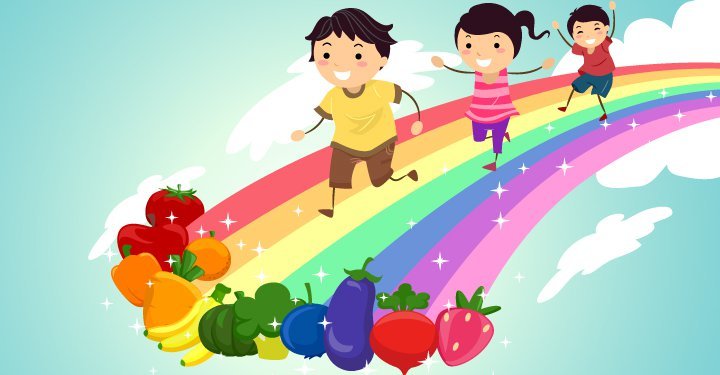
Imagine this - as you sit down to eat, your plate looks no less impressive than a rainbow! Now, don't you think that would be the perfect moment to capture for your Instagram feed? And your child would also be attracted, or at least curious if you invite them to feast on the rainbow! However, don't be fooled by the sugar-laden colorful rainbow food fads popular on photo-sharing sites. We are talking about naturally colorful rainbow-hued fruits and vegetables.
Discussions about improving our immunity to fend off diseases are everywhere. Rainbow food, with its natural healthy nutrients, is the need of the hour. So, it's time you bring that natural rainbow to your table!
However, do you know the science behind this easy-on-the-eyes food trend?
What are Phytonutrients?
Do you wonder why some fruits and vegetables have vibrant, distinct colors? Fruits and veggies get their distinctive color from a compound named phytonutrient. Besides the colors, phytonutrients are also responsible for the distinctive tastes and aromas of fruits and vegetables. Plants also require phytonutrients to strengthen their immune system. We all know that fruits and vegetables have many health benefits. But do you know most of these potential benefits come from phytonutrients that are also responsible for the plant's color?
Phytonutrients are one of the most important ingredients in a plant-based diet. This compound is said to have anti-cancer and anti-heart disease properties and is known to strengthen the immune system.
There is a strong correlation between colors and the nutrition of the food. No wonder why these rainbow-hued foods are a favorite among nutritionists. Dietitians and nutritionists all over the world recommend that we welcome more plant-based and colorful rainbow food to our plates.
This is what Priya Kathpal, nutritionist and founder of Nutrify, tells us about eating rainbow-colored food.
"Eating a rainbow means more than just getting enough fruit and veggies - it's about eating a wide variety of foods so your body gets all the essential nutrients. Fruits and vegetables come in various colors - red, orange, yellow, green, blue, and purple - and this isn't just nature's way of adding color to your plate. Each color serves a nutritional purpose. And these nutrients can prevent diseases. It's recommended that at mealtimes, half of your plate should be filled with fruits and vegetables."
How to eat rainbow food?
Now you know that rainbow food is good for you. But how do you make it a part of your diet? We tell you how! It's simple. Make it a habit to include as many fruits and vegetables as possible in your family meals - fruits for breakfast, salads for lunch and dinner, every single day. Bring new and colorful fruits and vegetables to your child's plate once they start on solids. You can even use different colored fruits and veggies to introduce the concept of colors to your pre-schoolers and arouse their curiosity for food!
Nutritionists believe that when it comes to health benefits, no one color is superior to another. So, try to bring balance by eating different-hued food. Also, the skins of fruits and veggies are the richest sources of phytonutrients. So, eat the whole fruit and the skin (in most cases). The next time you peel off skins from apples and peaches or eggplant (brinjal), think twice. You are losing out on the goodness of phytonutrients, too!
Benefits of different colored fruits and veggies
Let's check out what fruits and veggies of different colors have to offer regarding nutrition. However, keep in mind that there are hundreds of phytochemicals in one plant. We have listed some common benefits of each color. Many health benefits overlap, too.
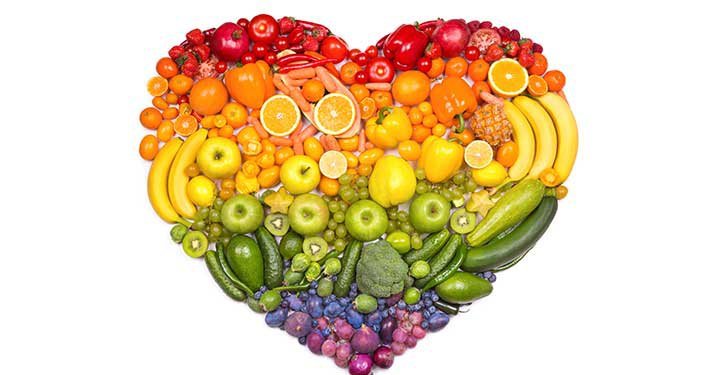
Red
Fruits and vegetables such as red bell peppers, apples, strawberries, tomatoes, cherries, red grapes, raspberries, red onions, cranberries, and watermelons come under red-colored food.
| The goodness of red: Red-coloured foods are the storehouse of essential nutrients, namely carotenoid lycopene and ellagic acid, which protect us from heart and lung diseases. |
Orange
Oranges, orange-colored peppers, pumpkin, and carrots
| The goodness of orange: These orange-colored fruits and veggies are full of beta- carotene, which is good for healthy vision, skin, cell growth, and the immune system. |
Yellow
Bananas, pineapples, yellow squashes, and yellow bell pepper
| The goodness of yellow: Yellow-coloured fruits and vegetables contain carotenoids and thus are known to improve heart health, vision, and digestion, as well as boost the immune system. |
Blue
Blueberries, grapes
| The goodness of blue: Blue-hued fruits and veggies contain an antioxidant named anthocyanin, which contains anti-aging properties. These are also good for heart health as it blocks the formation of blood clots. |
Purple
Brinjal, purple cabbage, beets, and plums
| The goodness of purple: It has antioxidants and helps the body absorb minerals. |
White
Radish, cauliflower, garlic, onion, and mushroom
| The goodness of white: White-colored vegetables contain compounds that reduce the risk of cancer and activate natural antibodies. Garlic and onions contain compounds called allicin and quercetin. Both these compounds have anti-cancer and anti-inflammatory properties. Selenium in mushrooms plays a crucial role in boosting immunity. |
Green
Cucumbers, spinach, peppers, green beans, broccoli, cabbage, avocado, kiwi, green grapes, and green apples
| The goodness of green: Green-colored fruits and vegetables contain compounds like lutein, isothiocyanate, and isoflavones that fight against cancer. Greens are also rich in vitamin K and calcium, which are essential for blood and bone health. |
How much rainbow food can we eat?
Nutritionists recommend that, in a day, we should ideally consume a total of four and a half cups of colorful fruits and vegetables. You could easily achieve this if you consciously plan to include at least two servings of fruits and veggies in every meal. Try to stock up on fruits to eat as snacks, too.
If you feel that your family is low on immunity-boosting fruits and veggies, whip up a colorful rainbow on your table, and we bet everyone will ask for more! Happy eating!































Comments
Edit
Comment Flag
Cancel Update