
Baby Food Guide: What To Feed And Avoid For 6–11 Month-Olds
V Saravana Kumar
Starting solids can feel exciting but confusing for new parents. This guide explains which foods to introduce and avoid for babies aged 6 to 11 months, helping you build healthy eating habits while keeping your little one safe and happy
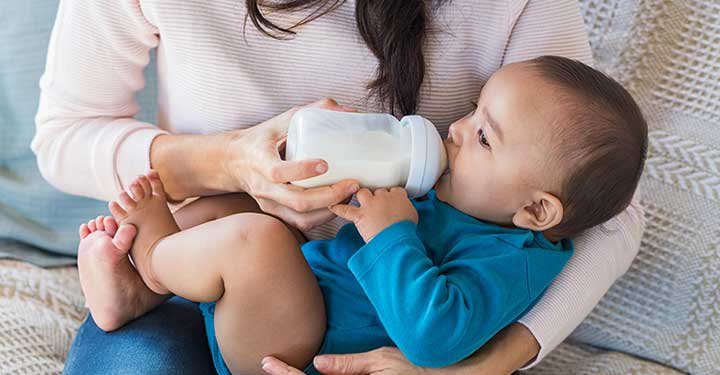
It has been established beyond doubt that there is absolutely no substitute for mother's milk. It has all the nutrients essential for the baby's growth and for building immunity. Ideally, babies should be given their mother's milk for two years or even longer. But as your little one crosses the 6-month mark, their feeding habits start to evolve. The child, who was hitherto wholly dependent on breast milk or formula feed, is now ready to explore a variety of foods in the form of semi-solids and solids, to meet their growing appetite and nutritional needs.
So, you will have to come up with a diet schedule that matches the different phases of your baby's development. And, we're here to help you do this.
Starting solids: when and how to begin feeding your baby
Let's take a detailed look at what you can feed your baby from 6 to 11 months, and how to devise a baby feeding schedule.
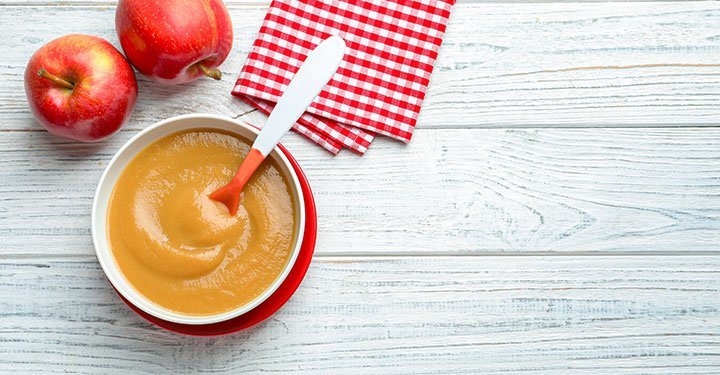
There are several foods you can introduce to your baby during this phase. The list includes fruits, vegetables, lentils, grains, and dairy products. You can use these to prepare puree or porridge for your baby.
Introducing solid food to your baby
Your baby reaches an important milestone when ready to take solid foods. Make this transition smooth and trouble-free. Before introducing solid foods, you should make sure that your baby can do the following:
- Hold their head in a steady, upright position.
- Sit with support.
- Lean forward and open their mouth on seeing food.
When you are sure your baby can do all this, they're ready for semi-solid foods. However, don't give your baby a bowl full of porridge or different types of solid food all at once.
Best first foods for 6-11-month-old babies
When introducing your baby to food other than breast milk, take it slow. Add new items to the menu one at a time. Here's how to do it:
- Start with a single-ingredient food with no added sugar or salt. It could be carrots, apples, or lentils, for instance. Serve it pureed, stewed, or as porridge.
- Give the baby only a teaspoon or two to start with. Check if it induces any adverse reactions such as diarrhoea, vomiting, or rashes. If your baby shows no such problems, you can continue, gradually increasing the quantity over time.
- Introduce other single-food items in succession, leaving a few days' gap between each new addition. However, every time you introduce something new, watch out for any adverse reactions. Also, take care to increase the portion sizes only in a gradual manner.
- Once your baby begins to have three or four different food items in a semi-solid form and is comfortable with them, you can offer a combination of foods. The same principle of 'watch and continue' applies here, too.
- While introducing store-bought baby cereal, begin with a single-grain, an iron-fortified one, such as rice, barley, or oatmeal, mixed with 4 tablespoons of breast milk or formula. Start with one or two teaspoons, and gradually increase the serving sizes.
- Gradually, add pureed vegetables with no added sugar or salt.
Remember to make your baby sit upright and offer the food using a small spoon. Give the baby ample time to get used to the new textures and to learn how to swallow.
Tips to help baby transition smoothly to solid foods
- Your baby may refuse semi-solid food the first time you give it. Don't lose heart if this happens. Try again after a few days. Baby may be more willing to accept it then. If not, keep trying a few times. After several attempts, if your baby is still rejecting the food, you could ask your pediatrician for suggestions.
- Your baby needs at least 120-150ml of water per day once they start taking semi-solid and solid foods. This is to keep them hydrated and avoid constipation.
- Your baby is the best judge of how much food they want to have. When they've had enough, they will resist by crying or turning their face away. When this happens, don't force your baby to eat because there's still some food left on the plate, or you feel he should eat more.
Nutritious foods to nourish and support your baby’s growth and development
At 6 months
- Breast milk or, if unavoidable, formula milk.
- Smooth pure made from vegetables or fruits.
- Store-bought single-grain baby cereals mixed with breast milk or formula.
At 7 months
- Breast milk, or formula if needed.
- Purees and baby cereals.
- Mashed bananas diluted with milk.
At 8 months
- Breast milk or formula if needed.
- Purees, baby cereal, dal water, rice water, and mashed bananas diluted with milk.
- Curd/yogurt, preferably homemade.
- Cooked and mashed potatoes and pumpkin.
At 9 months
- Breast milk, or formula if needed.
- Purees, baby cereal, dal water, rice water, mashed bananas diluted with milk, homemade curd/yogurt, cooked and mashed potatoes, and pumpkin.
- Mashed yolk of boiled egg (after consulting your paediatrician).
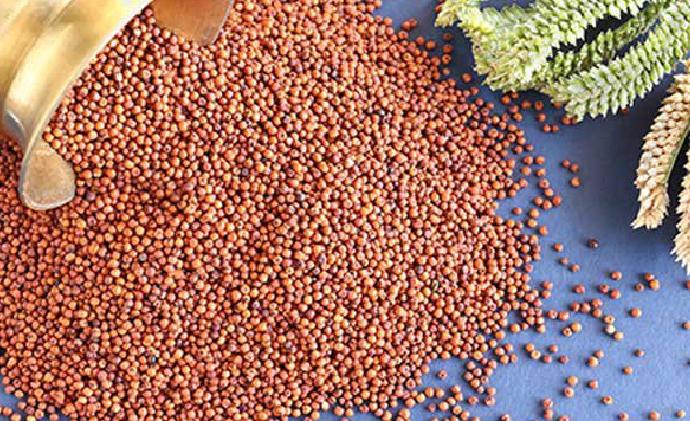
- Porridge made with wheat, ragi, oats, and sooji.
At 10 months
- Breast milk or formula if needed
- Pure, baby cereal, dal water, rice water, mashed bananas diluted with milk, homemade curd/yogurt, cooked and mashed potatoes, and pumpkin.
- Mashed yolk of boiled egg, wheat, ragi, oats, and sooji porridge.
- Small quantity of cheese and paneer cooked with vegetables and/or meat.
- Soup made using tomatoes or spinach.
- Soft fruits such as orange, banana or poached apple, and pear.
At 11 months
- Breast milk or formula if needed
- Pure, baby cereal, dal water, rice water, mashed bananas diluted with milk, homemade curd/yogurt, cooked and mashed potatoes, and pumpkin.
- Mashed yolk of boiled egg, ground cooked meat, wheat, ragi, oats, and sooji porridge.
- A small quantity of cheese and paneer added to vegetables and/or meat while cooking.
- Soup made using tomatoes or spinach.
- Soft fruits such as orange, banana or poached apple, and pear.
- Soft-cooked and mashed khichdi.
- Soft pieces of idli and dosa.
- Finger foods such as crackers, bananas and apples, boiled eggs, and cooked pasta.
Remember: Cook fruits and vegetables by steaming or baking instead of boiling, as it depletes the nutrients.
Feeding portions for various foods
Breast milk or formula:
- 6 to 8 months - 200 to 240ml per day in 3 to 5 feeds
- 9 to 11 months - 220 to 280ml per day in 3 to 5 feeds
Baby cereal:
- 6 to 8 months - 3 to 5 tablespoons per day in 2 feeds
- 9 to 11 months - 4 to 6 tablespoons per day in 2 feeds
Vegetables:
- 6 to 8 months - 2 to 3 tablespoons per day in 2 feeds
- 9 to 11 months - 2 to 4 tablespoons per day in 2 feeds
Fruits:
- 6 to 8 months - 2 to 3 tablespoons per day in 2 feeds
- 9 to 11 months - 2 to 4 tablespoons per day in 2 feeds
All other foods:
- 6 to 8 months - 1 to 2 tablespoons per day in 2 feeds
- 9 to 11 months - 2 to 3 tablespoons per day in 2 feeds
Remember: The quantities given above are approximations. Respect your baby's instincts on how much they want to eat.
Foods to avoid for babies under one year
- Honey: It might cause botulism, a serious condition that causes multiple complications if introduced too early.
- Cow's milk: Babies under one year can't digest cow's milk. Stick to breast milk or formula.
- Whole nuts and grapes: These can cause choking.
- Sugar and salt: It is better to delay the introduction of the refined versions of these as long as possible. Your baby will get the required quantity of salt and sugar from the food they eat.
As you prepare to celebrate your baby's first birthday, keep adding various foods to the menu. But we can't stress enough that the baby still needs breast milk. It is the best source of vital nutrients; so, if possible, continue breastfeeding until the baby turns two.
The six-month milestone in a baby's life is the time when the foundation of lifelong food habits is laid. Following a planned feeding schedule and slowly leading them to explore more food options will instill in your child a love for food and different flavors. Be their guide in making healthy choices. Make the process of having food fun for your little one!
Last updated on: August 1, 2025
Have insights, questions, or tips to share? Join the discussion on nutrition here.


























Comments
Edit
Comment Flag
Cancel Update