
Worried about your child's eyesight? Here are tips to ensure your child's eyes remain healthy
Dr Tulika Kar
author parentcircle author parentcircle author parentcircle author parentcircle author parentcircle author parentcircle
Who wouldn't want their child's eyes to be hale and hearty? Here are useful tips to help you ensure the same!
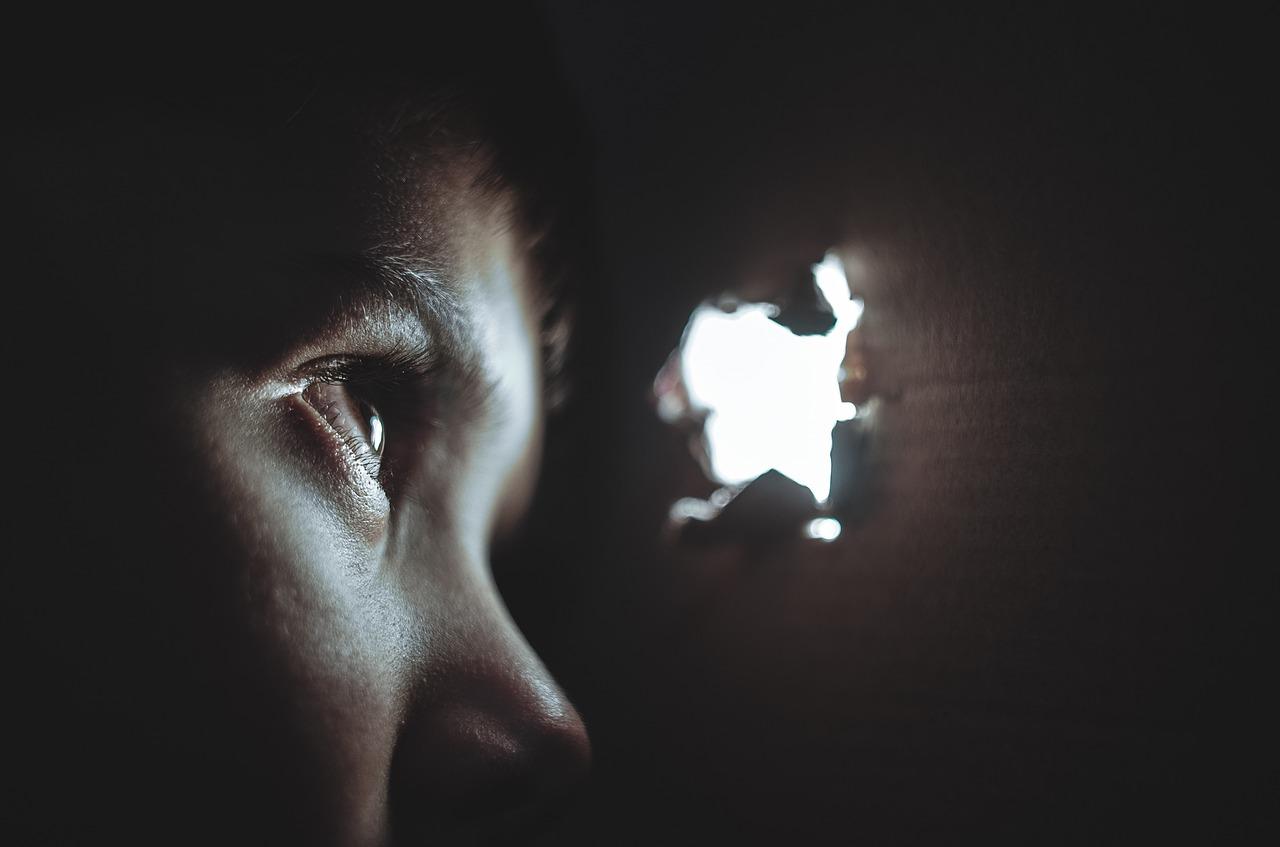
A child's sense of sight develops over a period after birth. It is most vulnerable during the first seven to eight years of life. As a child grows, there may be changes in their vision and this can impact their learning. They may not be able to express their difficulties with seeing; hence, most vision-related issues go undetected by parents and teachers. Therefore, a formal vision check-up is important at this stage.
At birth, a child's vision, which is poor, grows very fast along with the brain. By 3 months of age, a baby is able to fix their gaze at close range and thus smile at their mother. This is an important landmark in a child's vision milestone. From here on, the child's vision keeps developing till 5 years of age, when they are able to read 6/6 on the vision chart with each eye, provided their visual development is normal. The child is also able to appreciate depth perception (3-dimensional views). Any eye disease occurring during this time has a great effect on the achievement of normal vision. The presence of any problem, if detected early and treated promptly, can restore vision to normalcy.
Vision screening
This is a process of checking the visual functions. Different techniques of vision estimation are available and they vary based on the age of the child. Even when quantification is difficult, a comparative qualitative examination is useful.
In developed nations, this is done as a routine procedure as early as a few weeks after birth by the attending pediatricians during clinical examination of the babies. In our setup, a primary healthcare provider like a pediatrician, physician, nurse, or even a teacher can detect visual problems. A child 'screened' should be referred to the eye doctor promptly. In the first year, one has to look for the steadiness of the eyes, signs of abnormality in the size, shape, movements, and color of the eye, the position of the eyes, etc.
Vision screening for premature babies
Special screening is done at the first month of life for premature babies born within 32 weeks of pregnancy, low birth-weight babies weighing less than 1800 g, and all sick babies, irrespective of the gestational age and birth weight.
In recent times, the survival rate of premature babies in India has increased, thanks to improved neonatal care. As a result, Retinopathy of Prematurity (ROP) is also on the rise apart from the associated squeal of prematurity.
When a child is born pre-term, the development of Retinal Vasculature (development of blood vessels that supply the inner portion of the retina) is not complete. This normally happens in 38-40 weeks. Though most of them develop into a normal mature retina, in some neonates with certain risk factors, the incompletely developed Retinal Vasculature gives rise to Neovascularisation (the formation of atypical, tiny, and leaky fragile blood vessels within the eye). Its complications result in ROP, potentially leading to severe vision impairment. In its early stages, a simple intervention with a retinal laser is sufficient to prevent further complications.
It is recommended that premature and low birth weight babies undergo a thorough check-up of their eyes 1 month after their birth. The condition, if not detected promptly, can lead to bleeding inside the eye, resulting in permanent loss of sight. Usually, this goes undetected silently when the infants are in NICU since other systemic problems warrant more intensive care to save their lives.
From the second year onwards, in addition to the above, a child needs a detailed examination to detect refractive errors that may necessitate the use of spectacles. This applies more to children of parents and siblings with a history of eye ailments. They should have a periodic screening by an ophthalmologist.
In addition to the information given above, it is important you ensure your child eats a healthy diet. You should always include fruits and vegetables rich in Vitamin A in the diet of your child. It can be found in green leafy vegetables, carrots, papaya, and cod liver oil. Ensure your child reads in adequate lighting and avoids doing excessive work that requires a closer, highly focussed look at a very early age, especially using mobile phones. Make sure your child protects their eyes from injuries by avoiding the usage of sharp objects while playing and maintaining basic personal hygiene.
After all, happiness is all about beautiful eyes!
ABCs of Vision Problem
Appearance
- Eyes crossed, turned in or out.
- Eyes 'wander' all the time, part of the time, or when a child is tired.
- Red, watery, or encrusted eyes.
- Drooping eyelid(s).
- Frequent styles or boils on the lids.
- Presence of white pupil.
- Eye injuries result in bruising, swelling, or bloodshot eyes.
Behavior
- Squinting, frowning, blinking, or squeezing of the eyes.
- Thrusting head forward or backward while looking at distant objects.
- Rubbing the eyes.
- Turning the head to use only one eye.
- Tilting the head to one side.
- Placing the head close to a book or desk when reading or writing.
- Closing or covering one eye, especially in the sunlight.
- Tripping, stumbling, or daydreaming excessively.
- Afraid of venturing in the dark or unable to see in ambient light.
Complaints
- Headaches.
- Eye pain.
- Nausea or dizziness.
- Burning, scratching, or itchy eyes.
- Blurred or double vision.
- Words that move or jump while reading.
- Blurred vision when looking up after close work.
- Unusual sensitivity to light.
Eye Problems in Children
- Refractive Errors: Refractive errors are said to exist when light entering the eye does not get focussed in the back of the eye for us to see clearly. This could result in short or long-sightedness or a condition called Astigmatism. Children affected by such a condition need to wear glasses regularly if prescribed by their ophthalmologist. A regular eye checkup, once in 6 months is needed in children less than 5 years of age and once a year after that.
- Squint or Lazy Eye: Squint is a misalignment of the two eyes pointing in different directions. Such misalignment may be constant for a few, while it may be intermittent for others. The deviation of eyes may be in any direction-inward, outward, upward, or downward. If a child is not treated at the appropriate time, a condition called Amblyopia occurs, which eventually leads to permanent loss of vision. Treatment for Squint involves immediate consultation with an eye doctor and most of the time, warrants surgery.
- Cataract: Unlike popular belief, cataract is not a disease confined to adults and the elderly. Children are also vulnerable to this condition. A cataract is a clouding or opacification of one's natural crystalline lens used for focusing light in the back of the eye. It causes blurring of vision and if not treated on time, can lead to permanent loss of sight due to Amblyopia. Treatment involves surgical removal of cataracts with or without artificial lens implantation. Parents who've had cataracts in their childhood should have their children screened as early as a few weeks of age since it can be inherited.
- Allergic conjunctivitis: This condition occurs when eyes come in contact with allergens like smoke, dust, pollens, animal hair, feathers, etc. It is characterized by redness, tearing, itching, and ropy discharge from the eyes. Prevention involves avoiding exposure to dust, frequent washing of the eyes and face, cold compresses with ice packs to avoid itching and rubbing of the eyes and appropriate treatment by the eye doctor. Off-the-shelf usage of steroid drops should be avoided as they can have vision-threatening side effects.
- Problems with one eye: Whatever the reason may be if a child does not see well with one eye, the brain starts to ignore that eye, which subsequently goes into disuse and becomes lazy, leading to 'Amblyopia.' If this condition goes undetected early in life, it can lead to an irreversible loss of sight. Most of the time, this happens in conditions like squint (deviation of one or both eyes from its normal, straight-ahead direction), nystagmus (abnormal dancing movements of the eyes), a child not wearing spectacles when needed, any obstacle in clear viewings like Cataract or Tumour, and Haemorrhage or Opacification (discoloration) of the front part of the eyeball.
Discover how myopia affects your child's vision. Explore causes, symptoms, and treatment options now!























Comments
Edit
Comment Flag
Cancel Update