
Expert Insights On Staying Sun-safe In Summer: Answers to Parent Queries
Team ParentCircle
Renowned pediatrician Dr Rajath Athreya answers your questions on summer care for children

Q. My 2-year-old develops severe prickly heat very easily. What can I do to prevent prickly heat?
Heat in summer can cause a number of issues ranging from mild to severe prickly heat, sunburns, heat exhaustion, and heatstroke. Prickly heat is an itchy, raised, reddish rash seen on the face, neck, back, and groin folds. It is usually harmless and can be avoided by taking the following measures:
- Dress in light, loose-fitting cotton clothes.
- Use lighter bedcovers, and avoid blankets.
- Take cooler showers.
- Avoid perfumed soaps, shower gels and creams.
- Drink plenty of water.
Once prickly heat appears, soothe your baby's skin and make your baby feel comfortable:
- Don't scratch the itchy skin. Instead, gently pat the skin.
- Cool down the skin with an ice pack or a washcloth.
- Apply calamine lotion to your baby's skin.
- If itching is severe, your child can take antihistamine medications after consulting with a pediatrician.
Q. My 3-year-old sweats profusely and feels very uncomfortable during summer. Is it okay to keep the AC on all the time or will it make my child's nose and skin dry?
It should be fine to keep the AC on. Air-conditioning keeps cool air circulating in your home. The air may lack humidity and you may find the nasal passages drying out after prolonged exposure. This won't pose major health risks. Using saline nasal drops may help. Avoid heavy bedding and stick to cotton bedcovers and lightweight cotton blankets that should help the skin.
Q. My 5-year-old wants to spend a lot of time in her kiddie pool or playing on our terrace. I am worried about the intense heat. What time during the day are the sun's rays most harmful?
This is an important question. In the peak of summer, between 11 a.m. and 3 p.m., the sun's ultraviolet (UV) rays are strongest, and the temperatures will be high during this time.
Here are some tips that can help your child stay sun-safe:
- Keep your child in the shade between 11 a.m. and 3 p.m.
- Let her dress appropriately—loose-fitting clothes with long sleeves, dresses that cover the legs, fabrics with tighter weaves, and wide-brimmed hats to protect the face, neck, and back of ears.
- Don't allow your child to spend long, uninterrupted time in the sun.
- Ensure that she drinks plenty of water! Children don't drink water to quench their thirst when they're distracted by play and other activities. So, remind your child to drink enough water.
- Your child can use sunscreen with an SPF (sun protection factor) of at least 30. She can use two teaspoons of sunscreen to cover her face, back of neck and ears, legs, and arms. She can use another two teaspoons to cover the rest of the body if entering a swimming pool. Ensure that your child applies a water-resistant sunscreen immediately before entering the pool. Water bodies reflect UV rays, so make sure your child uses eye protection.
Q. My daughter just completed 11 months. Can I use sunscreen on her?
For babies below 6 months of age, avoid direct exposure to harsh sun for prolonged periods. Sunscreens have chemicals that may not suit a baby's sensitive skin. The best protection would be appropriate clothing and a baby cap. After the age of 6 months, sunscreen lotions can be used. So, yes, you can use sunscreen on your 11-month-old baby's exposed skin.
Q. My 10-year-old gets a headache when she spends just about 10 minutes out in the sun. It gets worse in summer. Is there anything I can do to help her?
Headaches in the hot and bright summer months are not uncommon. Harsh light can be a trigger for migraines. Dehydration is another cause of headache. Avoiding triggers, wearing sunglasses and wide-brimmed hats, and drinking plenty of water may help your child.
Q. My child always gets extra cranky in summer and doesn't eat well. He is 4 years old now. What could be the reason and how can I help?
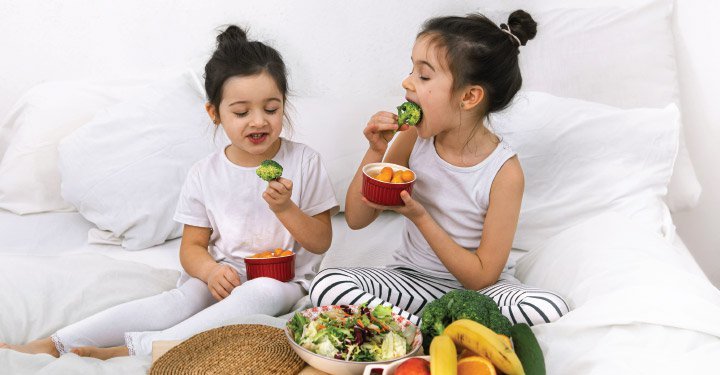
In summer, children may be more thirsty and may have less of an appetite for heavy meals. Provide food options based on the season. You can give your child summer fruits like watermelon and mangoes and fresh crunchy vegetables like cucumber. Provide smaller portions and give an extra meal or snack as necessary. Ensure that your child is adequately hydrated with water and tender coconut water (avoid sugary drinks and fruit juices).
Dr Rajath Athreya is a senior consultant (Pediatrics and Neonatology) in Bengaluru.
If you have a question, mail us at editorial@parentcircle.in























Comments
Edit
Comment Flag
Cancel Update