
A Guide To Scalp And Hair Care: Expert Answers To Your Biggest Questions
Team ParentCircle
Worried about your child’s scalp and hair health? Dr Sushil Tahiliani answers most common questions, from tackling dandruff and hair fall to choosing the right hair care routine. Get practical tips and expert advice to keep your child’s hair healthy, strong, and well-nourished!
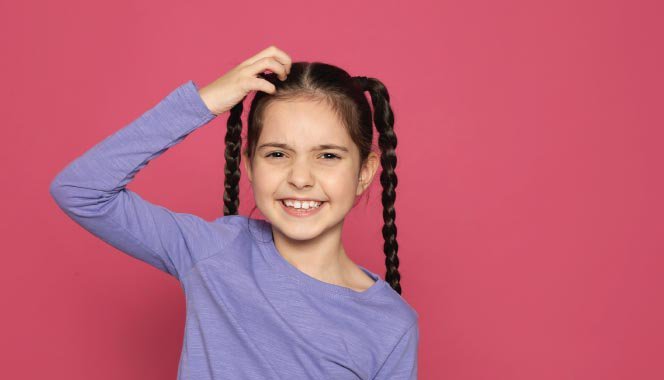
Q. My 5-year-old's head is a camp for lice and nits. No matter what I do, they keep coming back. We live in a joint family, and ensuring everyone's scalp is clean at the same time is not possible. Is there something I can do to make my child's hair undesirable for these pests?
It's best to examine and treat all affected family members simultaneously. Since it appears that it's difficult in your case, please treat your child along with your immediate family with appropriate medication. The application of an anti-lice agent on hair and scalp should be repeated after 10 days, as the agent may not be fully effective against the embryo of lice present in the nit. (The nits hatch in 10 days.) Please keep the hair short, wash it regularly, and keep a separate comb for each family member. Even pillows should not be shared, and pillow covers need to be changed regularly.
Q. How do I get rid of nits from my 3-year-old's hair? Even after I treat her hair with anti-lice shampoo, the nits remain on the hair.
Nits are eggs laid by lice. These are glued to the hair shaft. After 10 days, the eggs hatch into lice, leaving behind the empty eggshells. These empty shells have no medical significance. However, for aesthetics and to allay anxiety, patients insist on getting rid of them. Some methods that may help: Using a fine-toothed comb, and application of diluted vinegar.
Q. My teen has severe dandruff. He has an itchy scalp and develops small red spots when the itching gets worse. His dermatologist has given him a shampoo. But I'm apprehensive about these chemical-laden anti-dandruff shampoos. Are they safe? How long does it take to treat dandruff?
Adolescence is characterized by increased levels of sex hormones. Along with other well-known changes brought about by these hormones, the sebaceous glands get active and produce sebum (oil). Some fungi, which are among the healthy microorganisms present on the skin surface, feast on sebum and tend to overgrow. The skin reacts to this overgrowth by getting scaly and itchy. The anti-dandruff shampoos have antifungal ingredients that control this fungal overgrowth. As the shampoo effect wears off in a couple of days, you need to use the shampoo regularly. It's as safe as using toothpaste daily to maintain healthy teeth. I'm sure we have got used to using chemical-laden toothpaste!
Q. My teenage daughter is very worried about her hair fall. We have recently shifted to a new locality, and I think the water change is affecting her hair. Since we can't change the water, is there any other way to control hair fall?
The human scalp has about one lakh hairs. Each hair has a life span of 210 years. After this life span, the individual hair stops growing and is shed with the root, only to be replaced by a new strand. This means every healthy human is supposed to shed some hair daily (50 -100 strands). The increased hair loss happens due to various hair, scalp, or internal conditions, which can be diagnosed by a dermatologist. Water used to wash hair and scalp cannot penetrate to the depth of 6 -7mm, where a hair root is located, nor does it have the power to weaken the roots in an instant. If water had such power, it wouldn't work selectively on scalp hair; it would affect body hair, too.
Q. My teen's scalp is full of circular patches which are itchy and scaly. He has tried shaving his head, and applying oil and medicated shampoos. As more flakes appear and the patches swell when oil is applied, he has stopped applying oil. What is it and how do we make it go away?
Your son appears to be having a localized version of a condition called psoriasis. It's an immune-mediated condition, seen more commonly in people with a genetic predisposition to it. It affects about 2% of the worldwide population and can be managed well through a confirmation of diagnosis and appropriate treatment. You should take him to a dermatologist.
Dr Sushil Tahiliani is a consultant dermatologist at PD Hinduja Hospital and Medical Research Centre, Mumbai






























Comments
Edit
Comment Flag
Cancel Update