
What you should know about the papaya: Health benefits, nutrition and uses
Arun Sharma
Health benefits of papaya range from weight loss to protection from cancer. Read on to know about the benefits of eating papaya and drinking papaya leaf juice
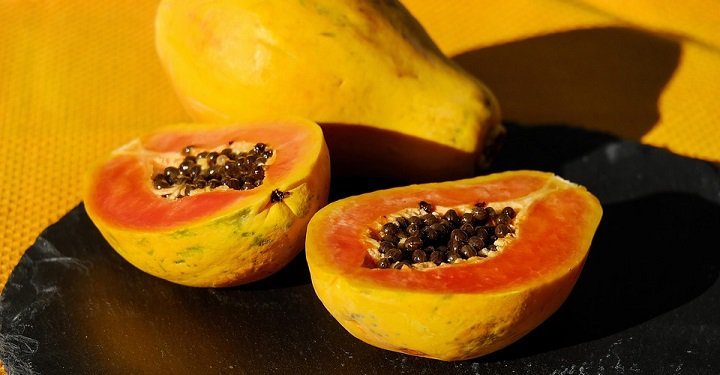
The papaya is believed to have originated in southern Mexico and Central America. Records say that, from its area of origin, the papaya was first brought to Panama and then taken to the Dominican Republic. It is from here that papaya spread throughout the world.
The word 'papaya' is of Spanish origin, which, in turn, is borrowed from the Tano word 'papia'. It is called pawpaw or papaw in Australia and a few Caribbean countries. The botanical name of papaya is Carica papaya.
Packed with nutrition and calories, papaya is synonymous with healthy food. Years of use, along with modern research, have revealed numerous uses of papaya and papaya's benefits for health.
Usually, most varieties of papaya are either oval or pear-shaped with smooth skin; however, round varieties exist as well. Fresh, ripe papaya is juicy and sweet. So, it is usually consumed as a dessert. However, unripe papaya is consumed as a vegetable. The fruit is also processed to produce products like jam, ice cream and juice. But no matter which way we consume it, papaya benefits our health immensely.
Nutritional value of papaya (raw, 100g)
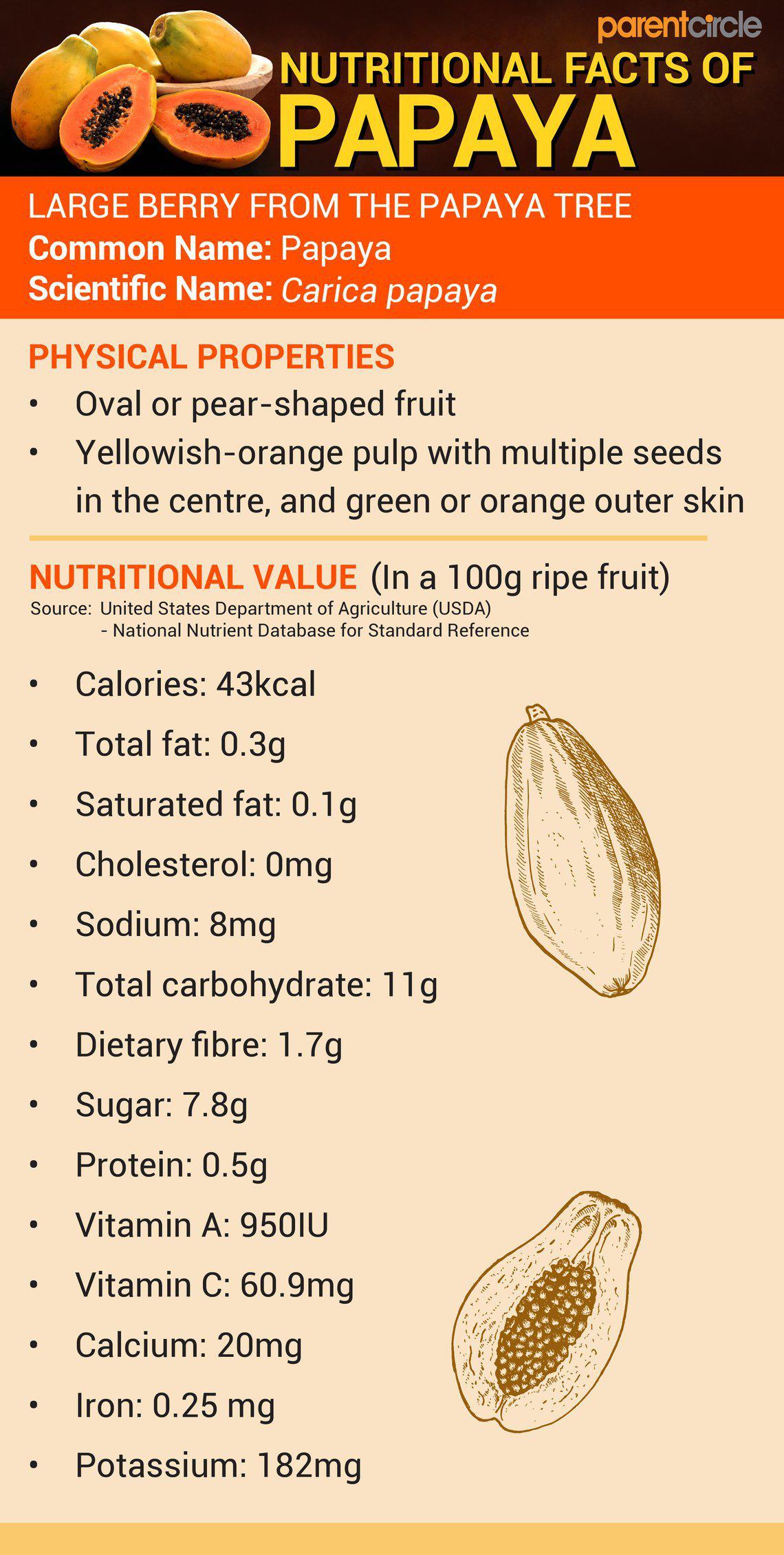
Data based on USDA (United States Department of Agriculture) - National Nutrient Database for Standard Reference
Health benefits of papaya
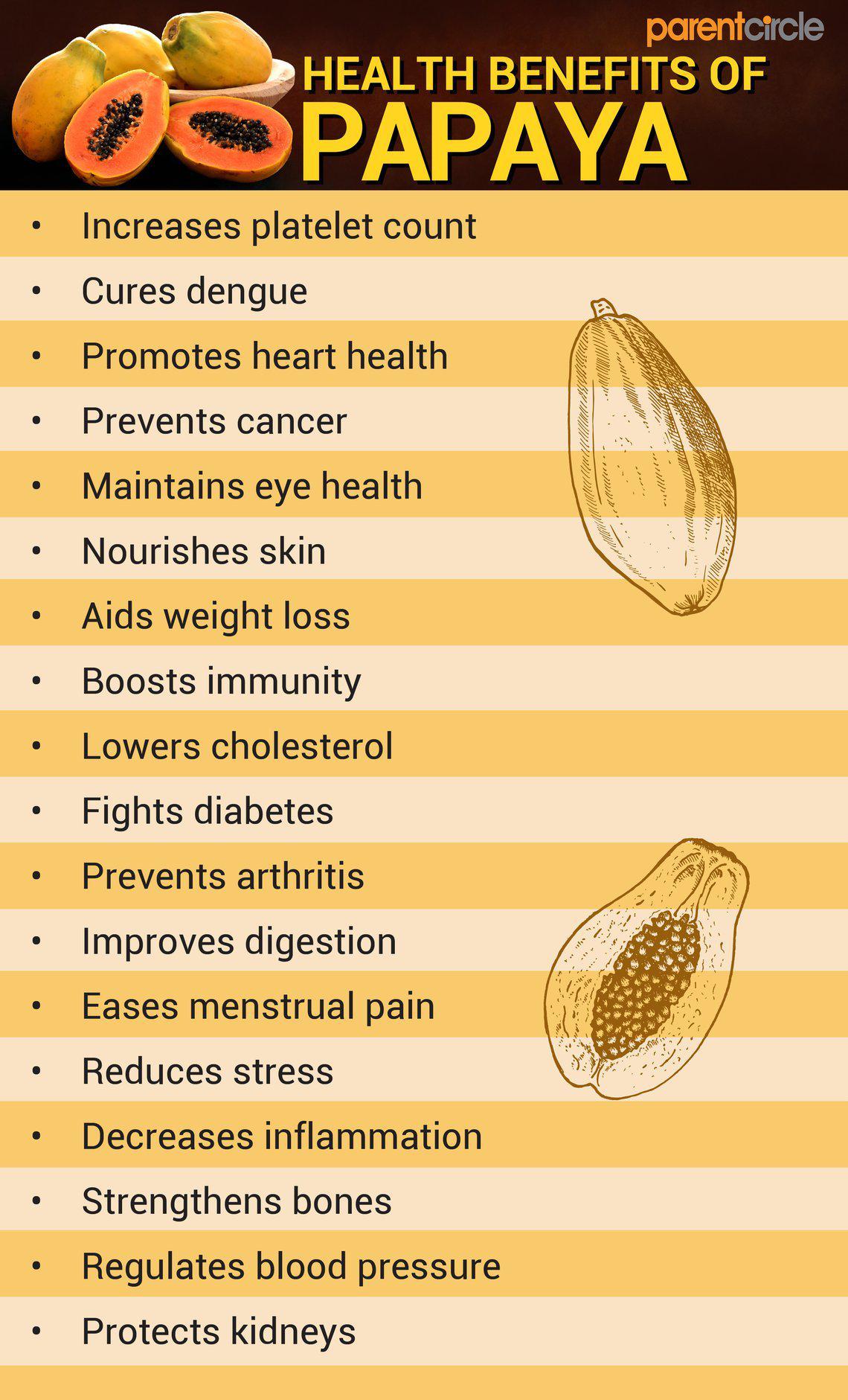
To boost their health and cure any ailments, an increasing number of individuals are now turning towards nature. And, what better way to do this than by eating papaya. Some of the many benefits of eating papaya include:
- Improved heart health: Being rich in fibre, Vitamins A and C, papaya prevents the oxidation of cholesterol and its build-up and deposition in the blood vessels. Thus, papaya benefits not only heart health but also decreases the chances of having a heart attack and high blood pressure.
- Help with weight loss: Being low in calories and sugar, and high in fibre, one may consider papaya for weight loss. It is an ideal food for this purpose. The high amount of fibre makes an individual feel full for a long time after consuming papaya.
- Nourishment of skin: Papaya's benefits for skin are many. Papaya skin contains an enzyme called papain. Massaging with papaya peels helps with skin whitening. It also inhibits the growth of hair, thus reducing unwanted hair growth. Papaya's benefits for face include repairing skin damage, exfoliating and hydrating the skin; this increases skin elasticity and reduces wrinkles. So, there are quite a few benefits for the skin in eating papaya.
- Removal of dandruff: According to Daulatabad et al's study, 'Prospective Analytical Controlled Study Evaluating Serum Biotin, Vitamin B12, and Folic Acid in Patients with Premature Canities', published in the International Journal of Trichology (2017), folic acid deficiency is associated with premature greying of hair. Papaya is rich in folic acid and antioxidants promote the growth of healthy hair. Papaya's benefits for hair also include its anti-dandruff properties. Applying a mixture of papaya vinegar and lemon juice to the scalp helps fight dandruff.
- Protection from cancer: Papaya has high levels of fibre, flavonoids, antioxidants and other compounds. Consuming papaya in adequate quantities regularly decreases the likelihood of developing prostate cancer and colon cancer.
- Improvement of eye health: Vitamin A is essential for healthy eyes and to prevent macular degeneration. As papaya is rich in Vitamin A, regular consumption of the fruit ensures that we get the vitamin in adequate quantities. Flavonoids and Vitamin A also prevent macular degeneration by keeping the mucus membrane of the eyes healthy.
- Better immunity: Being rich in multiple vitamins, minerals and antioxidants, consuming papaya helps boost immunity and protect from several ailments.
- Increase in platelet count: Dharmarathna et al in their study, 'Does Carica papaya leaf-extract increase the platelet count? An experimental study in a murine model', published in the Asian Pacific Journal of Tropical Biomedicine (2013) recommends papaya leaf extract to boost the production of thrombocytes and erythrocytes (red blood cells).
Treats dengue: According to Priya Kathpal, a leading nutrition consultant from Mumbai, "Papaya is a very popular fruit because it is easily available, is affordable, and has a great taste. It has antioxidants and anti-inflammatory and digestive properties. It also has anti-aging and skin-healing properties.
Traditionally, papaya leaves are used as a cure for dengue, an infection that causes a drop in blood platelet counts. Dengue patients are asked to drink the extract or juice of papaya leaves to increase the platelet count. Case studies have indicated that the extract or juice of papaya leaves contains chymopapain and papain which help boost platelets count in dengue patients and relieve symptoms.
Papaya leaf extract preparations are available in the form of capsules and liquid formulas. About 20-25 mL of papaya leaf juice is recommended twice a day for a week for a quick increase in platelet count. However, papaya leaf juice may lead to stomach upset in some cases. So, it's better to start with a small quantity and increase it gradually."Improves digestion: The enzyme papain in papaya helps break down protein, which, in turn, improves digestion. For a long time, papaya has been used to relieve constipation. Because of its protein-breaking properties, papaya is also used as a meat tenderizer.
- Fights inflammation: Papaya is a storehouse of antioxidants that are easily absorbed by our body. These beneficial compounds fight and reduce inflammation and heal wounds and burns.
- Controls blood sugar: Even though papaya is sweet, it has a low glycemic index. Studies have found that eating raw papaya helps maintain blood sugar levels because of its high fiber content.
- Protects against arthritis: Papaya is good for bone health as it has anti-inflammatory properties along with Vitamin C. These reduce the risk of developing various forms of arthritis later in life.
- Eases menstrual pain: Papaya is a very good remedy for menstrual pain and cramps. The enzyme papain helps regulate and ease flow during menstrual periods, thereby reducing pain and cramps.
Benefits of raw papaya
While most of us prefer to eat ripe, sweet papaya, unripe papaya is consumed as a vegetable and confers numerous health benefits such as:
- Cleansing the colon: Raw papaya is rich in fiber. These bind with the toxins in the stomach, promote bowel movements, and prevent constipation - thus cleaning the colon and improving gut health. Consuming green papaya also provides relief from heartburn, stomach ulcer, piles, and diarrhea.
- Supplying nutrients readily: Carotenoids are essential for maintaining good health. According to a study by Schweigert et al, the carotenoids from papaya were more readily absorbed by the body compared to those from carrot and tomato, which are also carotenoid-rich foods.
- Reducing blood glucose: The beta cells of the pancreas play an important role in the synthesis and secretion of insulin. In their study, Miranda-Osorio found that consumption of papaya led to an improvement in hyperglycemia.
- Promoting lactation: In her book, 'Boost Your Breast Milk', Alicia J Simpson says that Chinese researchers were able to establish that papaya consumption increased milk production in lactating mothers.
Uses of papaya
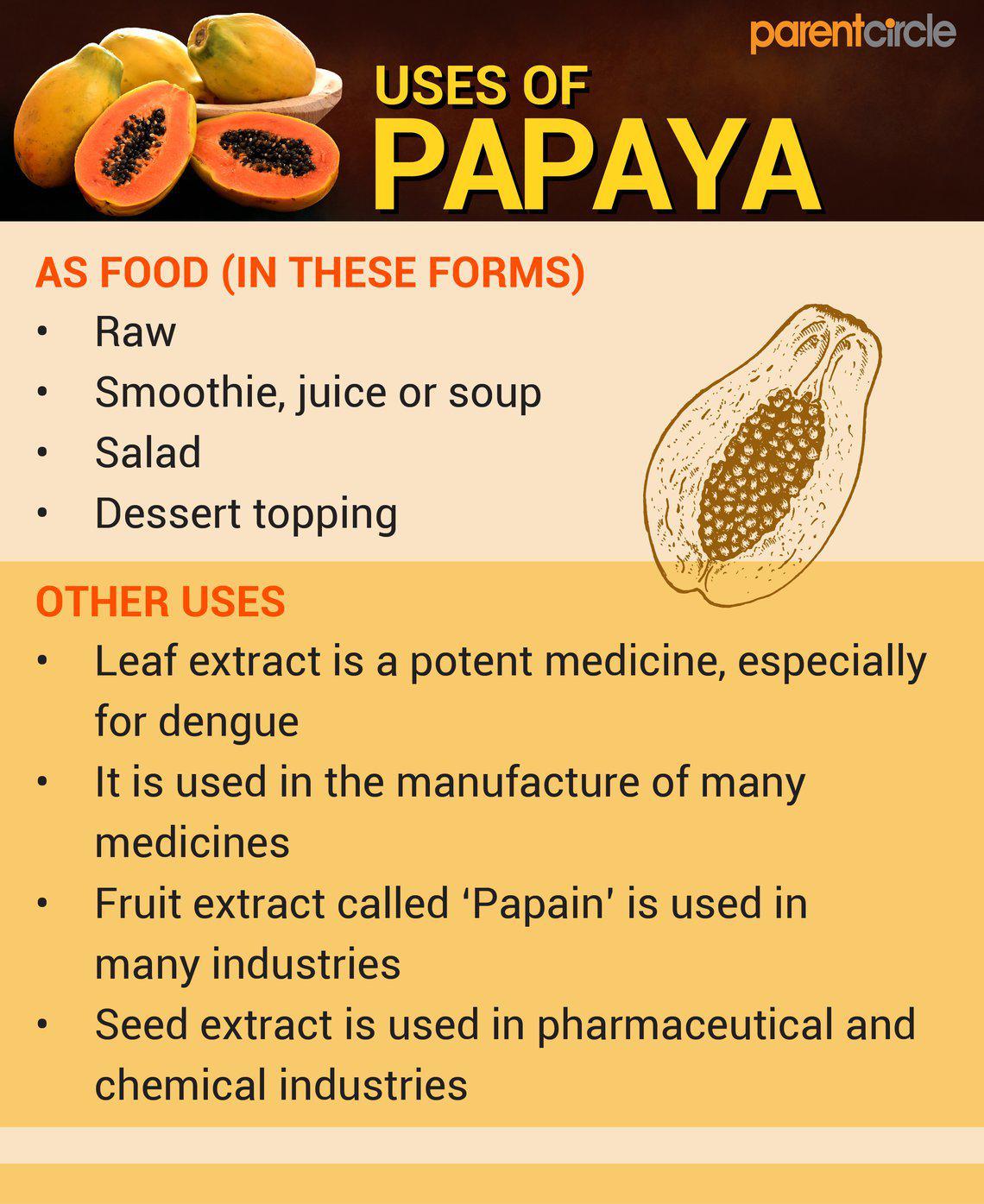
Most of us believe the papaya plant to be a tree, which isn't true. Though the stem of the papaya plant resembles a tree, it is a herb that produces an edible fruit called papaya. There are many uses of papaya. When it is ripe, it is consumed as a fruit, and when it is raw/green, it is consumed as a vegetable. Papaya is also used as medicine to help with constipation and other stomach disorders, skin disorders, respiratory ailments, and menstrual problems. Papaya juice is gaining popularity as it is also beneficial to health.
In addition to the fruit, the sap (or latex) extracted from papaya is used in industries for clotting milk and manufacturing cosmetics and toothpaste.
Uses of papaya leaves
In addition to the fruit, there are many uses for papaya leaves as well. Papaya leaf extract has medicinal properties and is used in the treatment of dengue to improve platelet count, as an antimicrobial to stop the growth of various bacteria, to protect against ulcers of the digestive tract and improve digestion, and strengthen the immune system. Rowe et al found in their study that, "Papaya enzymes assist with maintaining a clean and moistened mouth, free of bacteria and assisted with the increase in saliva flow."
Benefits of papaya for babies/children
Rich in antioxidants, vitamins, and minerals, and helpful in preventing and treating various health conditions, can papaya be given to babies or young children? Of course, yes. It improves digestion and metabolism, boosts eyesight and immunity, and keeps the skin healthy.
When and how to introduce papaya to your baby
You can introduce papaya into your child's diet after she completes 7 or 8 months. If your child is an infant, you can deseed the papaya and mash it or pure it. If your child is a toddler or a pre-schooler, you can serve papaya after cutting it into small chunks.
However, children suffering from latex allergy or having cystic fibrosis should not be given papaya, as it may cause health complications.
Side effects of papaya
There are many ways we can make papaya a part of our diet. And, the benefits the fruit confers are many. However, some individuals may experience certain side effects after eating papaya. These could include an upset stomach due to the high fiber content, allergic reactions like rashes and itching, abdominal cramps and pain, difficulty breathing, dizziness and headache, and carotenemia.
Is papaya safe to eat during pregnancy?
According to Dr Neha Sanwalka Rungta, pediatric nutritionist and director of NutriCanvas, "Raw papaya should be avoided during pregnancy. Raw papaya contains the enzyme papain which is known to cause uterine contractions and miscarriage. Hence, pregnant mothers should avoid eating raw papaya, especially during the first trimester."
Ripe papaya is safe to consume overall. Quantity should be half a bowl and can be consumed once or twice a week. However, if a mother is worried, she can always eat other fruits in place of papaya.
The papaya is not only good to eat and full of nutrients but is great for the skin as well. It comes in powdered form, juices, and even as a herbal face wash. If you love the fruit, check out the following items which contain papaya as an ingredient.
Papaya powder for eating
Papaya juice for the skin
Papaya herbal face wash
Interesting papaya facts
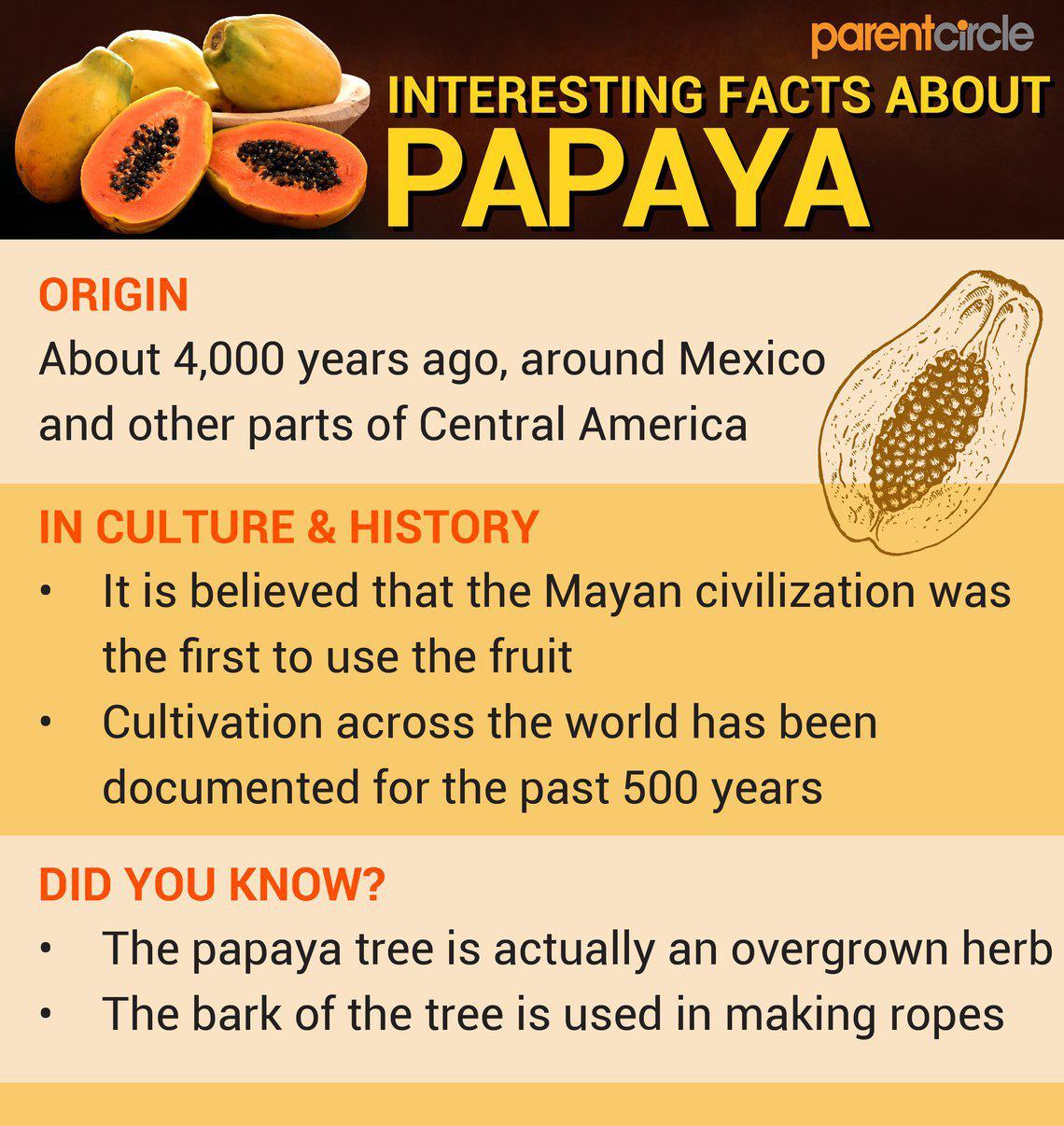
- Although papaya is called a fruit, botanically, it is a berry.
- The papaya plant doesn't have branches.
- The seeds of papaya are ground and used as a substitute for black pepper.
- Papaya contains the enzyme papain, which is also used as a meat tenderizer.
- Papaya leaf tea is believed to protect against malaria.
The Dot health and safety program empowers children with the skills to stay safe and healthy and make healthy food choices.























Comments
Edit
Comment Flag
Cancel Update