
Kalaripayattu for kids: What my child learns from this ancient martial art
Sahana Charan
The ancient Indian martial art form is still relevant to today's children as it was to the warriors of yore. Here's how the holistic nature of Kalaripayattu helps in awareness of mind and body
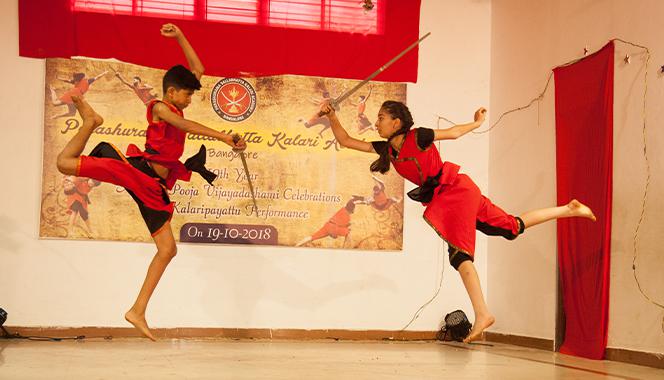
As the sky changes myriad hues above the tiled roof of the traditional training space, the sound of wooden sticks and the clank of metal weapons can be heard above the faint rumble of the surf. Arriving a little early to take my 13-year-old son home from his class, I watch mesmerized as students, young and not-so-young, crouch, leap and bend while following the instructions of their master.
I am in the verdant environs of Spaces - an important center for art and culture in Chennai founded by renowned choreographer Chandralekha - and a Kalaripayattu class is in session. Known to be a lethal warfare technique, to me this ancient martial art form seems like poetry in motion - graceful and lyrical.
What is Kalaripayattu?
Kalaripayattu is one of the oldest traditional martial art forms in the world. It has its origins in Kerala, with many warrior clans in the region practicing it to protect their land. 'Kalari' means battlefield and 'payattu' means to practice or gain training.
The history of Kalaripayattu
According to Hindu mythology, the warrior-saint Parashurama created Kalaripayattu and trained warriors in this martial art form. There are also references to Kalari in Sangam literature. The martial art is said to have gained prominence during the reigns of the Chola, Chera and Pandya dynasties.
Kalari seems to have tenuous links to kung fu and karate, with some versions maintaining that it inspired the other two. But, this is unsubstantiated as there is little documented information available on ancient martial art.
Learning the techniques of Kalaripayattu
A typical session starts with warm-up exercises which include bending, stretching and raising the legs. This progresses to movements that build the body's strength and stamina and then a component called meypayattu, a series of defending and attacking stances that are aimed at improving flexibility. All these exercises - including poses that imitate animals such as the elephant, tiger, wild boar and snake - are part of the first phase of Kalari that every student begins with, called meythari.
My son is in the second phase right now, the kolthari, which involves practicing with wooden weapons. After completing this, it would be time to go on to the metal weapons, followed by the phase in which Kalari students learn to defend themselves with their bare hands. In the final stage, students learn traditional treatment and therapy based on marma (vital points in the body). The Kalari instructor will teach the last one to only those students, who he believes will not misuse their knowledge to hurt anyone.
While the Kalari training follows the traditional path, it is often slightly tweaked in tune with modern times. For example, in many Kalari classes in urban centers, the practice of starting a session by rubbing oil over the body is avoided and instead, warm-up exercises that incorporate yoga poses are woven into the practice sessions.
Why my child learns Kalaripayattu
Of late, there is a renewed interest in Kalaripayattu among the urban populace, influenced partly by references in popular culture. Remember the cartoon series, Kalari Kids and the kicks and leaps in mainstream Hindi movies Baaghi and Junglee? Not to mention its popularity as a self-defense technique, fitness routine and tool for improving body confidence.
But if you ask me why I enrolled my son to learn Kalari, my reply would be different. As a parent of a student of Kalaripayattu, the holistic approach of the martial art is what appeals to me the most.
How my son adapted to this martial art
Maybe it is a little early to tell, but who should know better than me the real advantages of learning Kalari? When I first enrolled my child for Kalari training, he was a few months short of his 11th birthday. We had a fair knowledge about the martial art form because of a family member, who is a practitioner and my son was inspired enough to try it out. Of course, he was oblivious of how strenuous and demanding the sessions would be, at that time.
In the first few months, there was sulking and complaints about leg cramps and backaches. But as he moved from one phase to the other, we (the parents) took note of the advantages - the physical fitness, the calm demeanor and the confidence in mind and body.
Benefits of Kalaripayattu
|
"Kalaripayattu is not just a martial art; when children learn the technique, they not only improve their physical fitness but also their concentration and decision-making skills; it promotes positive behavior and interaction with others. So, when children train in Kalaripayattu, they will derive a positive influence from it even in their adult life," says Roy George, Kalaripayattu instructor at Spaces Mandapa Kalari.
The benefits of Kalaripayattu are immense but misconceptions abound. In my interactions with other parents on Kalari, the most frequent question asked is - isn't it associated with dangerous moves and violence?
Instructors and proponents of Kalaripayattu will tell you that even though it is a fighting technique, one of its important principles is to resolve conflict with tact.
"In a difficult situation, a Kalari practitioner will know how to act in the right way, in a calm and controlled manner. In that sense, this martial art actually promotes peace," says Roy.
At a time when children's minds are numbed by gadgets and sedentary living has become the norm, this martial art seems more relevant today than ever. One exponent describes it saying, "Kalaripayattu is a way of life." That is exactly the lesson I would like my child to take home.
























Comments
Malini Aug 14, 2019
Edit
Comment Flag
Cancel Update