
Jackfruit Health Benefits, Nutritional Value, And Calories: A Superfruit Rich In Fiber And Antioxidants
Arun Sharma
Jackfruit is packed with nutrients, but is it suitable for children and pregnant women? Learn about the jackfruit nutrition facts (100g) and be aware of potential jackfruit side effects before adding it to your diet
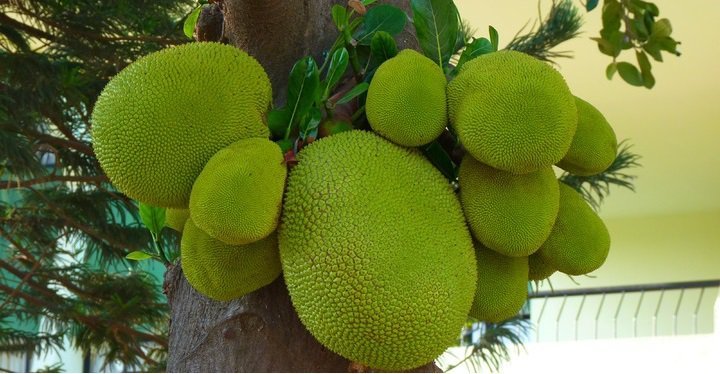
A tall, evergreen plant with glossy, oblong leaves, the jackfruit tree is common in South India. Although the jury is still out on the origin of the jackfruit tree, it is widely believed to be indigenous to the humid mountains of the Western Ghats of India.
The number of jackfruit health benefits has made it the most popular fruit after the mango and the banana. Especially in Kerala, how much the people of the state love jackfruit can be gauged from the fact that in the year 2018, it was declared the state's 'official fruit'!
While the biological name of jackfruit is Artocarpus heterophyllus, it is known by various names in different languages of India - kathal (Hindi), chakka (Malayalam), palapazham (Tamil) and panasa (Telegu and Oriya).
Considered a member of the mulberry, breadfruit, and fig family, many varieties of jackfruit are cultivated in India. However, all of them are broadly grouped under two categories - soft flesh and firm flesh. Can you guess how many varieties of jackfruit are grown in India? Thomas, a native of Chakkampuzha, a village in Kottayam district of Kerala, grows 210 varieties of jackfruit in his orchard!
This bulbous, fibrous fruit with a spiky exterior tastes sweet when ripe. However, the raw jackfruit has a neutral taste. As a result, an increasing number of vegans are now opting for jackfruit as a replacement for meat. The other reason is the presence of high amounts of vitamins it provides.
Jackfruit nutritional value (per 100g)
- Calories 95
- Total fat 0.64g
- Saturated fat 0.2g
- Cholesterol 0mg
- Sodium 2mg
- Total carbohydrate 23.25g
- Dietary fibre 1.5g
- Sugar 19.08g
- Protein 1.72g
- Vitamin A 110IU
- Vitamin C 13.7mg
- Calcium 24mg
- Potassium 448mg
- Iron 0.23 mg
Data based on USDA (United States Department of Agriculture) - National Nutrient Database for Standard Reference
Jackfruit nutrition facts (ripe, 100g)
- Calories 302kcal
- Total fat 0.15g
- Sodium 1.62mg
- Carbohydrate 14.01g
- Fibre 3.62g
- Protein 2.74g
- Vitamin C 6.73mg
- Vitamin B2 (riboflavin) 0.01mg
- Calcium 35.03mg
- Potassium 279mg
- Phosphorus 23.02mg
- Iron 0.36mg
Data based on NIN (National Institute of Nutrition) - Indian Food Composition Tables (2017)
Jackfruit health benefits
Besides being delicious and having a high nutritional value, the jackfruit is also beneficial to our health in many ways. From assisting in weight loss to protection from cancer, research has revealed several benefits of jackfruit. Let's look at some of them:
Benefits of raw jackfruit
- Improves gut health and prevents constipation: Jackfruit has a high amount of dietary fibre. This promotes bowel movements and prevents constipation. The fibre also binds to cancer-causing chemicals and protects the mucous membrane of the colon.
- Fights anaemia and osteoporosis: Rich in iron, jackfruit helps prevent anaemia and promotes blood circulation. The abundance of various minerals, including calcium, boosts bone health and prevents bone-related ailments.
- Lowers the risk of diabetes: Studies have underlined jackfruit benefits for diabetes. They have shown that raw jackfruit sugar content is very low. Also, raw jackfruit is less acidic. So, it can be consumed as a substitute for carbohydrate-rich foods like white rice. This helps balance blood sugar and lowers the risk of developing diabetes.
- Cuts the risk of heart disease: The high level of fibre in jackfruit helps in reducing cholesterol levels. The potassium present in jackfruit regulates the level of sodium in the body and prevents damage to arteries. Potassium also helps maintain muscle function of the heart and keeps it healthy.
- Helps in weight loss: With research having proved that jackfruit controls weight, consumption of jackfruit for weight loss is slowly gaining acceptance. Because of its high water and fibre content, it makes you feel full for much longer, thus helping to control weight.
- Decreases the risk of cancer: Research has found that the phytonutrients and other compounds present in jackfruit prevent the formation and proliferation of cancer-causing cells within the body.
- Protects skin: Jackfruit benefits for skin include protection from damage caused by exposure to the sun and the ageing process. Compounds present in jackfruit also promote the production of collagen, a fibrous protein found in the skin, bones, and muscles. Collagen helps make the skin firm and strong.
- Enhances vision: Jackfruit prevents age-related macular degeneration and night blindness. Vitamin A in jackfruit helps in maintaining good eyesight and eye health, and protects the eyes from bacterial or viral infections and ultraviolet rays.
Benefits of jackfruit leaves
- Prevents premature ageing: The presence of free radicals in the body damages the cells and speeds up the ageing process. Jackfruit leaves are a rich source of antioxidants, which protect the cells from free radicals.
- Heals ulcers: Boils, skin diseases, ulcers, and wounds cause damage to the skin. The health benefits of jackfruit leaves include ulcer and wound-healing properties. The ash of jackfruit, corn, and coconut shells mixed with coconut oil can heal ulcers.
- Controls diabetes: The study, 'Antidiabetic and Antioxidant Activity of Jackfruit (Artocarpus Heterophyllus) Extract', by Biworo et al, was published in the Journal of Medical and Bioengineering (2015). The study found that jackfruit leaves inhibit glycation of haemoglobin and improve blood sugar levels.
- Inhibits foodborne pathogens: Loizzo et al in their study, 'Antioxidant and antibacterial activities on foodborne pathogens of Artocarpus heterophyllus Lam. (Moraceae) leaves extracts', published in the Journal of Food Science (2010), found that jackfruit leaf extract showed significant antibacterial activity against foodborne pathogens. The leaf extract also showed antiradical and antioxidant properties.
Benefits of jackfruit seeds
Covered by flesh, jackfruit seeds are 2 to 3 cm long and light brown. They are edible and can be consumed after boiling, cooking with vegetables, or grinding and adding to flour. However, since many of us aren't aware of their benefits, we do not consume the seeds and usually throw them away. Research has shown that the flour made from jackfruit seeds contains high levels of protein, calcium, phosphorus, iron, and fibre. Consuming these seeds helps build muscles, prevents anaemia, and improves eyesight. Applying jackfruit seed paste on the skin helps fight wrinkles. Consuming sundried and powdered jackfruit seeds relieves indigestion.
When and how to introduce jackfruit to your baby
Parents are cautious about what they feed their babies. And when it comes to the jackfruit, it does not figure in the list of foods parents would generally give their baby. The tough exterior and the fibrous flesh could probably be the reason. But should babies be kept away from this nutritious fruit, which boosts energy levels and promotes good health?
According to medical experts, babies should be exclusively breastfed for at least the first six months after birth. Solids can be gradually introduced thereafter. However, as far as jackfruit is concerned, it is recommended to introduce it in a baby's diet only after the child is one year old. And the flesh should be removed and cut into very small pieces or made into a puree to prevent choking.
While giving jackfruit to a baby, parents must remain alert and observe their baby for allergic reactions. Children allergic to birch pollen may be sensitive to jackfruit. Also, be cautious about the quantity of jackfruit you feed your child, as it can cause diarrhoea.
Benefits of jackfruit during pregnancy
Pregnancy is a period when the mother-to-be requires good nutrition and care. While certain foods are recommended, some foods considered to be 'hot' or 'cold' are taboo. So, should pregnant women make jackfruit a part of their diet?
Jackfruit is a storehouse of nutrients. In pregnant women, jackfruit helps regulate hormones, promotes fetal development, normalizes blood pressure, and boosts immunity. However, it could also cause stomach upsets, high blood sugar levels, and allergies. So, jackfruit should be consumed with caution and on the advice of an obstetrician.
There is a misconception regarding papaya and jackfruit when it comes to consuming them during pregnancy. These fruits can't be the reason for miscarriage. They are not recommended by doctors because they have high sugar levels which is bad for women with gestational diabetes. Even women with blood-related problems are advised not to consume jackfruit as it leads to coagulation of the blood.
Otherwise, jackfruit is a good source of iron and magnesium. It is also a good source of vitamins, including Vitamin A and C. However, women who are allergic to jackfruit should refrain from eating it.
Various snacks can be prepared from jackfruit, such as chips, which are delicious to eat. Pregnant women can munch on these healthy options.- Dr Sanchita Dubey, Consultant Obstetrician & Gynaecology, Motherhood Hospitals, Noida
Jackfruit side effects
There are two sides to every coin, and this applies to consuming jackfruit as well. While eating the fruit confers numerous benefits, health concerns may also arise in some cases. Some side effects of eating jackfruit are:
- Increase in coagulation in those suffering from blood disorders.
- Allergic reaction in individuals suffering from birch pollen allergy.
- Change in tolerance levels of glucose in those suffering from diabetes.
- In individuals undergoing immunosuppressive therapy, jackfruit seeds can have an immune-stimulatory effect.
- Eating jackfruit at night can make an individual feel sick the next morning, as it takes time for the body to digest the fruit.
- Overconsumption of jackfruit can cause a stomach upset.
Interesting facts about jackfruit
- It is the national fruit of Bangladesh.
- The word jackfruit originated from the Portuguese word 'jaca' which, in turn, is derived from the Malayalam word 'chakka'.
- The jackfruit is the largest tree-borne fruit.
- In a year, a single jackfruit tree can produce more than 200 fruits.
- You can eat jackfruit either ripe as a fruit or raw as a vegetable.
- Jackfruit tree wood is fungus and termite-resistant. It is used in making jewellery, furniture, musical instruments, doors, and windows.
- The leaves are used as fodder for livestock.
- Jackfruit root extract is used to cure fever and asthma. So, from roots to leaves, every part of this tree is useful.
How to choose the best jackfruit
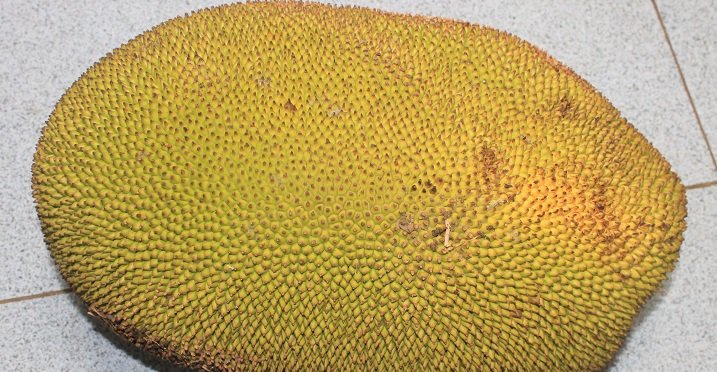
Like any other fruit, begin by checking the skin of the jackfruit. Check for dark, soft spots and the colour of the skin. Ripe jackfruit has yellowish-green skin with some brown patches. The spines in a ripe jackfruit are more widely placed than in a raw one. A ripe jackfruit also emits a strong, sweet smell. Squeeze the fruit with your hands. The ripe one isn't hard and can be squeezed. Do not buy one that is completely brown and very soft. Such fruit rots quickly.
The Dot health and safety program empowers children with the skills to stay safe and healthy and make healthy food choices.



























Comments
Edit
Comment Flag
Cancel Update