
The baby first-aid kit you need in an emergency: Handy guide for new parents
Monali Bordoloi
Do you have a handy first-aid kit for your baby? No? Then read on to find out why you need one and what our doctor recommends you keep in your baby’s first-aid kit
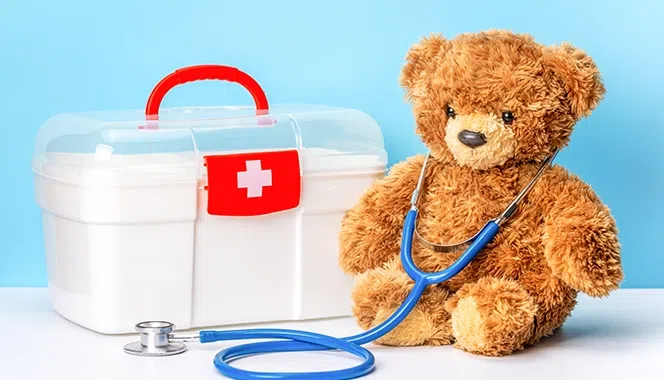
Shalini is a new mom to a 9-month-old daughter. As the baby crawls and learns to walk, she gets injured frequently. The baby fell from the bed the other day and was slightly injured. When Shalini realized that she didn’t have the supplies to treat her baby’s minor cuts and bruises, she decided to put together one first-aid kit.
Shalini is not alone in this—there are many new moms who are clueless when it comes to giving first-aid care to their infants. Issues like fever, minor cuts and bruises, minor bumps, and gas are part and parcel of an infant’s first year, and these can occur at the unlikeliest of times. The more mobile your baby becomes, the more likely they are to fall and hurt themselves.
Keep a first-aid kit handy, and you’ll be prepared for such eventualities.
What is a first-aid kit for babies?
Dr Vrushali Bichkar, consultant pediatrician and neonatologist, Motherhood Hospitals, Pune, says, “Babies often get minor injuries, especially when they start crawling, cruising, and walking. Having the necessary first-aid supplies at home will help you feel prepared to deal with these injuries. First-aid kits are useful to have at home so that if your baby falls ill or gets injured, you have the necessary supplies to give them immediate relief.”
What should you keep in your baby’s first-aid kit?
These are the first-aid kit must-haves for your baby according to Dr Bichkar:
1. Plasters
2. Bandages
3. A pair of small scissors
4. Thermometer
5. Topical antibiotic ointment
6. Antiseptic cream
7. Antiseptic wipes
8. Burn ointment
9. Gloves
10. Ice pack (to keep in the freezer)
11. Painkillers
12. Antiseptic dressings
So, stock these essential items in your first-aid kit.
Dr Bichkar adds that every baby’s requirements may be slightly different, hence the first-aid kit has to be customized based on the baby’s needs. So, if you’re giving your baby prescription medicines, keep those in the first-aid kit too. For example, medicines for allergies should be included in the first-aid kit if your child has any allergy issues.
Apart from that, you can also include a hand sanitizer, fever medicine, saline sprays, medicine dropper, petroleum jelly for diaper rashes, tweezers to remove splinters, and a magnifying glass to view the wound closely. You can also keep a small notebook with emergency phone numbers and note down any specific instructions regarding your child.
Where should you keep the first-aid kit?
You might have all the supplies needed for an emergency at home. However, if those are all over the place and not somewhere handy, you’ll lose precious time scampering for that important medicine and that antiseptic dressing, right?
To avoid those tense moments, always make it a point to store your baby’s first-aid kit somewhere handy, maybe in a cabinet in your bedroom or bathroom.
Other things to keep in mind regarding first-aid kits for babies:
- Keep the first-aid kit in a dry and cool place, out of your children’s reach. Better to keep the kit locked, so that your curious children can’t access the contents.
- If you travel frequently with your children, we suggest keeping a mini version of the first-aid kit for babies in your car too. You never know when you need to use that.
- If you are a soon-to-be or a new parent and putting together a first-aid kit for your baby, ensure that it is durable, waterproof, and easy to carry. You can also opt for a lockable kit, as it is easier to keep it out of children’s reach.
- Check your first-aid kit periodically. Throw out expired medicines and replace them as and when necessary.
- You can also opt for a ready-made first-aid kit—there are a lot of options available in the market. Browse through these before deciding on the one you need.























Comments
Edit
Comment Flag
Cancel Update