
Did you know that apart from the fruit, even mango bark and mango leaves have health benefits?
Arun Sharma
Read on to find out more information about mango tree, uses of mango tree, and its benefits and importance
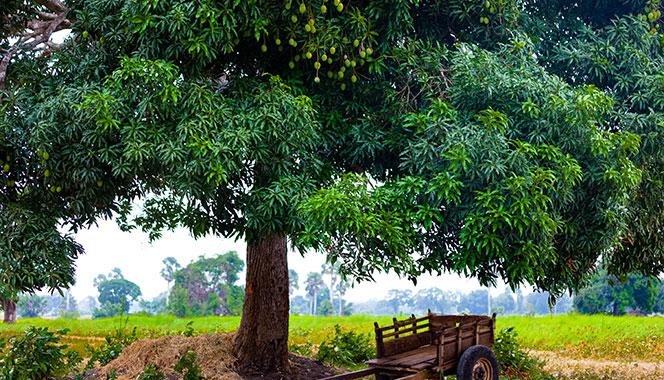
Come summer and most of us conjure up dreadful images of the sun bearing down on us and making our life miserable. But is summer only about unbearable heat and nothing else? Not really, for summer also brings along with it the 'King of Fruits' - yes, everyone's favorite and the divinely delicious mango.
While enjoying the health benefits of mango, have you ever wondered about the importance of mango tree, useful parts of mango tree and uses of mango tree?
The mango tree is an inseparable part of Indian culture and customs and folklore. Considered sacred, the Hindus believe the mango tree to be the abode of gods. So, they use mango leaves to decorate their home on auspicious occasions and while conducting religious rituals.
From Kalidas to Amir Khusrau to Mirza Ghalib, poets across India have waxed eloquent about both the uses of the mango tree and the benefits of mango.
So, how did the mango tree and its fruit come to occupy such an important place in our lives? Let's read on to find more information about the mango tree, the uses of mango tree and useful parts of mango tree.
Fan of the king of fruits? You might like these yummy products made from mangoes too.
Mango jam
Mango pickle
Mango papad
Information about the mango tree
The history of the mango tree can be traced back to the bronze age, or almost 4,000 years ago. Originally, a native of southern Asia, especially eastern India, the mango tree was introduced to southeast Asian countries by Buddhist monks. Later, it was brought to Africa by the Portuguese, from where the mango tree spread across the world.
The English word 'mango' is an adaption of the Malayalam name for the fruit, which is 'maanga'. A member of the Anacardiaceae, or the cashew family, the scientific name of mango is Mangifera indica.
What are the uses of mango tree?
The lifespan of a mango tree is more than 100 years, and during all this time, it confers its valuable gifts on many generations.
When considering the useful parts of mango tree, one can say that almost every part of the tree is useful to humans in some way or the other. So, the uses of mango tree and many - from being a part of religious ceremonies to the treatment of ailments.
Health benefits of the mango tree
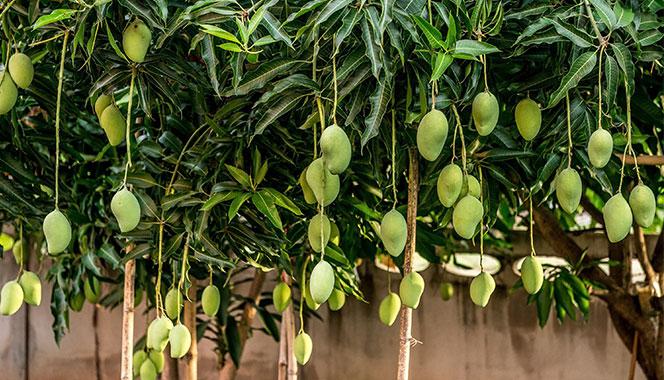
The most consumed part of a mango tree is its fruit. The mango is not only a sweet and juicy delight, but also has therapeutic properties. Here's how a mango a day may help in keeping ill-health at bay:
- Prevents anemia: Mango is rich in iron. Consuming mango in adequate quantities helps in increasing iron levels. Also, the vitamin C present in mango increases the absorption of iron.
- Improves digestion: Disorders of the digestive system are a major cause of poor health. Being rich in fiber and polyphenols, consuming mango aids in decreasing constipation and inflammation of the bowels.
- Helps gain weight: Many individuals find it hard to gain weight. According to Ayurveda, consuming mango with milk helps in nourishing the body and gaining weight.
- Boosts immunity: Apart from vitamin C, mango also contains folate, zinc and vitamin B6. All these contribute greatly towards strengthening the immune system and boosting our immunity.
- Improves eyesight: Do you know why the mango pulp has a rich yellow color? It is due to the presence of an abundance of carotenoids which help in improving eyesight.
- Keeps heart healthy: Research shows that low selenium levels are linked to an increased risk of heart disease. Mango is a good source of selenium and B6, both of which promote heart health.
- Has anti-cancer effects: Mangiferin, a natural polyphenol present in mango, has been shown to exert anti-cancer properties. Khurana et al in their study, 'Mangiferin: a promising anticancer bioactive', published in the journal Future Science, in 2016, says that mangiferin helps in inhibiting the progression of cancer. They also say that this polyphenol has antioxidant properties, which decrease oxygen-free radicals and reduces damage to the DNA.
What are the medicinal benefits of mango leaves?
Now that you know the health benefits of eating mango, let's look at some of the medicinal uses of mango leaves:
- Decreases blood pressure: Extract of mango tree leaves has antihypertensive properties. As a result, having tea made with mango leaves a few times a day helps in decreasing blood pressure.
- Helps in controlling diabetes: Tender mango leaves which are pink or purple in color are rich in tannins and anthocyanins. Juice of these mango leaves taken on an empty stomach in the morning helps in controlling blood sugar levels.
- Treats oral problems: Poor oral hygiene or diseases of the gums can lead to bad breath. Clean a few old/mature mango leaves and boil them in water until the water turns slightly yellow. Add some salt to this water and rinse the mouth with it. This helps address problems of unhealthy gums.
- Eliminates free radicals: Mango tree leaves contain antioxidants and vitamin C. Consuming mango leaf extract can help eliminate free radicals and protect the body from oxidative damage.
- Cleanses the stomach: Soak a few mango leaves in warm water and leave them overnight. Consuming this water on an empty stomach in the morning helps in cleansing the stomach and flushing out toxins from the body.
What are the useful parts of the mango tree?
- Mango bark: Consuming the powder of dried mango bark provides relief from diarrhea.
- Mango gum: The gum obtained from the bark of the mango tree can be applied on cracked feet and areas affected by scabies.
- Mango sap: The juice that oozes from the branch after plucking a mango can be applied on bee stings to relieve pain.
- Mango seed: Obtained from mango seed, mango butter can be applied on the skin to soothe sunburns, remove and prevent stretch marks, heal scars and reduce wrinkles. It can also be used as a hair moisturizer. Consuming mango seed extract has proved helpful in losing weight and decreasing obesity.
Varieties of mangoes
Some common varieties of mangoes found in India are, Alphonso, Banganapalli or Safeda, Neelam, Sindoora, Dasehri, Chaunsa, Kesar, Langra, Mulgoba, Himsagar, Himam Pasand and Totapuri.
Over the centuries, the mango tree has spread across India and the world. Today, according to the National Horticulture Board, about 1,500 varieties of mango are grown in India, with each having a unique taste and flavor. This is also a reminder of how popular the mango is in our country, and how much we love it.
The next time you pass by a mango tree swaying in the wind or stand under its cool shade, don't forget to appreciate the uses of the mango tree. Also, if you are fortunate enough to have a garden or a backyard, you can grow your own mango trees and relish the delicious fruits. But, even if you aren't that lucky, you can still grow a bonsai mango tree in a pot on your balcony or terrace.
























Comments
-

1Edit
Comment Flag
Cancel Update