
Is Airconditioning Safe For Babies? Ideal Room Temperature And Summer Safety Tips
Sahana Charan
Worried about using AC or coolers for your baby in summer? Here’s a simple guide on ideal room temperature, safety tips, and how to keep your baby comfortable and safe in the heat
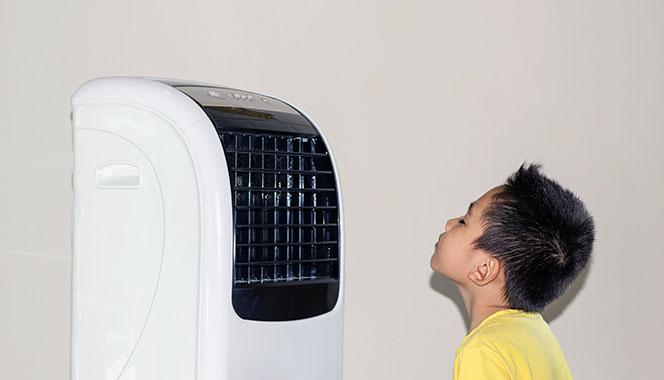
Keeping your baby comfortable during the hot summer months
When the scorching sun beats down on us during the summer months, there is rarely a respite from the heat and humidity. In most cases, people turn to air conditioners or coolers for relief.
Is it safe to use AC or air coolers for babies?
When you have a baby at home, it’s natural to wonder if it's really safe. Many parents worry that constant exposure to AC or cool air might harm their little one, especially newborns and infants. At the same time, the heat and humidity can make babies restless, sweaty, and uncomfortable.
So, how do you strike the right balance and keep your baby safe and comfortable?
What is the normal body temperature for a baby?
Babies are not able to regulate their body temperature as well as adults. This means they can get too hot or too cold very quickly.
Health experts, including those from the World Health Organization, highlight that maintaining a stable body temperature is very important for newborns, especially for premature or low-birth-weight babies, who are more vulnerable to health risks.
Why temperature regulation is critical for newborns
"Ideally, the room temperature should be maintained at a steady 24 -26°C. Newborns with a low birth weight are at risk of hypothermia (a drop in body temperature to dangerous levels), which in turn can cause blood sugar levels to drop and affect metabolic activity. Therefore, parents must take extra care to see that such babies do not become too cold. A baby weighing less than 2.5 kg should be wrapped well, with the head, hands, and feet kept warm all through the day," says Dr Santosh Kumar, Consultant, Paediatrics and Neonatology, Motherhood Hospitals, Bengaluru.
On the other hand, excessive sweating can cause dehydration in babies, so an air-conditioned room can help keep the little one cozy and relaxed.
"Dress your baby in light and airy clothes in the daytime, while at night, the head and limbs should be covered with a wrap, preventing direct contact with the cold air. It is a good idea to check your baby's temperature from time to time by touching their forehead, hands, and feet. Keeping a low-reading thermometer handy will help. Anything below 34°C needs immediate attention", adds Dr Santosh.
A low-reading thermometer should be used for all measurements. An ordinary thermometer only reads down to 35°C/95°F and will not detect significant hypothermia; low-reading infant thermometers go down to 25°C/77°F.
Dr Santosh also recommends that parents (either the mother or father) give Kangaroo care (skin-to-skin contact) to a newborn from time to time, as this will help keep them warm even in a cooled room, especially at night.
Ideal room temperature for babies in summer
In a tropical climate, overheating and sweating during the summer months can cause dehydration in babies. While it is necessary to keep an infant's body temperature normal, it is also imperative to keep them cool and comfortable in summer so they do not lose water content from their bodies. Medical experts say that having an AC or an air cooler in a baby's room is absolutely fine, as long as parents take necessary precautions.
"It is a good idea to check your baby's temperature from time to time by touching their forehead, hands, and feet" - Dr Santosh Kumar.
Recommended temperature range for comfort and safety
There is no harm in using an air conditioner or air cooler for your baby in hot weather, but keep safety measures in mind. Ideally, the room temperature should be maintained at a steady 24 to 26°C.
Practical tips to keep your baby safe in an air-conditioned room
- Ensure the room has good air circulation and is not too hot or too cold, as this can be dangerous. When the room is air-conditioned, maintain a steady temperature of 24 to 26°C to keep your baby comfortable.
- Dress your baby in light and airy clothes during the day. At night, when your baby is sleeping, keep their head, hands, and feet covered with appropriate garments and cover the body with a soft wrap.
- Check your baby's body temperature regularly by touching their forehead, hands, and feet. If you feel your baby may be cold, use a thermometer to measure the temperature.
- Hold your little one close to your chest once in a while to transfer your body warmth. If you find that your baby is unusually lethargic or having difficulty breathing, ensure they get immediate medical attention.
- Service your air-conditioner or cooler occasionally so it functions properly and does not give out unhealthy air that might affect your baby.
Important precautions when using AC or coolers for babies
Avoiding common mistakes with cooling devices
- Do not keep your baby's crib or cot right in front of the air-cooler or close to the air-conditioner. It is advisable to place your baby in a part of the room away from the direct blast of cool air.
- Do not expose your baby to sudden changes in temperature, i.e., from a cold room to the hot outdoors and vice versa. Increase the temperature gradually, so the change is not sudden.
- Do not let the cool air dry your baby's skin. Moisturize your baby's skin with baby lotion and keep the baby hydrated with regular feeds and water.
- Do not allow the cold air from the cooler to blow directly near your child's nose, as this can cause difficulty in breathing and dry out nasal passages.
- Do not lower the temperature in your baby's room. Low birth weight babies and newborns are at risk of hypothermia in cold surroundings. Change nappies regularly to ensure your baby is dry.
Simple ways to balance warmth and cooling for your baby
Using an air cooler or air-conditioning system in the hot and humid months will keep babies safe from the heat and help them sleep well during the night. Parents should, however, exercise caution to ensure that it does not cause discomfort or harm to the little ones.
Parent checklist
- Maintain room temperature between 24–26°C for your baby’s comfort
- Keep your baby away from direct airflow from the AC or the cooler
- Dress your baby in light, breathable clothes during the day
- Cover hands, feet, and head lightly during cooler nights
- Check your baby’s temperature by touching the forehead, hands, and feet
- Use a low-reading thermometer if needed
- Avoid sudden temperature changes when moving in and out of rooms
- Ensure your baby stays hydrated with regular feeds
- Moisturize your baby’s skin to prevent dryness
- Keep the room well-ventilated, along with cooling
- Service ACs and coolers regularly for clean air
- Try skin-to-skin contact (kangaroo care) to regulate body temperature
- Watch for signs like lethargy or breathing difficulty and seek medical help immediately
Last updated on: April 29, 2026























Comments
Edit
Comment Flag
Cancel Update