
Baby Weight Chart 0 to 12 Months: Track Your Baby's Healthy Growth Month By Month
Dr Gaurav Jawa
author parentcircle author parentcircle author parentcircle author parentcircle author parentcircle author parentcircle
Worried about your baby’s weight gain? This guide explains the baby weight chart from 0 to 12 months, how much weight babies gain each month, and what healthy growth really looks like, so you can track progress with confidence, not anxiety

"How is my baby growing?"
"What is the ideal weight for her age?"
"How much weight should a baby put on gradually every month?"
These are the most common questions pediatricians hear from concerned parents.
Why do parents worry about their baby's weight gain
New parents on this exciting yet stressful journey are anxious to know if their baby is growing well. To help monitor healthy growth, doctors advise parents to track their baby's progress using a standard growth chart and regular pediatric check-ups.
How doctors track a baby’s growth
The most widely used and scientifically established growth charts are those developed by the World Health Organization (WHO). These charts are based on the principle that children everywhere have a similar potential for healthy growth under optimal conditions.
Pediatricians focus on a baby's growth pattern over time rather than a single weight measurement. A baby's consistent growth over months gives a much clearer picture of overall health and development.
What is the WHO baby weight chart?The World Health Organization (WHO) Child Growth Standards are used worldwide to assess healthy growth in infants and young children. These standards were developed from data collected from healthy, well-nourished babies from different countries and show how children should grow under optimal conditions. Put simply, growth references describe how a group of children grew during a particular period, while growth standards indicate how children are expected to grow under healthy conditions. guide us on what healthy growth should ideally look like. This is why pediatricians commonly use the WHO Child Growth Standards to monitor a baby's growth and development. |
Before we look at the chart, let's first understand how babies gain weight during their first year.
Normal weight loss after birth
Most newborns lose a small amount of weight in the first few days after birth. A weight loss of up to 10 percent of birth weight is generally considered normal while breastfeeding becomes established and the mother's milk supply increases.
Babies may lose weight because they are shedding excess body fluids and passing meconium, the dark green stool passed in the first few days after birth. Most babies regain their birth weight within the first two weeks of life.
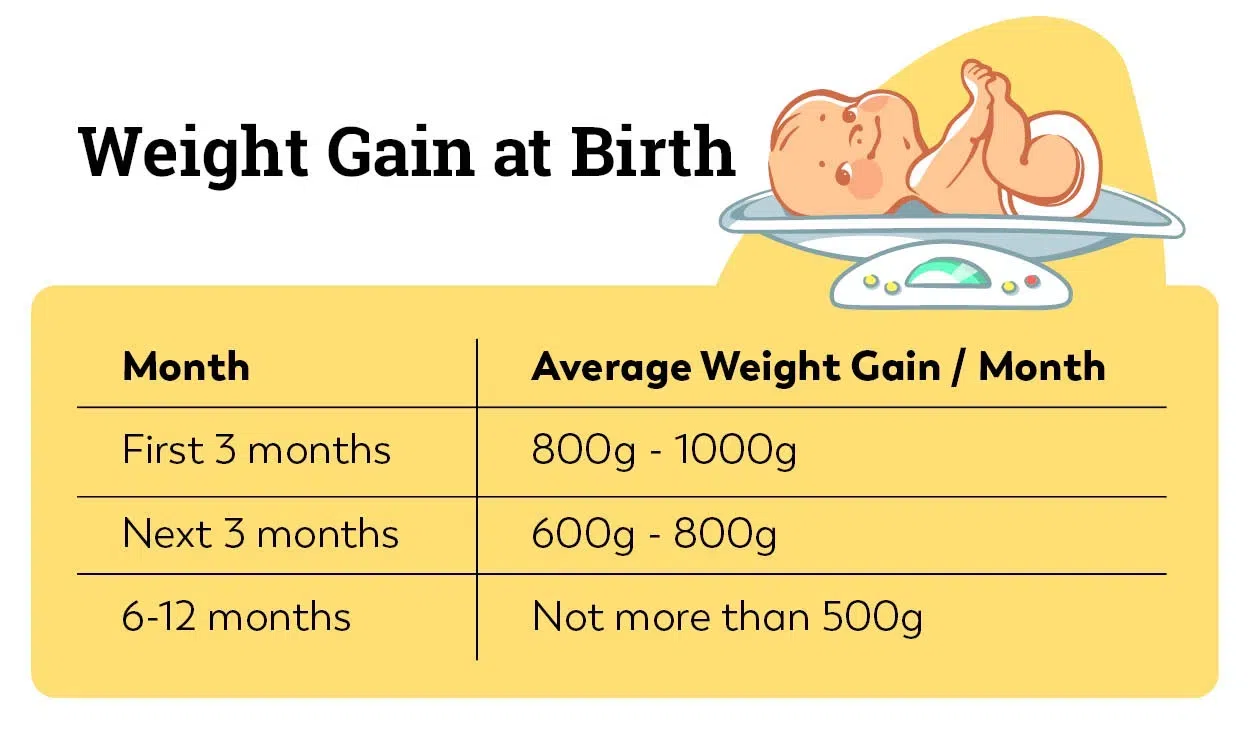
Baby weight gain by month: What to expect in the first year
When tracking a baby's growth and development, it's important to use a reliable baby weight chart as a reference.
Most full-term babies weigh between 2.5kg and 4kg at birth, although healthy birth weight can vary depending on several factors.
Most babies double their birth weight by about 4 to 6 months and triple it by their first birthday, provided there are no underlying health concerns.
This comprehensive baby weight chart can be a useful guide for parents and caregivers to ensure healthy growth and development during the baby's first year of life. Remember that healthy babies come in different shapes and sizes, and individual variations are common.
 Expert tip
 Expert tip
Avoid comparing your baby's weight with that of other babies. Healthy growth is about following a consistent growth pattern over time, not reaching a specific number on the scale.
Does breastfeeding affect baby weight gain?
Exclusive breastfeeding is recommended for the first 6 months, unless advised otherwise by the pediatrician. Some breastfed babies may appear leaner, but this does not necessarily mean they are unhealthy.
When evaluating growth, pediatricians look at several factors, including weight, length, head circumference, feeding patterns, and developmental milestones.
If the baby is not growing as expected, the pediatrician will first try to identify the underlying cause.
For exclusively breastfed babies, breastfeeding, proper feeding technique, and adequate milk transfer are important. Babies should be allowed to feed long enough to receive both the foremilk and the higher-fat hindmilk that comes later during a feed.
And after six months, in addition to breast milk, babies need supplemental foods to meet their increasing nutritional requirements. A balanced weaning plan must include nutritious, age-appropriate foods that support healthy growth and development.
If your baby is on formula milk, follow preparation instructions and proportions carefully. Adding too much water can reduce the calorie content and affect weight gain.
Other factors that influence a baby’s weight
Besides feeding, other factors contribute to a baby's weight. Genetics also plays an important role. Some babies born to larger-built parents may naturally be heavier; babies born to smaller-built parents may weigh less.
Several maternal and pregnancy-related factors can also influence birth weight, including maternal health, weight gain during pregnancy, diabetes, and certain medical conditions.
Some babies born larger than average may have metabolic abnormalities (low blood sugar and calcium), traumatic birth injuries, higher hemoglobin levels, jaundice, or various congenital complications.
Similarly, some babies may be born smaller than expected for possible reasons:
1. Preterm birth: Babies born before 37 completed weeks of pregnancy often have lower birth weight than full-term babies.
2. Maternal health condition: Medical conditions such as high blood pressure, heart disease, kidney disease, or certain pregnancy complications can affect fetal growth.
3. Poor maternal nutrition: Inadequate nutrition during pregnancy can influence a baby's growth before birth and may require closer monitoring after delivery.
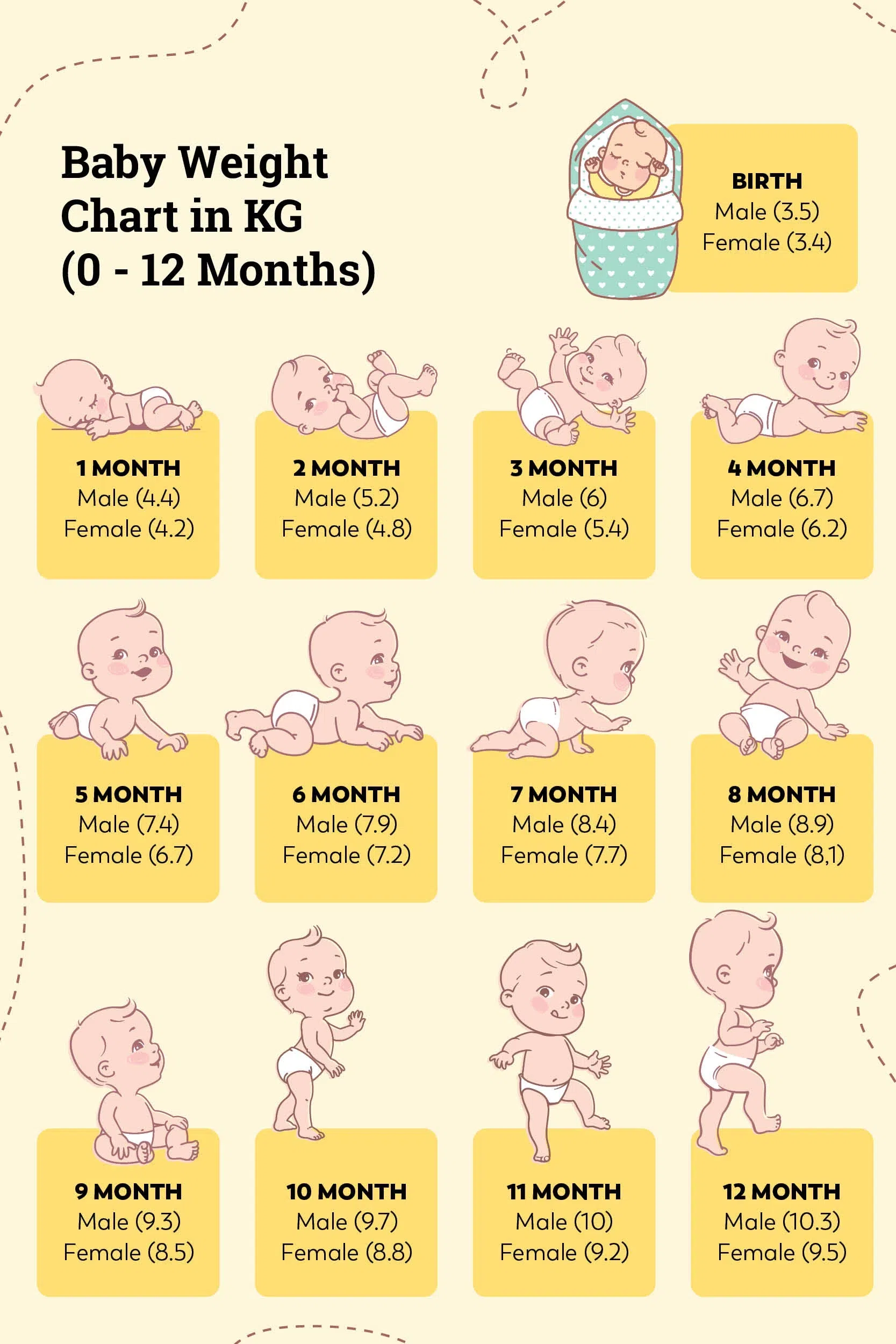
Baby girl and boy weight chart: 0 to 12 months (WHO reference)
The following figures show the 50th percentile weights for male and female babies according to WHO standards.
A percentile helps compare a baby's growth with that of other children of the same age. A baby at the 50th percentile weighs more than 50 percent of babies of the same age and less than the other 50 percent.
When should parents be concerned about weight gain?
Most healthy babies grow at their own pace. However, it is important to consult your pediatrician if your baby:
- Is not regaining birth weight within the first two weeks
- Shows poor feeding or feeding difficulties
- Appears unusually sleepy or lethargic
- Experiences a sudden drop in growth percentiles
- Has persistent vomiting, diarrhea, or other illnesses affecting feeding and growth
- Is not meeting developmental milestones, alongside concerns about growth
Growth concerns are best assessed using repeated measurements over time rather than a single weight reading.
How to read a Baby Weight chart correctly
During routine check-ups, your pediatrician will plot your child's growth on a growth chart to ensure appropriate progress. Growth charts may seem confusing, but they are valuable tools that help monitor your baby's health over time.
Remember that every baby is unique. Use growth charts as a guide, not a comparison tool.
Kindly note that the information shared in this article is intended for educational purposes only and should not replace medical advice. The factors influencing growth may differ from baby to baby, so always consult your pediatrician regarding concerns about your child's growth and development.
Relax, trust the process, and enjoy your parenting journey.
Dr Gaurav Jawa is a pediatrician and neonatologist with over two decades of experience in newborn and child healthcare. His areas of expertise include newborn care, infant nutrition, and child growth and development.
Trusted resources:
- World Health Organization (WHO) Child Growth Standards.
- Indian Academy of Pediatrics (IAP) Growth Monitoring Guidelines.
- UNICEF Infant and Young Child Feeding Recommendations.
Last updated on: January 21, 2026



























Comments
Normal delivery: 28 day old baby My baby born with the weight of 3.400kgm and after 28 day of birth baby weight is 4kg
Suggest me it is ok normal or something to more good next to do
-

1Edit
Comment Flag
Cancel Update