FEATURED
Children are often the worst affected by natural disasters. So, if you live near a calamity-prone area, here is how you can safeguard their mental, emotional and physical well-being.
"We cannot stop natural disasters, but we can arm ourselves with knowledge: so many lives wouldn't have to be lost if there was enough disaster-preparedness." ? Petra Nemcova, model and TV host-turned-philanthropist
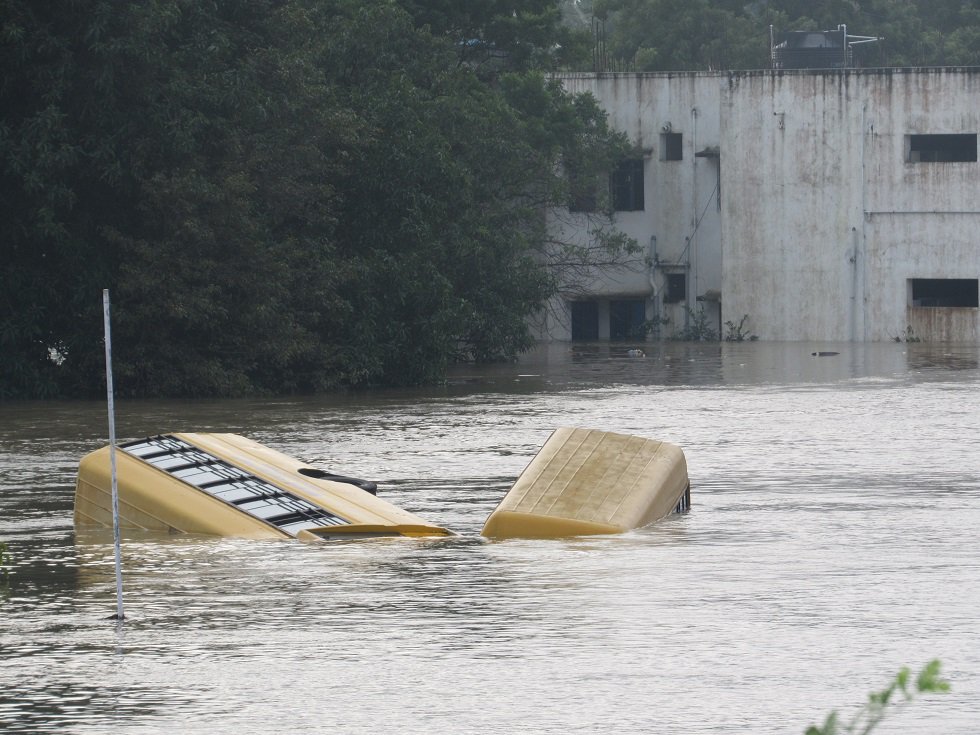
According to reports published last year by the International Disaster Database (IDD), India has faced more than 300 natural disasters in the last 17 years. Due to the diverse landscape of the country, we experience everything from drought, floods, earthquake, epidemics, landslides and storms. Apart from the devastating death toll, natural disasters have affected close to a billion people in the country. According to official reports by the state governments in 2017, more than 1,200 people died in flood-related incidents.
When natural calamities occur, it is children who are the most vulnerable. Worse, in such situations, they also fall prey to communicable diseases, afterwards. For instance, after a flood, children are more likely to succumb to water-borne infections or develop diarrhoea, fever and acute respiratory complications.
What's more, a natural calamity can often be life-changing for survivors. Children especially need special care after such natural disasters. They may even need counselling to overcome trauma. More important, in some case, they might develop catastrophic after-effects like Post Traumatic Stress Disorder (PTSD).
In the year 2015, floods and cyclones wrecked Chennai city. There was such devastation, it took more than a week for the city to limp back to normalcy. But there is a more recent example of how much a natural disaster can affect people and places. This year, floods and landslides followed heavy rain across Kerala state and also in Kodagu region of Karnataka. There was tremendous loss of life and considerable damage to properties.
According to Dr Santosh Atmanand Revankar, a consultant physician and diabetologist at a leading hospital in Bengaluru: "After a flood, there is a high chance of water-borne diseases like typhoid, cholera and hepatitis A and also, vector-borne diseases like malaria and dengue. During and after a flood, children are also prone to hypothermia so preventive measures should be taken".
Having lived in Chennai during the floods, I have a first-person account of the devastation it caused then. After the floods, we did the following:
In India, coastal regions like Chennai and Mumbai are more prone to floods. If you are living in a vulnerable region, as a parent, it is important to help your children understand why and how such calamities happen and what you need to do, to stay safe. Talking to children about these matters is vital. If a calamity warning, for example, a cyclone alert, is doing the rounds, then do bring the topic up with your child. You could do this during story time or any other one-on-one occasion. Talk about what causes cyclones, how it is possible to track this natural phenomenon, why it is important to be alert when a warning is sounded and so on. Approaching the topic in this manner, works for most age groups.
There are many creative ways of bringing up serious subjects like natural calamities with children. For example, parents could present it as a story by saying, 'Sometimes, we get blessed with too much of a downpour', or 'The wind is playing with the trees'. Explaining the reality in the most reassuring tone is crucial here.
So, families that live in regions more prone to flooding, landslides, earthquakes or hailstorms can accordingly, build similarly relatable and easily understood stories. Remember, older children tend to know and be more aware of things around them - so it is better to ensure that you tell them what is happening. They should not get their information from peers, social media, the television, the Internet, or other sources.
When a natural disaster strikes, the safety of your children becomes paramount. While it is impossible to stop or change a calamity, as a parent, there are certain things you can do to safeguard your children.
As a parent, it is your responsibility to equip your kids with the life skills and the mindset to help them deal with such a situation when it arises. So, for your children's emotional well-being, you can do the following:
As numerous regions of India are earthquake-prone, it is important to educate your children on how to stay safe during or after an earthquake. This includes:
Also Read: Tackling Respiratory Infections in children
As a parent, your first priority is to protect and shelter your children. But, making them aware of natural disasters or calamities is also necessary - it can help them understand how inter-dependent the natural world is. Also, helping them in disaster-preparedness is a great way to teach them how to stay alert and be safe.
About the author:
Written by Moina Memon on 5 November 2018.
Looking for expert tips and interesting articles on parenting? Subscribe now to our magazine. Connect with us on Facebook | Twitter | Instagram | YouTube
Discover our health and safety program for pre-primary children at The Dot Learning Circle, designed specifically for LKG and UKG students. We focus on building children’s awareness of safety protocols in different situations, understanding personal space and safety, and the importance of getting help when needed. Our engaging curriculum ensures young children learn essential safety skills.
Comments
Edit
Comment Flag
Cancel Update