
Tackling Respiratory Infections in children
Dr Santha Narayanan
author parentcircle author parentcircle author parentcircle author parentcircle author parentcircle author parentcircle
With an increase in pollutants in the air, many children are facing respiratory infections. Here's how you can help tackle these infections and help your child recover.
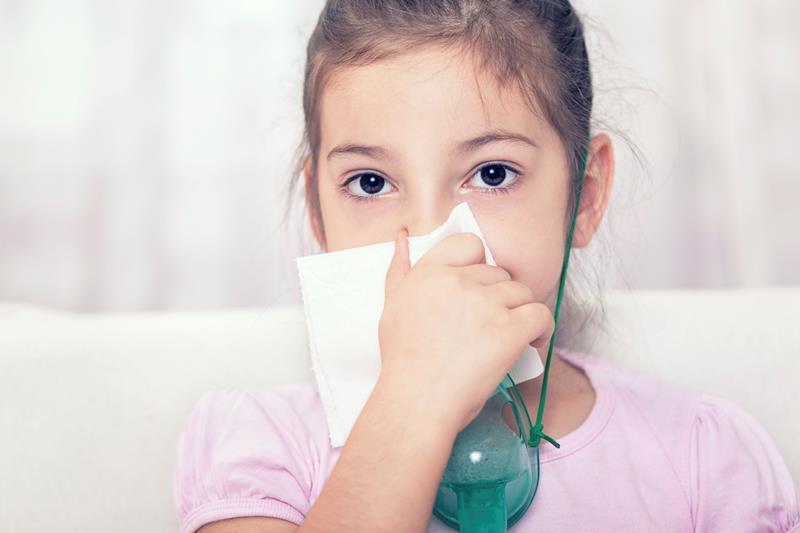
As paediatric practitioners, we have observed that 50% of our out-patients come in with Respiratory Infections. Earlier, for medical practitioners, the airway was divided into upper and lower airways where the portion from nostril to larynx was considered as upper airway and the trachea and the lungs formed the lower respiratory passages.
The new concept is the "One-way air disease". It is considered that most of the upper airway diseases, later on, lead to lower airway diseases. For example Sinusitis and allergic Rhinitis often lead to asthma.
Also read: Wuhan Coronavirus FAQs - What Indian Parents Need To Know
Upper Respiratory Infections:
The most common upper respiratory infections are:
- Common cold
- Sore throat- Tonsillitis
- Sinusitis
- Middle ear infections
- FB (Foreign Body) aspirations. This generally happens when you draw in some foreign body when you breathe.
- FB (Foreign Body) in the nose/ear
- Inhalation or Ingestion of kerosene
- Viral group
- Stridor (A harsh, high pitched sound when you breathe in or out)
Causes:
- Exposure to Respiratory pathogens (viruses) within the family, crowded places and day care centres
- Exposure to Pollutants/Passive smoking
- Environmental factors, leading to allergies
- Genetic
- Lack of breast feeding
Common cold (Rhinopharyngitis) causes inflammation of the nose and pharynx. This produces discharge from the nose, causes sneezing, a painful throat, difficulty in swallowing and fever of moderate to high degree. Colds are common in the child's first year and is prevalent among children 1-6 years of age.
Sore throat (Tonsillitis) is a condition in which the tonsils become swollen and red, with or without white patches. Fever, swollen neck glands and difficulty in swallowing are all signs of tonsillitis. It is found in children between 4-7 years of age.
Sinusitis is an inflammation of the cavities is called sinuses. This problem is found in children over 2 years of age and is characterized by stuffy or runny nose, slight fever, cough, pain over sinuses, headache and lack of appetite.
Middle ear infections are inflammations of the middle ear. There may be a pus or fluid within the middle ear cavity depending on the severity. It is characterized by pain in the ear, redness of ear drum, perforation (thin hole) of the ear drum, fever and vomiting. This is common in children up to 7 years of age.
Upper Respiratory Infections are the leading cause of sickness in children leading to absenteeism from school. Since most of the Upper Respiratory Infections are viral, there is no need for antibiotics. Only if secondary infection with bacterial pathogen occurs, appropriate antibiotics are to be given in adequate amounts according to the weight of the children.
Prevention:
- Improve your child's immunity by providing a healthy and balanced diet
- Give Influenza and Pneumococcal vaccinations
- Provide rest and adequate amount of fluids
- Provide vitamins and nutritional supplements
- Wash hands often
- Limit contact with people exposed to the illness
Lower Respiratory Infections:
The lower respiratory infections are also known as Chest Infections.
These comprise of:
- LTB: (Laryngotracheabronchitis) commonly known as croup, is an infection of the larynx, windpipe, and bronchia. It is characterised by a barking cough
- Bronchitis: Inflammation of the main passages of the lungs
- Bronchiolitis: Swelling and mucus buildup in the smallest air passages in the lungs
The presence of these conditions depends on age, affected person, and the part of the body affected.
Causes:
- Both Virus and Bacteria cause Lower Respiratory Infection
- Mycoplasma (bacteria like organism that lacks cell walls, and resistant to common antibiotics) can also lead to atypical Pneumonia
- Inhaled Foreign body
Other causes which mimic respiratory infections, known as differential diagnosis:
- Asthma
- Pneumothorax (Collapsed lung)
- Cardiac causes
- Gastro Oesophagial Reflux
Symptoms :
- Fever
- Evidence of previous Upper Respiratory Tract Infection
- Cough or difficulty in breathing, audible wheeze
- Rapid Respiratory Rate
- Grunting in severe cases
- Feeding difficulties
- Difficulty in speech
Treatment:
According to the condition, age of child and severity of symptoms, fluid, antibiotics and Nebulization is administered to the child.
Any child that shows signs of recurrent respiratory infections lasting for more than 3 weeks, where their nutrition intake also reduces and if the child has been exposed to persons with chronic cough, Tuberculosis should also be considered, since TB is hugely prevalent in our country.
Asthma
Asthma is a chronic condition of the lungs manifested by the inflammation and tightening of the airways. It results in shortness of breath, chest tightness and wheezing/coughing.
Asthma is of two types: Atopic (Extrinsic) and Non-Atopic (Intrinsic). It is caused by a combination of genetic and environmental factors.
Causes:
- Viral infections- Predominant in 40% cases
- Food allergy- Difficult to prove. Grapes, Banana, Citrus fruits, Fried foods, Tomato, Ice cream and Chocolates
- Pollen and Moulds (7.5%)
- House dust, Cold air, Passive smoking, Cockroach, Debris, Cologne spray, Mosquito coil smoke (6.3%)
- Pets- Mainly dog's saliva, dander, urine of cat allergenic
- Exercise induced asthma- 55% of children, more often in males
- Temperature changes- poorly tolerated by asthmatics
- Air Pollution- Oxides of Nitrogen, Sulfur dioxide, particulate matter produce airway inflammation
Often, a Nocturnal cough may be the sole symptom of asthma. Still, the doctor would be able to come to a conclusion after a detailed diagnosis and assessment related to the chest condition.
There are three types of Asthma that exists among children:
- Recurrent wheezing in early childhood, primarily triggered by common viral infections of the respiratory tract
- Chronic asthma with allergy that persists into later childhood and adulthood
- Third type of childhood asthma typically emerges in females who develop obesity and the early onset (by 11 years of age) of puberty.
The attacks can be mild, moderate or even severe.
There is a cough variant of Asthma, characterised by a dry cough which lasts for 6-8 weeks. It occurs at any time of the day, wakes one up at night and worsens during exercise.
Treatment:
Different modes of treatment exist which you need to be aware of, so as to provide your child with the right kind of treatment:
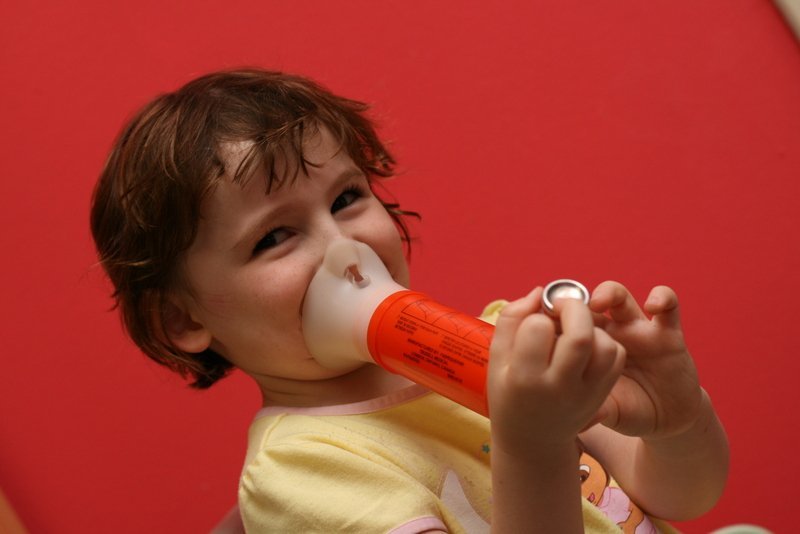
Relievers and Controllers: Relievers give immediate relief and Controllers are taken for a longer time. These are mostly inhalants administered through asthma inhalers.
Oral Medications: These should be given for a short period of time only.
Nebulizers - A popular medication, Nebulizers make a mist of water and asthma medicine that is breathed in. They are not recommended for regular use, since the oxygen saturation has to be normal before using the nebulizer. It is used in hospitals and only during emergencies at home.
Precautions:
There are some precautions to be taken at home to evade that asthma attack:
- Clean the house at least once a week and wear a mask while cleaning
- Avoid pets with fur or feathers
- Clean the bedding, sheets, pillow cases and mattress pads regularly
- Encase the mattress, pillows and box springs in dust proof covers
- Replace bedding made of foam/cotton with synthetic material
- Consider replacing upholstered furniture with leather or vinyl
- Consider replacing carpeting with hard wood floors/tiles
- Use air conditioners for dust free rooms
- Keep the humidity in the house low
- Work closely with your doctor to decide what your treatment goals are and how to achieve them
When to take the child to the Emergency unit in hospital:
- Increased pulse rate
- Increased respiratory rate
- Difficulty talking
- Unable to get up and walk
- Confusion and drowsiness
With proper treatment of the problem, your child will be able to do normal activities without having symptoms and also have fewer attacks.
















Comments
Edit
Comment Flag
Cancel Update