
Hop, Skip & Jump! Fun Indoor Activities for Kids That Keep Parents Fit Too
Varsha Venkatesh
If the pandemic has made it difficult for you to take your child outside to play, here are some exciting activity ideas from a fitness coach to help your little one stay fit and have fun.

Looking for ways to keep your toddler or preschooler active and occupied while you work out? Fortunately, you can help your child discover the joy of play and get your dose of physical activity as well, all while staying indoors.
Children between the ages of 2 and 4 crave a lot of excitement and variety when they play. This is because of their limited attention span and their need to learn by constantly exploring the world around them. So, staying active not only keeps your little one healthy but also helps develop their cognitive, gross motor, and communication skills. Moreover, your child will enjoy and remember for the rest of her life this time spent playing with you. Doing physical activity together is a great way to bond with your child and surround them with happiness, joy and inspiration so that they stay active from a tender age.
Here are some fun indoor activities you can do with your toddler or preschooler:
1. Run From the Monster
All children love playing, running, and catching, or a game of tag, especially when you get creative with the game and make it sound mysterious, magical and fun. A game of running away from the scary monster will get your little one scurrying and squealing with delight.
WHY IT IS GOOD: Develops agility and speed and improves dodging, running and storytelling skills.
2. Hide and Seek
Hide and Seek, an old favorite is played by children all over the world. In this game, children can hide themselves or objects, such as their stuffed toys, for you to find.
WHY IT IS GOOD: Develops observation skills and deduction skills.
3. Keep the Balloon Up
You can use a balloon or a lightweight beach ball for this game. Have your child use their hands to tap the balloon up in the air and keep it off the ground. How long can they keep the balloon in the air?
WHY IT IS GOOD: Improves hand-eye coordination, fine motor skills and striking skills.
4. Crawl Tag
Running is cliched, so it's time to get creative and crawl. Babies learn to crawl before they walk, and during this stage of development, something marvelous happens. They're using their hands and knees to move forward, and this contra-lateral movement involves the left side and the right side of the brain working together. So, ditch the running and start playing crawl tag with your toddler!
WHY IT IS GOOD: Builds overall strength and coordination skills.
5. Freeze and Melt
This is a fantastic game that's going to have everyone giggling. When you say 'Melt,' everyone must wiggle their body to mimic the flow of water, and when you say 'Freeze,' everyone must stop mid-movement and be still like a statue. No laughing is allowed during the game, but this rule would be tough to follow!
WHY IT IS GOOD: Strengthens the whole body and improves balance and concentration.
6. Animal Walk
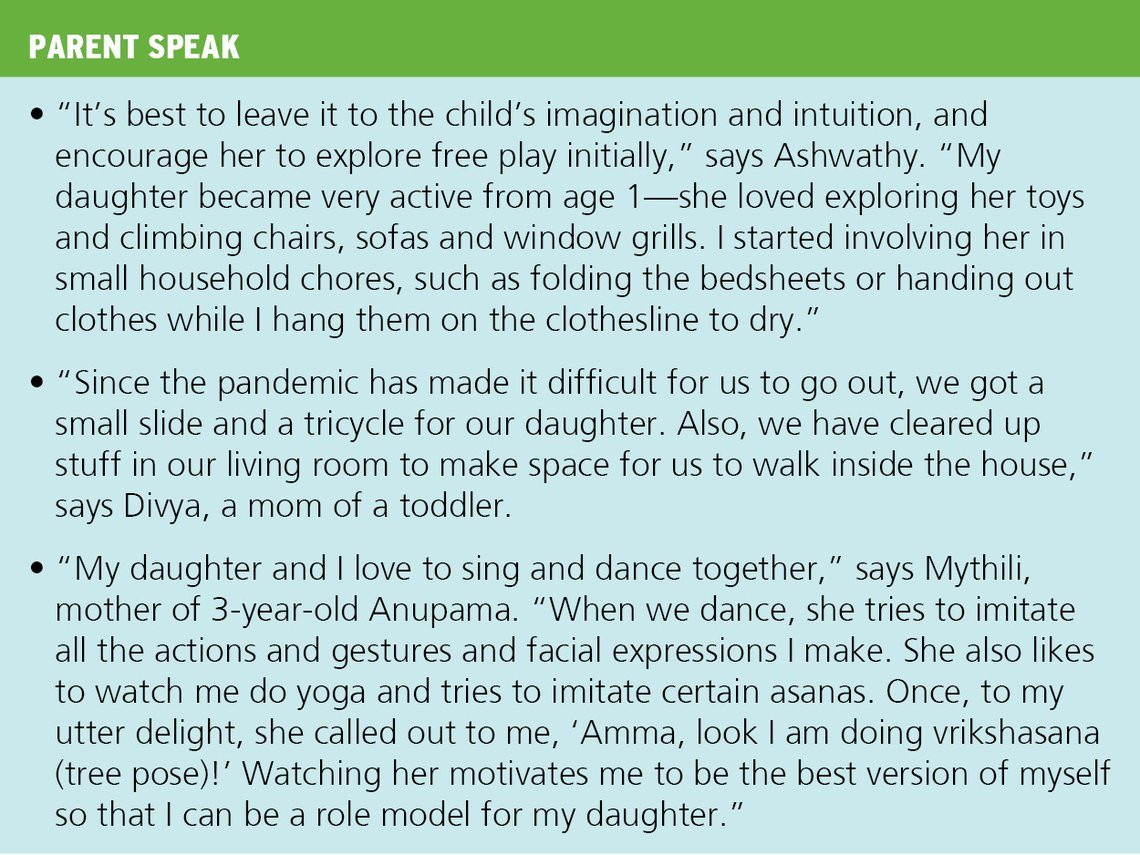
Encourage your child to mimic her favorite animals. Let her slither like a snake, hop like a frog, gallop like a horse, or crawl like a crab on all fours.
WHY IT IS GOOD: Develops hopping, galloping and jumping skills, self-confidence, and body awareness.
Encourage your child to engage in spontaneous, free play
7. Obstacle Course
Let your imagination run wild as you set up an obstacle course for your child within the confines of your living room. Have them crawl under tables, climb over counters, jump over ropes, hop from chair to chair, crawl through a cardboard box, jump through a line of hula hoops, and finally throw a family of stuffed animals into a laundry basket.
WHY IT IS GOOD: Develops motor skills and the ability to map a route from the start line to the finish line.
8. Simon Says
While the rules are simple, the options for funny and dynamic actions are endless. One person is called Simon, and Simon tells the others to do a multitude of movements, such as jumping, making funny faces, hopping on one foot, spinning, waving their hands over their heads, or touching their toes.
WHY IT IS GOOD: Develops listening skills and large motor skills like jumping, balancing and hopping skills
9. Bubble Play
Make a simple bubble solution with some lukewarm water and soap. Blow bubbles of various shapes and sizes with different bubble wands, and have a blast! You can have your child blow her bubbles or blow them yourself and have your child chase and pop them.
WHY IT IS GOOD: Improves agility
10. Yoga
Little children can learn all kinds of yoga movements very easily because they are natural movers. You can capitalize on their flexibility by teaching them some simple asanas that mimic nature, such as tree, downward dog, cat stretch, or butterfly poses.
You can also introduce your child to breathing exercises, such as smelling the flower and blowing out the candle or lazy 8. You could also get a yoga teacher to guide you with simple and fun yoga routines that you can do at home with your child.
WHY IT IS GOOD: Develops awareness of the body, personal space, and emotional regulation.
11. Dance Party
Get ready for a pyjama dance party right in your living room. Turn up the music and turn on your favorite ambient lights. Sing out loud, dance to your child's favorite tunes, and sway away into the evening. This is the best way to lift your spirits and get those calories burning!
WHY IT IS GOOD: Builds confidence, beats stress, and helps one to live in the moment.
Limit your child's screen time and engage them in these simple yet fun indoor activities. Encourage your child to engage in spontaneous, free play. Forcing your child never works. Instead, show them how to enjoy movements and help them learn the skills they need to stay fit and healthy. Let them explore these activities at their own pace and learn to appreciate the benefits of physical strength, health, and movement, all through play!
Varsha Venkatesh is a yoga practitioner and fitness and lifestyle coach. She is the founder of Yogavriksha, Chennai.
The Dot movement and coordination program for pre-primary children, focusses on their physical wellbeing and holistic development. The program ensures that physical activity becomes a part of the school routine.





















Comments
Edit
Comment Flag
Cancel Update