
Hidden Sources Of Caffeine In Your Child's Everyday Diet
Luke Coutinho
Are you aware that your child unknowingly consumes caffeine every day? A look at some shocking statistics about food that contains caffeine, and the impact it has on your child. Read on.
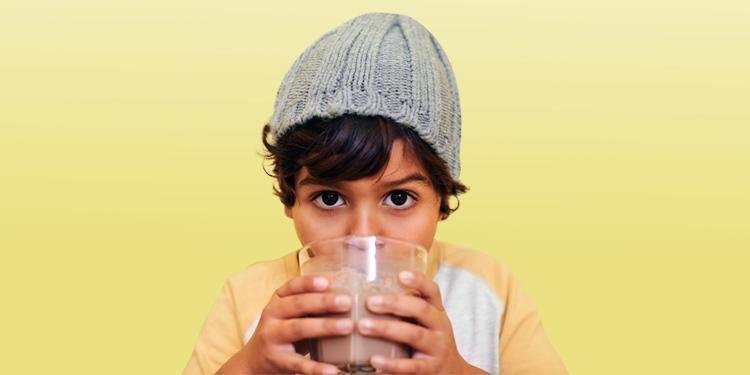
Radha and Sheela, who are both neighbours and friends, are having a conversation about their teenage children. "My son lives on coffee. He has a glass of cold coffee once he returns from school every day. He insists on buying coffee ice cream when we go out. My husband and I find it very difficult to get him off his caffeine addiction," says Sheela.
Radha is surprised. "I do not let my daughter go near coffee. She has hot chocolate in the morning, cold chocolate milk in the evening and sometimes chocolate ice cream when we go out. She loves chocolate, which is fine but we'll never let her drink coffee," says Radha with pride.
Little did Radha realise that her teenage daughter was addicted to caffeine too, perhaps more so than her friend's child.
Most colas, energy drinks and chocolate food items contain caffeine. When you allow your child to have a hot chocolate drink, a chocolate cupcake, a drink of fizzy cola or iced tea, you are loading his body with caffeine. The sources of caffeine here are tea leaves, coffee and cocoa beans.
Why is caffeine dangerous?
Caffeine acts like a drug in our body, which stimulates the central nervous system. Therefore, we feel more agile and energetic when we have a cup of coffee. Caffeine has the same effect on the body of a child.
It's important to remember that a child's brain is more sensitive to caffeine compared to that of an adult. Caffeine causes hyperactivity in a child, while also making her feel nervous and anxious, and even causing insomnia. It also worsens stomach-related problems.
Here are some adverse effects of caffeine:
- Caffeine blocks a chemical produced by the body. This chemical is responsible for calming the brain. When it is blocked, it leads to an increase in stress hormones.
- When your child has a high-stress response, his insulin resistance and fat storage in the body increase. This can lead to obesity and diabetes in the future.
- Caffeine also reduces the production of a chemical, serotonin, in the child's intestines. This leads to anxiety, jitters, hyperactivity, depression and sleep issues.
- Caffeine further acts as a diuretic. This means that it eliminates water from the body. Children who binge on a lot of caffeinated beverages consume less water. This eventually leads to dehydration.
- Caffeine takes almost seven hours to get out of your child's system. So, a morning or afternoon dose of caffeine can disrupt your child's night sleep, making him feel drowsy and lethargic the next day.
Withdrawal symptoms of chocolate, caffeinated beverages or ice cream (chocolate or coffee flavours) can leave your child feeling irritable with low levels of energy. Diminished energy makes her mind and body crave for more of the substance that provided her with the initial rush. Now, this is what leads to caffeine addiction.
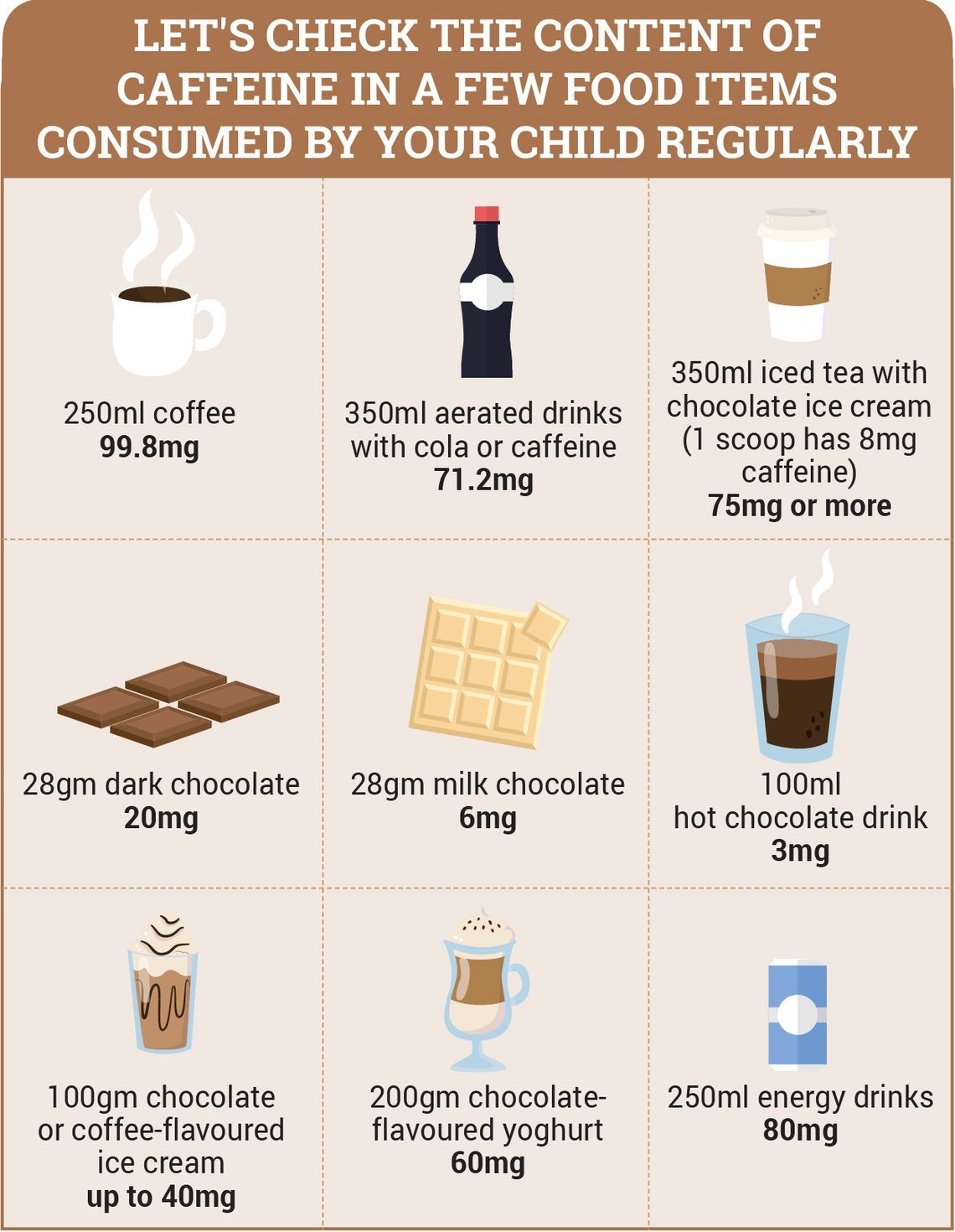
Here's what you can do
Consumption of energy drinks and aerated drinks such as colas is increasing among members of the younger generation. However, many of these drinks contain levels of caffeine several times higher than the permissible limit. This is a cause for worry as consuming such drinks can lead to addiction.
Although not all aerated drinks are caffeinated, it is better that children avoid such drinks as they also contain phosphorylate, which adversely affects the bones. Parents should not give in to their child's every demand for aerated drinks or junk food, but cutting it down completely is also not recommended, as this will only increase the child's craving. Remember, children like to do things which parents often tell them not to.
How to gradually withdraw caffeine from your child's diet
- Cutting off foods and drinks high in caffeine abruptly is also not advisable, as it will give rise to symptoms of withdrawal. These include tiredness and fatigue in your child.
- Caffeine should be withdrawn gradually. Ensure your child gets ample amounts of sleep during this time.
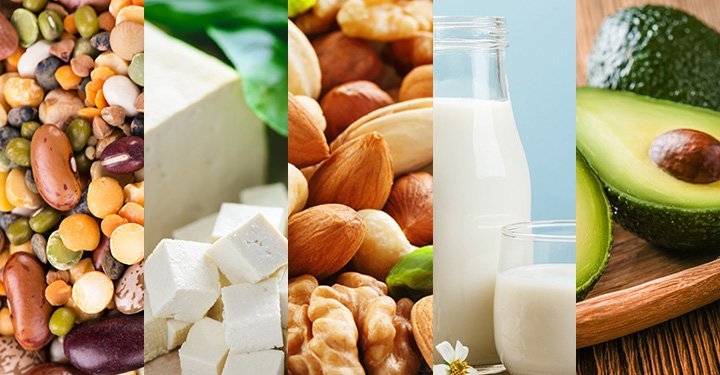
- Swap the caffeinated foods and drinks with healthy options like plain or infused water, lemonade without soda and plain lemon water with honey and rock salt.
- Other healthy alternatives include fruit and vegetable mixed juices, organic flavoured milk, mixed nuts shake, almond milk and organic buttermilk.
Once your child gradually gets used to these healthy options, you can stop giving him caffeinated foods completely, without causing any change in his mood and energy levels. With a proper diet and good sleep, your child will get back on track with high levels of energy sooner than you think. Finally, explain to your pre-teen or teen about the ill-effects of caffeinated drinks, so that the next time you say no, he'll know why. Also, set an example to your child by staying away from caffeinated drinks and junk food yourself.
About the expert:
Written by Luke Coutinho on 05 December 2018.
The author, Luke Coutinho - Adviser of Integrative Lifestyle and Nutrition at Purenutrition.me
Join our Circles to share, discuss and learn from fellow parents and experts!
Looking for expert tips and interesting articles on parenting? Subscribe now to our magazine. Connect with us on Facebook | Twitter | Instagram | YouTube




















Comments
Edit
Comment Flag
Cancel Update