
Health Benefits Of Bay Leaves: Nutritional Values And Side Effects
Monali Bordoloi
The humble bay leaf is more than just a kitchen staple — it carries impressive health benefits of bay leaves, backed by rich nutritional values of bay leaves. From easing common colds and digestive issues to supporting overall wellness, bay leaves have long been valued in traditional remedies. But like any natural ingredient, it’s important to also know the side effects of bay leaves. Read on to discover how this simple leaf can impact your health
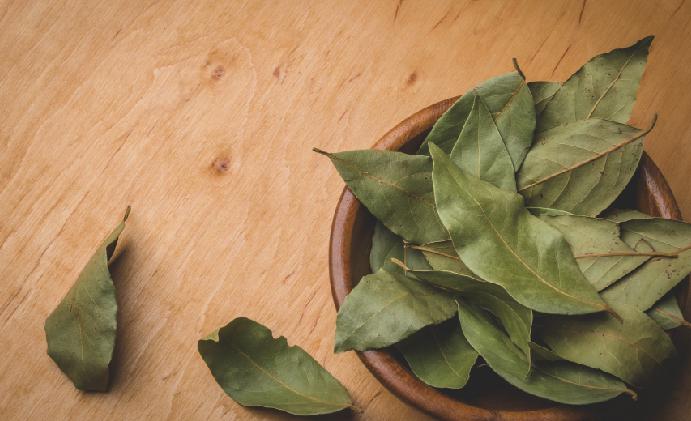
Every time the cold weather sets in, Niharika Parihar, 37, falls sick. On her mother-in-law's advice, she started using bay leaves in her food. Apart from using it in her curries, she started drinking bay leaf tea. Soon, she began noticing a significant change in her immunity against the common cold. Her problems with indigestion also became less frequent.
What is bay leaf?
Common to Indian and Pakistani cuisines, this spice adds a wonderful aroma and flavor to the food. Apart from its culinary uses, bay leaf has medicinal properties and is known for its antibacterial, anti-fungal, anti-inflammatory, diuretic and astringent qualities. Thus, it is an immunity-boosting leaf.
10 health benefits of bay leaf
1. Helps in digestion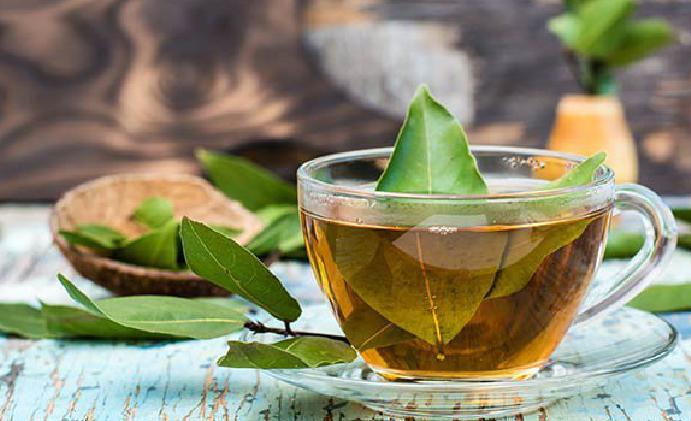 Bay leaves are good for treating digestive disorders like heartburn and flatulence. Drinking hot bay leaf tea is said to dispel common digestive disorders like constipation, acid reflux and irregular bowel movements. Enzymes in bay leaves enable the breakdown of proteins. For indigestion and bloating, drinking bay leaf tea with ginger and honey twice a day proves to be beneficial. If you are recovering from an illness and looking for ways to stimulate your appetite, bay leaf can act as an appetite stimulant. Bay leaf is a natural diuretic as it stimulates urination and aids in flushing out harmful toxins from the body.
2. Reduces congestion As Niharika found out, bay-leaf tea is effective in fighting the irritating symptoms of the common cold by clearing congestion in the respiratory tract.
3. Eases joint pain and body aches
4. Balances blood sugar level
5. Treats nosebleed
Both kids and adults may have an episode of nosebleeds due to many reasons like dry air and the common cold. Sometimes kids have it due to nose-picking too. Bay leaf can be helpful in treating these. To treat nosebleeds, crush two to three fresh or dry bay leaves. Boil them till the water reduces to half. Strain and drink this concoction for relief.
6. Treats respiratory conditions
Bay leaf is useful in treating many respiratory diseases. Due to its natural antibacterial quality, it can loosen up the phlegm and eliminate dangerous bacteria that get trapped in the respiratory tract.
7. Prevents the occurrence of wrinkles
As bay leaf helps in de-stressing the skin, it prevents the occurrence of wrinkles and skin outbreaks. Bay leaf decoction can be used as a compress to treat skin infection. Inhaling bay leaf decoction also helps in keeping the skin firm and supple.
Bay leaf oil when applied topically can heal insect stings and small cuts and bruises. It is used to treat snakebite too. Due to its antifungal and antibacterial properties, bay leaf oil can cure skin infections.
8. Induces sleep
Those suffering from sleep disorders can try bay leaf for relief. Consuming just a few drops of bay leaf extract with water at bedtime is said to induce proper sleep.
9. Cleans the scalp
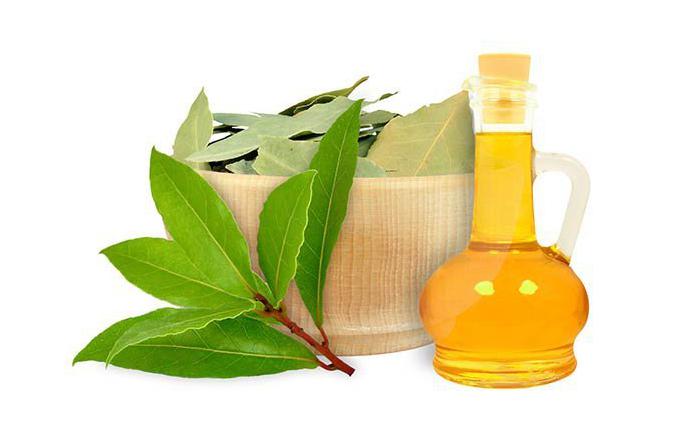
Bay leaf decoction is very helpful in keeping the scalp free of dandruff if used as a post-shampoo hair rinse. The oil extracted from bay leaves is considered to be a great hair tonic.
10. Treats menstrual problems
From the olden days, bay leaves have been used to treat menstrual problems like irregular periods, cramps and vaginal discharges. If the bay leaf is taken orally for some time, it regularizes periods.
As the bay leaf is rich in folic acid, it is beneficial to have it during the preconception period (three months before conception).
Nutritional value of bay leaf
The many health benefits of the bay leaf can be attributed to its rich nutrients. These leaves are rich in vitamins and minerals like copper, potassium, calcium, magnesium, zinc, iron, selenium and manganese, apart from phytochemicals and essential oils.
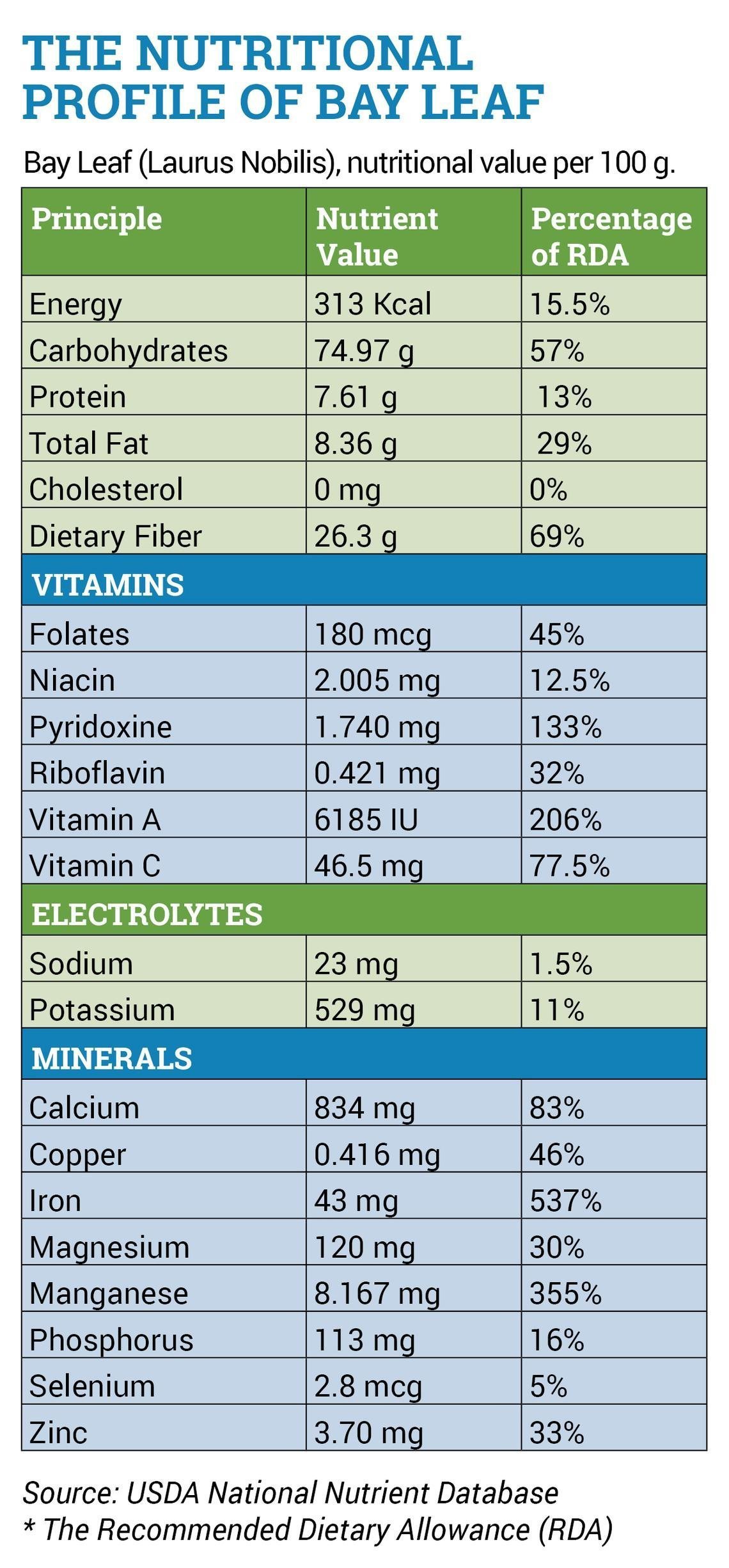
Recommended dietary allowance (RDA) comprises estimated amounts of nutrients that a human body requires to maintain good health. Please note that the values are per 100 grams, as is the norm. However, anyone is unlikely to consume 100g of bay leaves in a day, so please keep that in mind).
How to cook with bay leaves
It is always better to use dried bay leaves as it is said that it retains the flavors most when dried. Also, dried bay leaves are easy to store. However, if you have green and fresh bay leaves handy, go ahead and drop a few leaves in your curries.
Bay leaf recipes
1. Add it in biryanis/pulao
If you are preparing any rice dish, along with dried whole spices, fry a few (around 3-4) bay leaves before adding rice and masala. It will bring in that extra zing to your variety of rice items.
2. Mix it in curries
Preparing mixed veg, chicken curry or Kadai paneer? Along with all the regular ingredients, add 3-4 bay leaves. It will act as that magic ingredient to your curries and bring in a mild flavor to your dishes.
If you are preparing non-vegetarian items like chicken and mutton curry, dry roast all the whole spices and 4-5 dried bay leaves together for 2-3 minutes or until it turns aromatic. Then grind the mixture to a fine powder. You can use this spice mix in your non-veg curries and even use it to marinate meat.
3. Make some bay leaf tea
Boil water and add 3-4 dried bay leaves along with half a spoon of tea leaves. Once it is boiled, strain the water and have it with a dash of honey or sugar. Or you can have bay leaf tea without adding tea leaves. Just add a few bay leaves to a pot of boiling water, squeeze a dash of lemon once it cools a bit, and then drink this refreshing concoction.
You can even add a bay leaf to your regular milk tea and enjoy the aroma it brings to your tea.
Side effects of using bay leaf
There is not much scientific evidence regarding the side effects of consuming bay leaf in larger quantities. However, it is better to avoid having the whole bay leaf as it may take longer to digest. Also, it is a common practice to remove the whole bay leaf from dal and curries before serving. Using 3-4 bay leaves in your curries and pulao is generally safe.
At Dot Learning Circle, our health and safety program for kindergarten students is designed to instill healthy habits from a young age. Through engaging activities and interactive lessons, children learn the importance of maintaining good hygiene, staying active, and making healthy choices.






















Comments
Edit
Comment Flag
Cancel Update