
10 Healthy And Effective Weight Gain Foods To Support Your Baby’s Growth
Priya Kathpal
If your little one is on the lean side, don’t worry. Some babies take their time to gain weight. These 10 healthy foods are packed with nutrients and calories to naturally support your baby’s growth, while keeping mealtimes simple and enjoyable
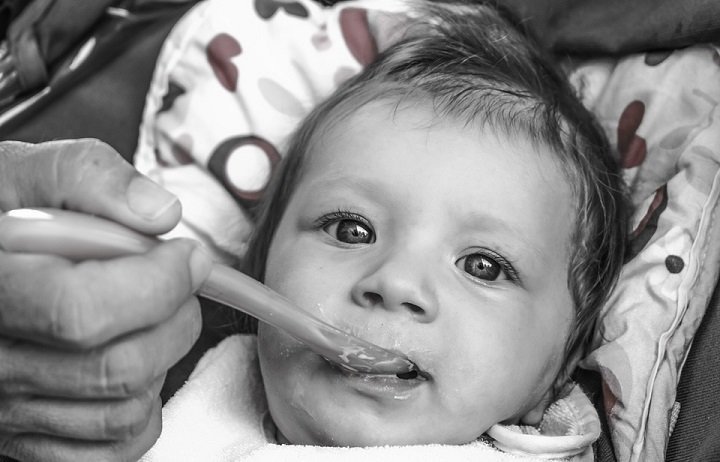
One-year-old Aahana is underweight for babies her age and her mother, Reshmika is worried about the little one's health. Reshmika consulted the family physician to find out why her baby was not gaining weight adequately. She feared that it could be due to underlying illness. To her surprise, the doctor said Aahana's health was perfectly fine and suggested some changes in the child's diet.
Why does a baby's weight gain slow down?
Babies gain weight gradually as they grow. But, at some point, weight gain slows down or stabilises. This usually happens when the baby starts to crawl and is more interested in exploring their surroundings than having food. Most babies lose weight initially after birth and get back to their birth weight in the first 8-10 days. Many babies go through brief periods when they lose a little weight. This is not unusual.
When a baby does not gain adequate weight in the first three months, it could be a cause for worry. It is a good idea to consult your child's paediatrician and check why your baby is not gaining weight.
Timeline of a baby's weight gain
Ideally, in the first three months, a baby should gain, on average, 100-175g a week. But it is important to understand that each baby will have their own pace of weight gain. This does not mean that one baby is healthier than the other. One good way of assessing how your baby is growing is to use a growth chart. This will tell you what percentile your baby is at. For example, if your six-month-old baby is at the 80th percentile for weight, it means that 80 per cent of six-month-old babies are of the same weight as your little one.
As your little one starts getting more active and exploring their surroundings, a slight dip in weight is natural. A good marker in weight gain is to check if your baby has doubled the birth weight by the sixth month and tripled it by the first year. Your baby's paediatrician will mark your baby's progress during the routine examinations and will be able to ascertain if there are any issues, based on the exams.
It's important to look at weight in alignment with other parameters like milestones, immunity, the health of the baby, etc. However, there are some foods you can give the baby to ensure good weight gain.
Note: The World Health Organization recommends that an infant be exclusively breastfed for the first six months after birth.
Foods that can help with weight gain in babies
- Breastmilk: This is ideal for the normal weight gain of a baby. Also, if the baby needs more fat, then a mother's milk will be able to provide it accordingly.
- Dry fruits: These can be given in grated, finely chopped, and soaked forms. Nuts and seeds like almonds, cashews, peanuts, raisins, prunes, and sesame are great sources of healthy fats, proteins, and natural sugars. They are concentrated sources of energy, which means a small quantity will give enough nourishment. It can be added to porridges for your little one.
- Clarified butter or ghee: It is a great source of calories and contains good amounts of Vitamin A. Add a small drop a day to your baby's diet. Try adding it to chapatis, rice, khichdi, etc.
- Homemade fresh juice: These are high in calories and natural sugars, easy to make and consume. Juice also takes care of hydration in babies. For babies under 12 months, it is advisable to give fresh fruit pulp.
- Sweet potato: This is rich in magnesium, potassium, vitamin A and C, dietary fibre, and very low in saturated fat. Sweet potato is also rich in beta-carotene and sugar. Hence, it is a highly nutritious food for gaining weight.
- Potatoes: These are high in starch and fibre, and can be added to almost all kinds of meals or eaten on their own.
- Cheese: A great source of fats, protein, and calcium, choose cheese that is low in salt. It can be combined with bread, potatoes, or even vegetables. About three slices per week are enough. Homemade cottage cheese is a good option.
- Eggs: Are a great combination of proteins, fats, and vitamins. One egg a day can take care of a lot of nutrients. However, please check for allergy, if any.
- Whole-fat milk: Compensates for the extra calorie needs of a child who is not gaining weight adequately. Give it in the form of a milkshake or add it to porridge.
- Jaggery: Helps boost immunity, leading to weight gain. Also, jaggery provides instant energy that is needed for active babies.
Although the above list is good to be offered to babies every day, it's important to make sure they consume a variety of foods that are local and seasonal, for a healthy body.
Priya Kathpal is a nutritionist and the founder of Nutrify.
Last updated on: July 31, 2025
Have insights, questions, or tips to share? Join the discussion on nutrition here.





























Comments
Standard Cold Pressed Oil Sep 9, 2019
Edit
Comment Flag
Cancel Update