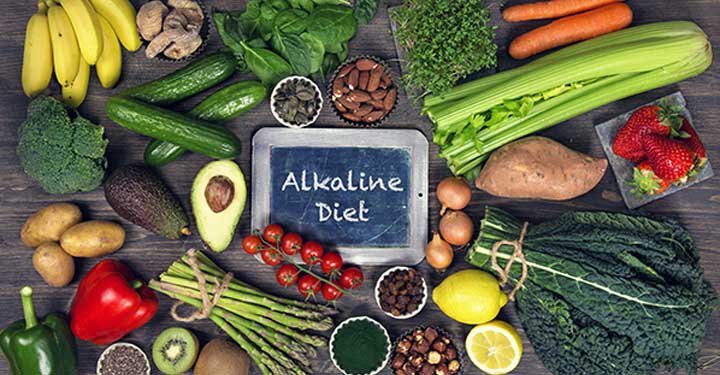
Alkaline Diet is a term we're hearing with increasing frequency. What's it about? Is it good to follow? Or is it just a fad? Let's take a look at the pros and cons of alkalising your body.

Everyone's talking about the Alkaline Diet. There seems to be a general move towards trying to get the body to be more alkaline where certain components like a diet rich in alkaline foods and maintaining the correct pH level play a major role. This wellness trend does do a lot of good, but one has to adopt it mindfully. In other words, yes, our bodies do need to be alkaline to heal and even prevent diseases, but we don't need to go to the extent of flooding our systems with alkaline water and shots.
In order to be mindful about alkalising the body, we need to understand a few basic facts.
The problem is, in the process of normalising pH, minerals like sodium, potassium, magnesium and calcium may be leached out from bones and other organs. As these minerals start getting depleted from our vital organs, it causes low immunity and degradation of the organs, which can express itself as diseases in the long run.
That's why it is important to help the body maintain a good pH balance.
Consider any health condition such as cancer, diabetes, cardiovascular issues, mild to severe migraines, headaches, poorly functioning liver, kidneys, lungs, brains and colons, skin and hair problems, obesity or simply the inability to lose weight. The root cause is an 'acidic' body.
There are approx. 37.2 trillion cells in our body and each cell demands a certain environment (pH level, nutrition and oxygen) to function normally. A pH level of approximately 7.3 to 7.5, going up to a maximum of 7.8, needs to be maintained.
The moment the pH falls below 6.8 or goes above 7.8, cells start to die, leading to degeneration and low immunity, thus paving the way for chronic health issues like migraines, candida and yeast infections, inflammations, cardiovascular conditions, kidney and gall bladder stones, hormonal issues, osteoporosis, cancer, muscular cramps, diabetes, autoimmune conditions, tuberculosis, ulcers, gastritis, cracked lips, low sex drive and much more.
Bone health: In cases of chronic acidity, the body may try to extract calcium from the softer parts of the bones in order to maintain an optimal pH level. So, this is one of the factors leading to joint pain and arthritis. Low calcium in bones can also lead to low Vitamin D3, which is one of the biggest problems in our country right now, and the main cause of osteoporosis and arthritis.
Liver and gallbladder health: When the blood gets too acidic, alkaline salts from the bile are leached to maintain equilibrium. This results in thickening of bile, so much so that it can no longer flush out cholesterol from the gall bladder, leading to stone formation. Therefore, all that is needed to cure gallbladder stones could be steps to keep the body alkaline, possibly accompanied by a liver flush, instead of the most common solution of removing the gall bladder itself.
Digestive health: When the body is acidic, nutrients from food cannot be absorbed. Detoxification is not possible in an acidic medium.
General health: If you are fighting fatigue throughout the day, chances are your body is acidic, because that kind of an environment prevents oxygen and nutrients from reaching the cells in the body
Child health: If your child's body is acidic, the production of the human growth hormone will be hampered and that can result in stunted growth. That's something for parents to be aware of.
So how does the body's acid-alkali balance go awry? Usually, it's because of lifestyle issues.

When we follow faulty lifestyle practices like eating too much animal protein, instant cereals, refined sugar and salt, using tobacco, consuming tea, coffee and alcohol in excess, not drinking enough water, and over-exercising or under exercising, an acidic residue is created in the body, leading to a shift in the pH value, taking it below 7. This is called Acidosis.
Emotional and physical stress and lack of sufficient sleep also contribute towards acidosis.
Though the acid-base homeostasis process will kick in to maintain the right pH level in the blood, persistent pursuit of unhealthy lifestyles, eating the wrong food and prolonged exposure to stress make the body produce acids in excess, leading to health problems.
It is important to remember that while an alkaline blood pH level is indeed beneficial, ideal pH levels aren't same throughout the body. Certain parts of the body need an alkaline environment and certain others, an acidic one.
The stomach, for instance, needs to maintain an acidic pH of around 3.5 so that the food that is eaten can be broken down effectively and digested, the nutrients absorbed, harmful organisms killed and acid reflux prevented. Similarly, the pH level in the vagina needs to be between 3.8 and 4.5.
A normal, healthy and active individual who maintains water intake of 2.5-3 L, eats one or two helpings of fruits a day, drinks a glass of vegetable juice or has a portion of raw vegetables in the form of a salad is likely to have an optimum pH level. However, if the person drinks too much of acidic beverages like tea, coffee or alcohol, eats a great deal of meat, or smokes a lot, special measures will be needed to keep the body alkaline.
So, how does one go about helping the body to maintain an optimum pH level without having to resort to acid-base homeostasis, thus endangering the vital organs and triggering health issues? One doesn't need to go to extremes to do this.
Simply by adding adequate fruits and vegetables and drinking clean water, one can maintain an optimum pH level. It's easier to achieve this with a plant-based diet. Also, reduce/eliminate tea, coffee, tobacco, alcohol, carbonated drinks, sugar, refined salt, milk, cheese, processed foods, meat and eggs from your diet.
However, if meat eaters are conscious about taking sufficient fruits, vegetables and vegetable juices and practice moderation with regard to non-vegetarian foods, they can have better control over the body's pH levels.
Another point to be noted is that all acidic foods are not bad. Pulses and legumes lean towards the acidic side of the pH scale, but that doesn't mean we should avoid them. They have health benefits too and are an important part of a balanced diet.
Some of the most alkaline foods are naturally available. That's why it's very easy to maintain the right pH level with a natural and (mostly) plant-based diet. When naturally available food is packaged and processed, there is a gradual decline in pH value, as all processed foods are acid forming. A diet mainly comprising wholesome and natural foods, with very little of processed foods, should be the aim.
Some of the most alkaline foods are also commonly available and inexpensive. These include lemon, cucumber, bottle gourd, mint, potatoes, fennel, kokum, cardamom, wheatgrass, barley grass, pink salt and aloe vera.
The age-old practice of storing water in earthen pots also helps to alkalise water.
Remember, an overdose of alkaline foods could result in acid reflux, gastroesophageal reflux disease (GERD), recurrent stomach infections (like E. coli and H. pylori) and low immunity.
Everyone needs alkaline foods in their diet. However, what is important is to maintain the appropriate balance at appropriate times. You can go ahead with 80 per cent alkaline and 20 per cent acidic ratio. This is the ratio to maintain in an ideal situation. However, there may be some days where one is not able to achieve that. So, 60 per cent alkaline and 40 per cent acidic ratio can also be followed.
What is important is that your diet is balanced. If you are eating natural, wholesome food that is chemical free, you are automatically working your way towards the right pH values. This holds true for both adults and children.
Many kids do resist eating fruits and vegetables, but then it comes down to setting a few ground rules in your parenting. Here are some tips:
These measures will infuse more oxygen into each and every cell of your body.

If your pH levels tend towards being acidic, it's time to start making lifestyle changes. But be careful not to go to the other extreme, and take in too much of alkaline food. Balance is the key. Make sure you are active, eat the optimum quantity of quality food, and achieve emotional detoxification and you are sure to have great health.
About the expert:
Written by Luke Coutinho on 26 August 2019.
The author, Luke Coutinho is a Holistic Lifestyle Coach - Integrative Medicine.
Also read: Luke Coutinho: All About Intermittent Fasting
Join our Circles to share, discuss and learn from fellow parents and experts!
Looking for expert tips and interesting articles on parenting? Subscribe now to our magazine. Connect with us on Facebook | Twitter | Instagram | YouTube
Comments
Edit
Comment Flag
Cancel Update