
Daily Calorie Requirements For Girls: Ensure Your Daughter Gets Proper Nutrition Support
Shiny Lizia M
Every growing girl needs the right amount of calories and nutrients to stay active, healthy, and happy. This guide breaks down the daily calorie requirements for girls and shares practical tips to ensure your daughter gets the nutrition she needs for growth, energy, and overall well-being
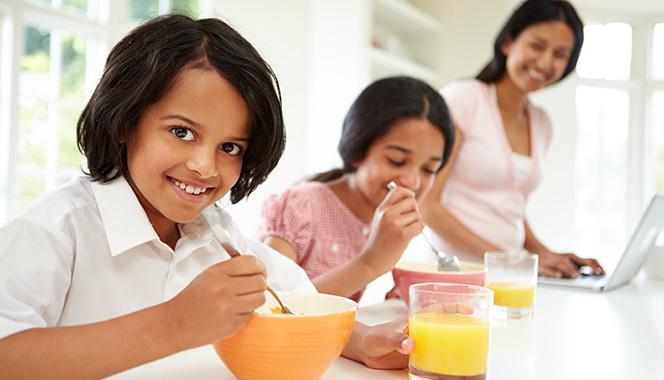
Do you know that the calorie requirement for girls is different from boys?
Do you know what girls should consume each day to reach their calorie count?
Do you know how much liquid intake girls need?
Let's find out.
Every human being needs energy for normal functioning. Energy is derived from the foods we consume, in the form of calories. Energy gets depleted through various functions and activities.
The word 'calorie' is no more jargon; most of us are aware of its role in the well-being of a person. A calorie, by its simplest definition, is a unit of energy, equivalent to 4.184 joules. The commonly used measure of a food calorie refers to a kilocalorie (Kcal) or 1000 cal.
Factors affecting the calorie requirements of children
The calorie requirement of an individual depends upon the following factors: age, sex, height, weight, Basal Metabolic Rate (BMR), and level of physical activity. Age and gender affect metabolic rate and, therefore, influence one's caloric allowance.
Energy requirements of adolescents are higher to support pubertal growth and development. When they reach puberty, girls need more calories than before, but they tend to need fewer calories than boys. Boys experience greater increases in height, weight, and lean body mass than girls and, hence, require more energy.
After BMR, physical activity determines your child's daily caloric allowance. The lower the physical activity level, the lower the calorie allowance and vice versa. In addition, the height and weight of your child also determine her calorie allowance.
Daily calorie requirements for girls based on age and activity
National Institute of Nutrition, under the Indian Council of Medical Research, proposes the Recommended Dietary Allowances (RDA) for Indians (2010). RDA can be defined as the average daily dietary intake level that is sufficient to meet the nutrient requirements of healthy individuals in an age and gender-specific group. The energy requirement of each individual differs, based on one's state of energy balance and other factors affecting food consumption and health.
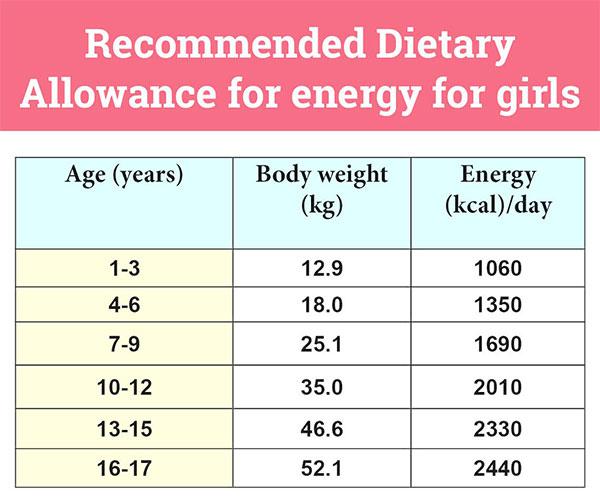
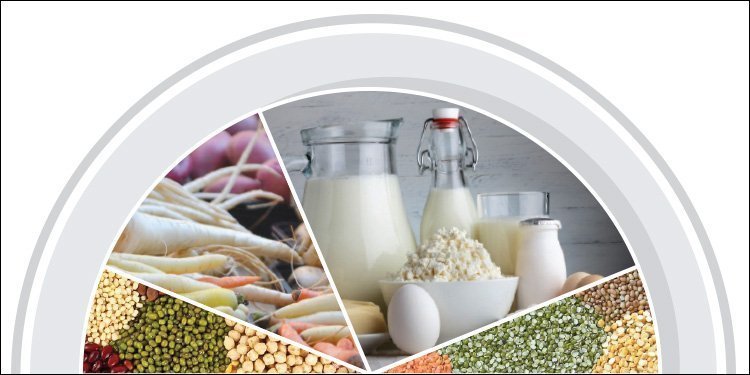
Essential Nutrients Every Growing Girl Needs for Energy and Development
If your child's energy requirement per day is close to 2000 Kcal, a balanced diet should provide:
- About 50-60% of her total calories from carbohydrates, preferably from complex carbohydrates (whole grains and fiber-rich cereals)
- About 10-15% from proteins (pulses, egg, milk, meat, and fish)
- About 20-30% from both visible (oils, ghee, margarine) and invisible fat (naturally present in foods).
As stated by the National Institute of Nutrition, in India, 70-80% of total dietary calories are derived from carbohydrates present in plant foods such as cereals, millets, and pulses. Understanding the number of calories present in each food group will help you plan out a balanced diet for your child.
One gram of carbohydrate yields 4 Kcal; a gram of protein yields 4 Kcal; and a gram of fat yields 9 Kcal. This implies that if you know how many grams of each food group your child consumes in her food every day, you can approximately calculate her total calories consumed. You would multiply the number of grams by the number of calories in a gram of that particular food component. For example, if a serving of biscuit has 10g of fat, it yields 90 calories (10g x 9 calories per gram).
Therefore, it is wise to:
- Include all the food groups in the right proportions to avoid deficiency or excess of energy and other nutrients as well.
- Understand that energy is not a matter of consumption alone; the number of calories consumed will have to be burned in the form of physical activity.
- Understand that excess calories consumed will be converted and stored as fat in the body, which might lead to non-communicable diseases.
Simple tips to encourage healthy eating habits in your daughter
- Encourage her to eat a balanced diet.
- Reduce sedentary behavior (watching TV, playing on mobiles, computers, and PlayStations).
- Expose her to a set physical activity pattern.
- Inculcate the habit of reading food labels while purchasing foods to understand the nutrients mentioned in them.
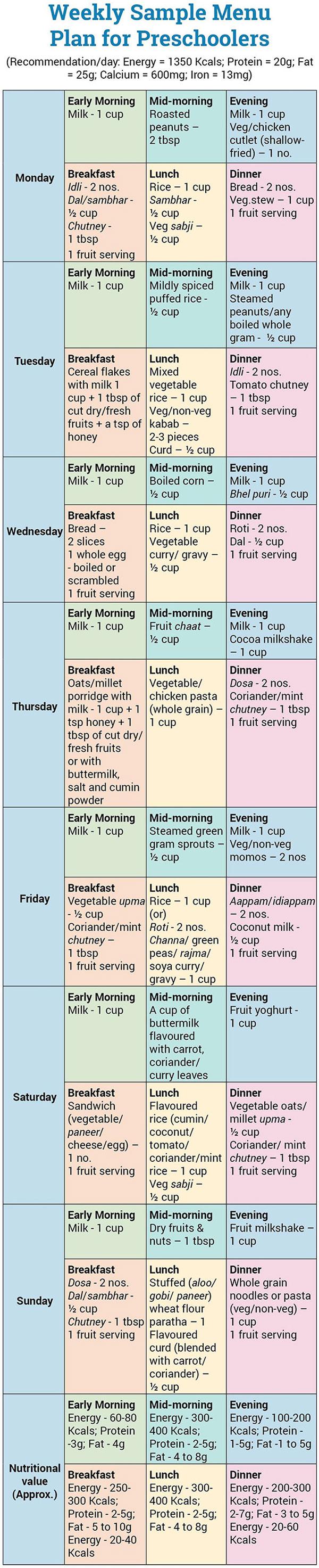
Based on your child's food choices and your time, you can cook interesting and innovative recipes that include the different food groups and balance the calorie load.
Last updated on: August 1, 2025
Have insights, questions, or tips to share? Join the discussion on nutrition here.































Comments
Edit
Comment Flag
Cancel Update