
Constipation in Toddlers: Causes and Treatment
Dr Vivek Rege
author parentcircle author parentcircle author parentcircle author parentcircle author parentcircle author parentcircle
Wondering how to handle constipation in your toddler? Check out our expert's views on what causes the problem and how to help your child feel better.
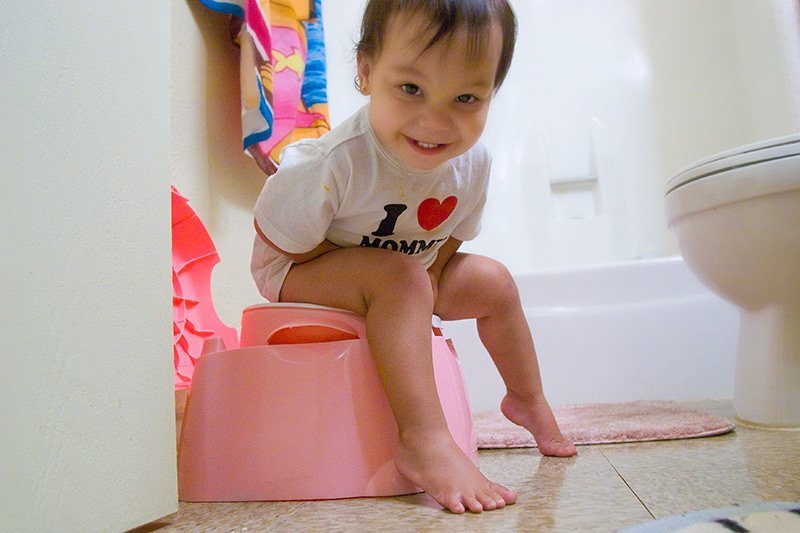
You are at your wit's end. Your toddler is constipated and you can't bear to hear her cry incessantly as she struggles with her bowel movements. So, what exactly does it mean when you say your child is constipated? It means that she is not passing adequate stools daily.
Passing stools less often than thrice a week, passing hard stools with difficulty or passing large volumes of stools, all these conditions can be termed as constipation. Basically, constipation is an abnormal and irregular passage of stools that has been persistent for over two months in older children and three weeks in young infants and children.
What causes constipation?
Constipation in children may be caused by the abnormal site or size of the anal opening, by drugs given for prolonged diarrhoea or a congenital condition called Aganglionosis (a disease of the large intestine which can cause constipation and intestinal blockages).
However, most commonly, though, it is due to poor feeding habits and improper toilet training in childhood. In 95 to 98 per cent of children over two years old, it can be traced to inadequacies in the daily diet, both in terms of quality and of quantity. Other causes include taking drugs like Codeine, which is given for coughs. In some toddlers, a spinal cord defect, trauma or a tumour can affect the nerves and cause constipation and or incontinence of the bowel and bladder.
Incomplete evacuation of bowels and constipation
Constipation is, in some cases, part of the Dysfunctional Elimination Syndrome (DES) that affects the urinary as well as bowel evacuation function. In such cases, the evacuation of stools in the terminal large intestine is incomplete and the stools keep accumulating over a period of days, weeks and, sometimes, even months. This could lead to impaction. In impaction, the stool volume is so large - it can be felt even during an abdominal examination. There is also a hard mass in the rectum that the toddler just cannot evacuate. He gets tired of straining to pass the stools.
Constipation and bedwetting
Constipation is not only a problem in itself; it can be the cause of other problems too, like bedwetting. As the stools accumulate in the child's rectum, the rectum begins to push against the bladder. As the rectum is just behind the urinary bladder, that irritates the bladder. This leads to involuntary passing of urine due to abnormal contractions of the bladder wall muscle. This happens more at night. It has been found in 72 per cent of children with both constipation and bedwetting that treating constipation can cure the bedwetting.
How constipation causes urinary tract infection
Just as a loaded rectum can lead to bowel irritation, constipation with an overflow and leakage of stools in the genital area is a well-known cause of Urinary Tract Infection (UTI), more so in girls as the distance between the urethra and the bladder is short and infection travels up to the bladder from the urethra. Once again in toddlers with UTI, it is important to get the history of stool evacuation and constipation. And if there is a positive history of constipation in toddlers with UTI, it is essential to treat constipation aggressively before investigating the UTI.
What to do if your toddler is constipated
So, what do you do if your toddler is constipated? The first thing to do is make a note of the history - for how long she has had constipation and how severe it is. Basic investigations along with a proper examination by a doctor will tell you whether it is just simple constipation or constipation with impaction. If there is impaction, the first thing that has to be done is to disimpact the rectum. For this, the doctor will either prescribe enemas daily for a couple of days followed by oral laxatives or give high doses of laxatives, depending on the child's age and weight. It can be given for 8-10 days followed by regular doses for an extended period of up to six-nine months.
The main emphasis will be on changing the diet of the child. The new regimen has to be strictly followed and neither parent nor child should change it in any way. The backbone of the treatment is a proper daily diet - no medicine will work otherwise.
Tips for parents to teach their toddler bowel management
- You must start bladder and bowel training for your toddler early, usually by two years.
- Be patient, invest time and effort in the process and do not leave it to your maid to teach your child.
- Don't lose your temper, or scold or punish him while toilet training - it will only make it more difficult for him to learn.
- Potty training must start with teaching the toddler to sit on the potty at a fixed time in the morning. He should be taught to draw his navel in to try and move his bowels.
- Make sure you don't feed your child with too much of fast foods, biscuits, wafers, chips, etc. Give him a regular breakfast, lunch, tea and dinner with a gap of about four hours between meals. Try to avoid snacks in between.
It can be painful to watch your toddler struggling with constipation. But a proper diet and proper toilet training help, in most cases, in dealing with the problem.
Looking for expert tips and interesting articles on parenting? Subscribe now to our magazine. Connect with us on Facebook | Twitter | Instagram | YouTube

























Comments
Edit
Comment Flag
Cancel Update