
Make dad-chats a regular part of your teen's life: Here is why they are a win-win method
Sriram Naganathan
Conversations with dad have the potential to boost a teen's self-esteem and well-being. Dads can also guide teens explore the world, besides helping in their transition into sensitive responsible adults

Teenage is typically marked by increasing unwillingness to spend time with parents. So is it realistic for a dad to aim at increasing quality conversation time with his teenage son/daughter? Well, it is not just possible but necessary too. However, a father has to have a glimpse of how an adolescent's mind works and adopt suitable strategies for generating and sustaining productive conversations.
Here are some ideas that you might want to mull over.
Strategize dad chat
Dad: Hey, would you like to know how I cheated for the first time in my life?
Daughter: Ah! Ok, go ahead.
Dad: When I was 10, my parents and I had gone on a tour of Karnataka. When in Mysore, we took a 'daily tour' bus to see some interesting places around the city. By evening, our bus reached Gumbaz in Srirangapatna, the mausoleum of Tipu Sultan and his father Hyder Ali. My tired parents decided to stay back in the bus. I jumped off. The Gumbaz was about 500 meters from where the bus was parked. Footwear was not allowed inside the Gumbaz. An old man sat outside and looked after the visitors' footwear for 25 paise a pair. I knew I had a 25 paise coin in my pocket. So left my chappals with him and went in. After a leisurely walk, I came out, wore my chappals, and gave the old man the coin I had.
He took a look at it and returned saying it was invalid - it was a 5 paise coin (a square one) which had its edges cut off to make it look like a round-shaped 25 paise coin. It had zero value.
I was shocked and didn't know what to do. I had no other coin.
The bus would be leaving any moment and I had to rush. I decided to run, confident that he wouldn't leave the chappals he was guarding to chase me. I threw that invalid coin towards him, sprinted to the bus, and got in. In a few seconds, the bus began moving to my relief.
Daughter (angrily): Oh no....Why did you have to cheat a poor old man?!
Dad (in a meek voice): You see, I was only 10. And confused. And in any case, what could I have done?
Daughter (in an angry tone): That's an excuse. You were only 10 but could reason that he would not be able to run to catch you. Why couldn't you have left your chappals and walked back barefoot? You must have been wearing ordinary slippers and not branded shoes. At least, he might have made up for the loss by selling it. Instead, you decided to cheat him. Look, a person's character is tested in such split-second decisions. Not when you have had enough time to deliberate and put on an act to project an image of your character to the world. I am ashamed of you. Go away!
Dad: (walks away, looking remorseful, but internally pleased)
The above conversation was between a Chennai-based father and his 18-year old daughter was aimed to check how strong his daughter was and also to make her feel comfortable in discussing her errors of judgment, and conduct.
His strategy
Narrate an incident from his life that would most likely make her disagree with his decision on moral grounds. It worked. His daughter has no qualms in narrating instances where she had erred, including on moral grounds.
His reasoning
Too much of a burden is put on children by parents trying to script perfect life stories. All failures, all errors of parents are wiped clean. "Demystifying yourself and getting your teen-kid to appreciate that you are an imperfect human helps them talk to you a lot more freely," he says.
"All parents were once perfect teenagers. Model humans. Never drank, smoked, swore, or lay in bed all morning. They were completely in control of all their hormones. They probably never had any hormones at all. They were calm, always smiling, and incredibly polite to everyone around them. All parents also have amnesia. That's why they think the above paragraph is true" - Nicola Morgan in Blame My Brain: The Amazing Teenage Brain Revealed
Is dad-chat different from mom-chat?
Sure, both parents play critical roles in bringing up a child, by drawing on strengths that each individual brings to the table. The intensity of engagement is based on the individual personality type of either parent. For instance, the extent of acceptance towards risk-taking varies between any two individuals be it dad and mom, or, for that matter, anyone else.
Are there generic differences between dad and mom in engaging with their teen?
A research study published in 2019 in the Journal of Youth and Adolescence reveals that mothers are seen more as 'safety' providers, while fathers are seen as facilitators in the exploration of the world. The influence of fathers, who are also perceived to encourage independence more than mothers, as 'bridges to the outside world' becomes more pronounced during adolescence.
"A dad's approach to his teens may evolve or remain stable throughout", says a Chennai-based father of a 16-year old daughter and 14-year old son. "An approach will evolve through the years only if it is sub-optimal to start with. Within a year of their teens, my approach stabilized and continues the same way. As that approach seems to be accepted, without creating discontent in relationship, it continues without really evolving."
So, in what ways a dad can guide a teen in conversations? Here are a few examples. You can work out more of your own, based on what you are already doing as a dad to your teen.
Handling finance
Here's what a father had to say: "My daughter, in her late teens, lives in a University hostel in Bangalore. She is not a spend-thrift but has been struggling to contain her expenses on dining out, buying clothes, etc., within the monthly allowance that she gets in her bank account. Getting her to write down expenses on her debit card - simply did not work. Her bank balance was often dipping below the minimum levels and I found myself replenishing it since I got the notification from the bank (she didn't). We had a conversation on this when she came home last summer. I told her that I wanted to help her tackle this issue and we could do that jointly. We agreed that any excess expense over the allowance would be deducted from the next month's allowance. It was also agreed that if she felt an extraordinary expense should be kept out of the allowance, we could consider that. Since then, she has been vigilant on her spends."
Connect through common interests
For pre-teens, mothers typically monitor their social activities. However, as adolescence sets in, the role of a father in helping a child form social relationships increases. Non-intrusive conversations about the child's evolving friendships, encouragement to take up after-school activities (s)he is passionate about, etc can help widen the scope for a mutually enriching dad-teen chat. You may find sharing leisure activities such as listening to music, watching or playing sports or going for an early morning run together bringing you closer to the teen as well as widening the scope for enriching conversations. You may also help in areas such as deciding on colleges and careers, getting a driver's license or passport, opening a bank account, etc. In a sense, fathers can build on earlier contributions made by mothers.
Converting challenges into opportunities
"My daughter gets distracted easily. Our efforts to get her to work on this issue did not yield results. I sought the help of a friend, the dad of a teen himself, who agreed to have conversations with her. He then listed career opportunities that would suit her personality traits and assured that she is smart enough to excel. So what was considered a hurdle now appeared as potential to handle many tasks across domains," says the father of an 18-year old undergraduate student.
Tricky topics for a dad-daughter chat
It may not be easy for a dad to talk to a teenage daughter on certain topics, mostly related to her physical development, hygiene, periods, etc. You should be open-minded about discussing these issues, if warranted, with genuineness in your voice and tone.
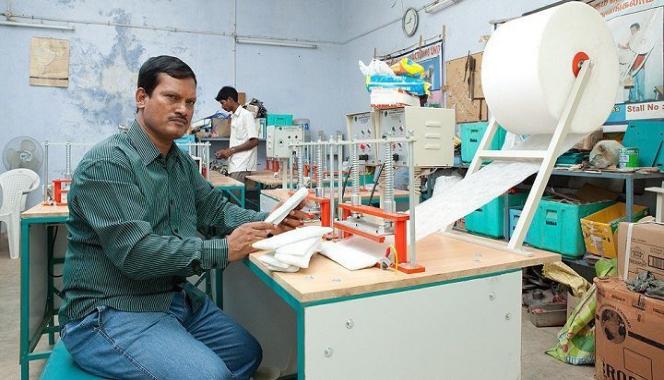
Listen to a dad here: "My teenage daughter was going off to a remote part of the eastern Himalayas for a couple of weeks. My wife wasn't around. I wanted to check if she had packed her sanitary napkins and knew how to dispose of them safely in a mountain village where there are unlikely to have incinerators or even dustbins. I managed to ask her with a straight face and was satisfied with her response".
If your daughter is hesitant to go to the neighborhood shop to buy sanitary napkins, you could offer to buy them for her. Periods are nothing to be ashamed of. There may be awkwardness in such conversations initially, but over time, that will vanish.
Helping your teen handle harassment
Sometimes, these could be more complex but serious issues - such as harassment (s)he could be facing but is hesitant to tell you about. If you spend time to connect with him/her every day, you will be able to figure if (s)he is going through a bad experience that (s)he doesn't want to tell. Wait for the right time to ask if there is something that (s)he wants to tell you about but is hesitant to do so. And once a conversation happens, discuss possible decisions and offer your views and advice for a course of action. Assure her that you are always there for her, anytime, no matter what.
According to Dr. Jerry Bubrick, a clinical psychologist at the Child Mind Institute, when you're validating her feelings, you should use a period, not a comma. That means support isn't followed by criticism - "That must have been really hard for you," not "I can see why that upset you, but maybe you're being oversensitive?", says Dr. Bubrick.
As Dr Meg Meeker says in his book Hero: Being the strong father your children need (2017) "Dads are meant to be heroes to their children-and you start off with that status from day one. So, as they say in football, you have the lead, the game is yours to lose or to win."
Strategies for effective dad-teen chats
- Control your emotions: Hold yourself from emotionally reacting to outbursts and flare-ups of your teen. The underlying reason could be hormonal changes - a hike in testosterone levels for boys and progesterone levels for girls. The boys may exhibit aggressive or even violent behavior while the girls might experience changes in moods. If you understand the reasons behind unacceptable or peculiar behavior and respond thoughtfully, without emotionally reacting, that would help the child wrestle with difficulties not in his or her control better. "If adults only knew the truth about the teenage brain, they'd realize that they couldn't have escaped its special behavior", says author Nicola Morgan.
Later, at an appropriate time, when you think a certain emotional distance has been reached, you could pop the question 'what were you feeling the other day?' in a calm tone to get an idea of their thoughts on the incident or issue. - Never demean the mother: In no conversation with your child, should you be mean to his/her mother. A teen learns a lot about how to treat others from his/her dad. If you have, even once, made a derisive comment about your wife (perhaps in a moment of anger) in a conversation with your teen, it helps to form or reinforce a certain negative image of the mother. Given that it is difficult to undo the damage, make a non-negotiable rule for yourself: never talk ill of your wife in any chat, casual or serious.
- Take the time to listen: Give your teen time when (s)he seeks a conversation with you on something, anything. The topic - if you get to know about it - may sound silly for you but it may be important for him/her. If you are too busy, then you could commit to getting back before a certain time. If you do so, keep your promise.
- Don't be judgmental: Instead, commit total support and make sure they know they have your unconditional love and backing. Often your judgment may be based on your past that may not even be relevant today. And, it is also important to support them in dealing with their peers and talking about issues that may come up in peer interactions. Whatever be the case, always support your teen during this period when he/she is going through a significant psychological transformation.
- Be a role model: If you want your teen to form a good habit or kick out a bad one, do try to practice it yourself. While it is okay to admit instances of hypocrisy in your past with your children, it is not okay to start a new one. It's okay if you fail a few times and make it known to your teen that you are on the same boat. That might lead to better bonding. An example here will help.
- Make repairs: There might be occasions when you treated your teen unfairly. As soon as you realize your mistake, don't miss the opportunity to apologize. It doesn't matter if it is delayed by a day, a month or a year, after the incident. They may not say it, but your apology will be deeply appreciated by a teen. And remembered too.
- Practice active listening: (No, this doesn't mean you jump in and switch on your problem-solving mode!) Sometimes, only active listening is expected and no response from you. For instance, when day-to-day happenings are shared, the role of either parent is to listen and not to respond/react. Often, when a response is given, a disagreement follows inevitably. When you want disagreements (as these are not always bad and have a learning value), then you respond. But refrain from responding every time.
- Learn from your teen: Your teen might know many things that you don't. Do seek opportunities to learn from him/her. It might be fun. Here's an example.
Father: I have a doubt. What is the difference between "thingie" and "stuff"? You and your friends use both words. Is there a difference? Are they interchangeable in your vocab?
Daughter: See, both broadly mean the same thing - something unspecific, something you are too lazy to describe. We use "stuff" when we feel like adults and use adult-lingo. We use "thingie" when we feel like children. It's child-lingo. As for the difference, "stuff" can include intangibles - you can enjoy a book and say "this is good stuff". You won't say "this is a good thingie". "Thingie" is a sub-set of "stuff".
Father: Ah ok. Got it. Thanks.
In a nutshell
|
What you can do right away
|

























Comments
Edit
Comment Flag
Cancel Update