
6 Simple Yoga Asanas For Irregular Periods, Cramps, And Better Menstrual Health
Monali Bordoloi
Irregular periods and painful cramps can affect daily life and overall well-being. Discover 6 yoga asanas that address period pain relief and menstrual cycle regulation. These gentle poses can improve blood flow, reduce discomfort, and promote relaxation during your menstrual cycle

Ever since she gave birth to her baby girl a year ago, Yogita Sreedhar has experienced irregular periods and severe cramps, but is reluctant to take medication. One day, she meets an old friend who recommends yoga, explaining that it may help regulate the menstrual cycle and ease associated discomfort.
ParentCircle presents this interview with yoga guru Suneel Singh, who explains how practicing the right yoga poses can help regulate irregular periods, ease cramps, and provide relief, especially during the first two days of menstruation.
What are irregular periods?
The menstrual cycle is typically 28 days but can range from 21 to 38 days. It is considered irregular if periods do not occur for over 35 days, or if there is unexplained bleeding within 21 days of the previous cycle. Occasional irregularity is normal, but frequent irregular menstruation warrants a visit to the doctor.
Why a visit to the doctor is important:
Irregular periods can be due to changes in hormone levels, Polycystic Ovary Syndrome (PCOS), excessive exercise, certain medications, thyroid issues, pregnancy, breastfeeding, uterine fibroids, or high stress levels.
Practicing yoga during periods is one of the best ways to manage irregular menstruation, painful cramps, and other menstrual disorders.
Should you practice yoga during periods?
Yoga guru Suneel Singh says, "It is entirely a woman's decision whether to practice yoga during menstruation. Most contemporary yoga methods respect this choice. Asanas like tadasana, pawanmuktasana, and dhanurasana can help alleviate menstruation-related cramps."
Yoga asanas can help regularize irregular periods
Here are six yoga asanas that can help get your menstrual cycle back on track. What's more, these asanas can be done at home.
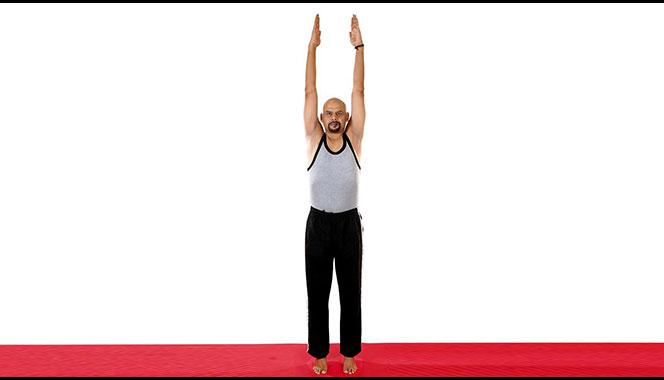
1. Tadasana (Palm tree)
How to do it:
- Stand erect with heels together or about 10 cm apart.
- Raise your arms above your head with palms pressed together.
- As you inhale, stretch your arms, shoulders, and chest upwards while rising onto your toes.
- Stretch the whole body from top to bottom without losing balance.
- Keep your gaze fixed at a point in front of you.
- Hold for a few seconds, then exhale slowly and lower your heels. This is one round.
- Do five rounds, synchronizing your breath with the raising and lowering of the arms.
| Benefits: This asana stretches the entire spine and loosens the spinal nerves. It also develops physical and mental balance, and may help regulate the menstrual cycle. |
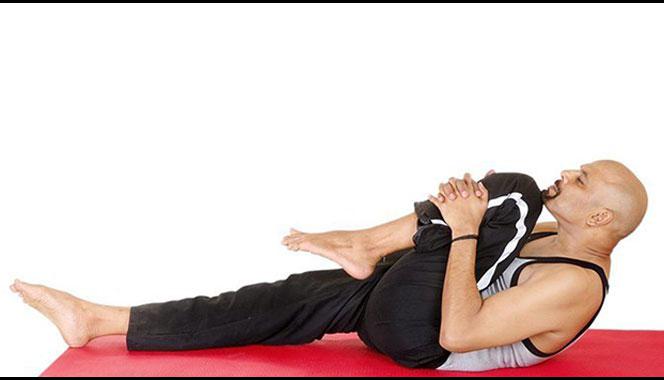
2. Pawan muktasana
How to do it:
- Lie on your back with legs together.
- Fold the left knee and bring it toward your chest. Clasp both hands around the knee and press toward your chin, keeping the other leg straight and gaze forward.
- Repeat with the right leg.
- Then fold both legs together, clasp them between your arms, and press both knees toward your chin.
- Do this asana three times.
| Benefits: This asana massages the digestive organs, helping relieve gas and constipation. It also eases indigestion during menstruation. |
Note: If you have a slipped disc or sciatica, avoid pawan muktasana.
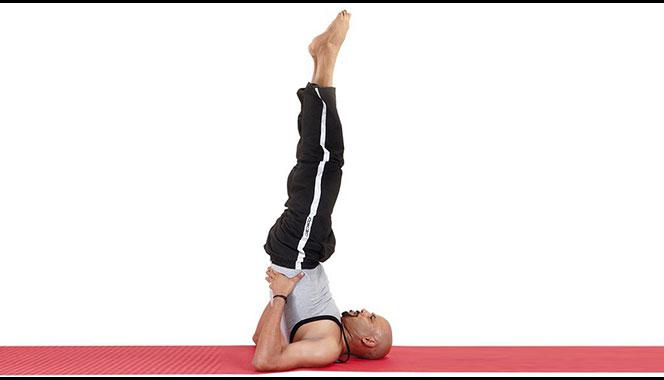
3. Sarvangasana
How to do it:
- Lie on your back and relax completely.
- Slowly raise your legs, hips, and trunk in one smooth motion until they are vertical.
- Keep your knees and hips straight; support your trunk with your hands while keeping your elbows bent.
- Rest your chin against your upper chest.
- Hold the position for as long as is comfortable
- Then slowly return to the starting position.
- Practice this once a day.
| Benefits: This asana improves blood supply to the eyes, heart, face, thyroid, spinal nerve roots, and brain. It relieves circulatory congestion, allows hormones to flow freely, and helps ease menstruation-related pain. |
Note: Those with high blood pressure, heart ailments, cervical pain, or a slipped disc should avoid this asana.
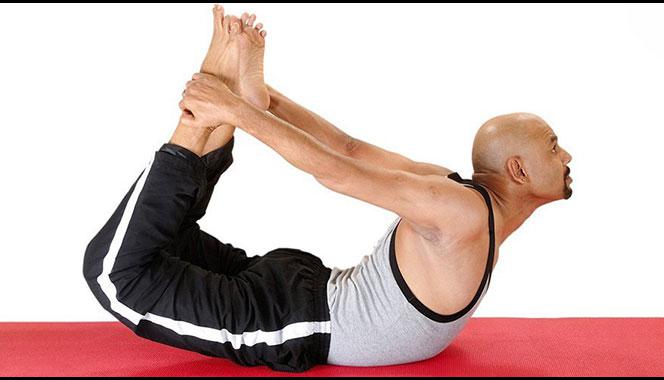
4. Dhanurasana (Bow)
How to do it:
- Lie flat on your abdomen with legs together and arms beside your body.
- Bend your knees and bring your heels close to your buttocks.
- Rest your chin on the floor and clasp your hands around your ankles.
- Inhale deeply and lift your head, chest, and legs off the ground, pulling your hands and legs in opposite directions.
- Balance the entire body on the abdomen. Hold for as long as comfortable
- Then slowly lower your legs, chest, and head back to the starting position.
- Repeat at least three times.
| Benefits: This asana stimulates gastric secretions, improving digestion, and massages the liver and abdominal muscles. It is recommended for managing diabetes, menstrual disorders, and neck pain. |
Note: People struggling with colitis, hernia, and slipped disc should avoid this asana. Those with heart conditions or hypertension are also advised not to practice it.
5. Nadi shodhana pranayama
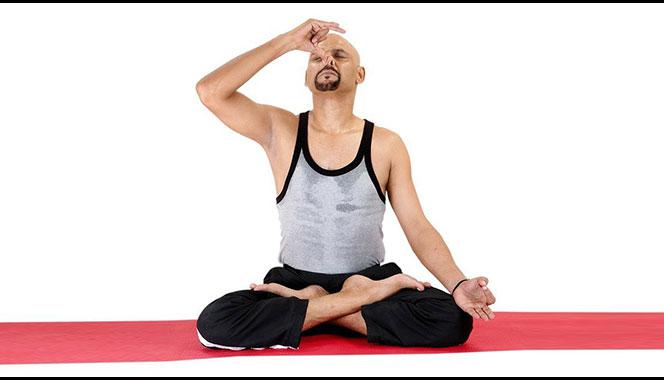
How to do it:
- Sit in a comfortable meditative posture with the head and spine upright.
- Close your eyes and relax.
- Using the right thumb, close the right nostril and inhale through the left.
- Then close the left nostril with the ring finger, release the thumb, and exhale through the right nostril.
- Inhale through the right nostril, then close it, release the left, and exhale through the left. This is one round.
- Repeat for a minimum of 20 rounds.
| Benefits: This pranayama floods the body with oxygen, expels carbon dioxide, and purifies the blood of toxins. Regular practice reduces anxiety, lowers stress, and leaves you feeling uplifted. (Nadi means channel or flow of energy; shodhana means purification.) |
6. Shavasana
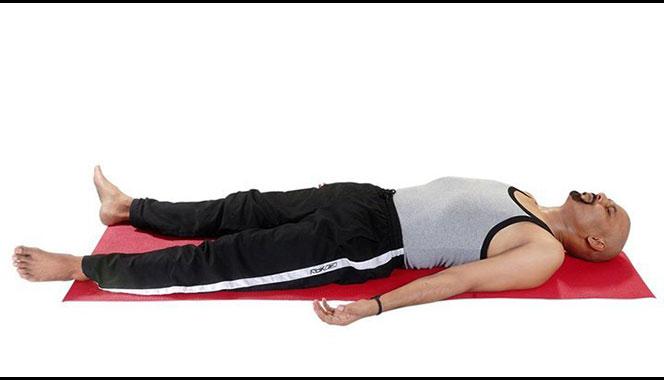
How to do it:
- Lie flat on your back with arms about 15 cm from your body, palms facing up, fingers curled naturally.
- Close your eyes.
- Keep the head and spine in a straight line and relax completely.
- Become aware of your natural breath.
- With each inhalation, quietly chant 'So', and with each exhalation, 'Hum'. In Sanskrit, So means 'I am,' and Hum means 'that I am.'
- Continue for five to ten minutes.
| Benefits: This asana relaxes the body and mind, reduces discomfort during menstruation, and is best practiced before sleeping. |
Note: Avoid unnecessary movement while practicing yoga, as even the slightest motion can cause muscular contraction.
Looking for simple ways to stay fit and relaxed despite your busy schedule? Discover these effective yoga poses for moms that help improve flexibility, reduce stress, and boost overall wellness—all from the comfort of your home.
Last updated on: June 05, 2026



























Comments
Md Muntadir Dec 18, 2019
Md Muntadir Dec 18, 2019
Edit
Comment Flag
Cancel Update