
Teaching Consent To Children: Body Boundaries, Safety, And Everyday Parenting Tips
Saakshi Kapoor Kumar
author parentcircle author parentcircle author parentcircle author parentcircle author parentcircle author parentcircle author parentcircle author parentcircle author parentcircle
Teaching consent doesn't need a perfect moment. This article shares simple, practical ways to help children understand respect, stay safe, and build a strong foundation in consent and child safety through everyday parenting moments

In Part 1, you understood why consent matters. But how do you actually teach it to your child in everyday life? Do you wait for the 'right age'? Do you sit them down for a serious talk? Or is it something that happens in small, everyday moments? Teaching consent isn’t a one-time conversation. It’s something children learn through what we say, what we do, and what we allow.
In Part 2, we help you move from awareness to action with simple, practical ways to help your child understand body boundaries, speak up with confidence, and build respectful relationships from a young age.
Understanding body and emotional boundaries in children
What are boundaries, and why do they matter
When we talk about consent, the phrase ‘body boundary’ becomes very important. Everyone has a body boundary. This body boundary acts like radar and tells you when to say ‘no’ and when to say ‘yes’ to any activity. In other words, it helps you exercise your right to consent.
A body boundary is a self-constructed set of personal guidelines or rules that helps us determine our ‘limits.’ For instance, some people enjoy hugs while others would rather shake hands to greet someone. Body boundaries can also mean different things for different people. Which is why hugging some people feels right, whereas with some people, it just doesn’t feel comfortable.
Apart from a body boundary, there’s an emotional boundary, too. Emotional boundaries help us define how we wish to be treated by others and how we wish to treat them. For instance, suppose you and your friend get into an argument, and they begin calling you names. While you are friends and share a good bond, you’re not okay with name-calling. They may say, “It’s just a fight between friends”, but you feel a boundary has been crossed. That’s your emotional boundary. Boundaries protect us. They are really important for building and maintaining healthy relationships.
Why boundaries matter for healthy relationships in children
In a healthy relationship between, say, two people:
- Both are aware of their boundaries
- Both communicate their boundaries openly to each other
- Both respect each other’s boundaries
This is why consent is not just a conversation; it’s really a life skill. It helps children establish and nurture healthy relationships at school, at home, and at work.
How teaching consent protects your child’s safety
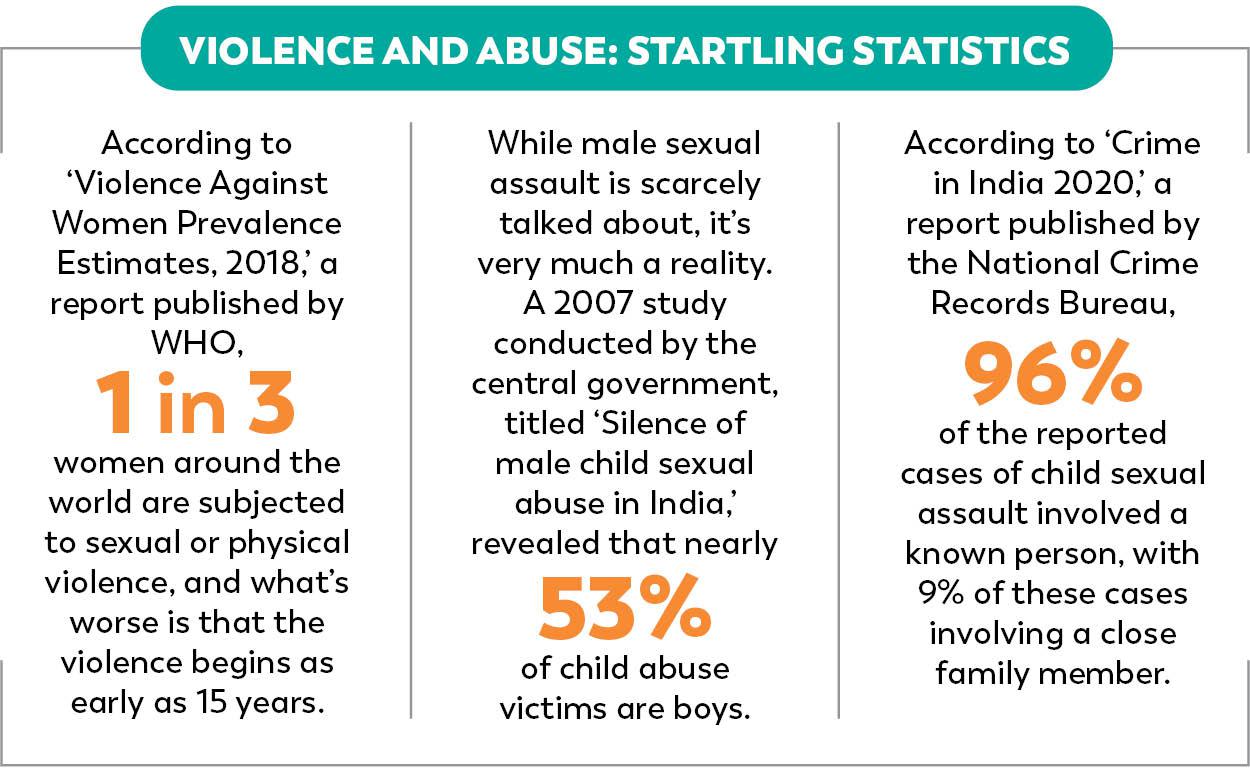
Consent plays a crucial role in physical activities or physical touch. People around the world began to pay attention to consent when the #MeToo movement went viral in 2017. After the movement, people, irrespective of gender, started narrating their personal stories of consent
violation. This led to new insights and new conversations, and one thing became clear. The lack of knowledge about consent is dangerous.
Conversations about consent don’t just empower your children; they may even protect them from potential harm.
What every child should know about consent and safety
- They have the right to consent. They need to say ‘no’ when they don’t want to do something and say ‘yes’ clearly when they do.
- Others have the right to consent. Your child needs to respect another person’s ‘no’ and wait for their ‘yes’ before they participate in any activity with anyone.
- There is at least one adult they can trust to discuss all matters related to consent.
- Informing the trusted adult about any violation of consent is important and necessary.
The above information helps your child remain safe and allows them to communicate openly if they have felt unsafe in any situation.
How to talk to your child about consent at every age
Before talking to children about consent, it’s wise to first reflect on your own thoughts and beliefs about it.
Ask yourself these questions:
- Do I model consent?
- Do I know my body boundaries?
- Do I communicate my boundaries clearly?
You can do this activity with your partner, so both are on the same page.
Simple strategies to build a consent culture at home
Here are some strategies you can use to create a consent culture at home with children of any age. Tweak the narrative based on your child’s age.
1. Make consent an everyday conversation
Consent, like charity, begins at home. Ensure that routine interactions involve consent:
- Can I hug you?
- Can I sit next to you while you watch TV?
- Can I tell your grandmother about your boyfriend?
These examples show that consent doesn’t have to be an entirely separate conversation. It needs to blend with your daily routine. When that happens, children feel safe and comfortable asking you questions and reaching out to you in case they have been in an uncomfortable situation. When it comes to matters of consent, remember never to judge and shame your child, even if they have made a mistake. Let them know that they can and must come to you anytime they are curious about something.
2. Explain body boundaries through simple examples
Here’s a simple way to explain to your child what a body boundary is:
“Imagine you’re the king or queen of your kingdom. You decide who enters your kingdom and who doesn’t. You make your own laws, and you’re the only person to decide what is allowed in this kingdom and what isn’t. What is permitted in one kingdom need not be permitted in yours, and vice versa.
A body boundary is just like that. Your body is your kingdom, and you’re the king or queen. You decide what you’re comfortable with and what you’re not. When your body boundary is violated, it feels like intruders from another kingdom have entered your kingdom. Now, what would you do as a king or queen whose kingdom has been attacked? You would let the intruders know that they need to back off. You should do whatever you can to make sure they don’t cross the boundary.”
3. Respect your child’s ‘no’ consistently
There’s no point in teaching your child to say ‘no’ if you’re not going to respect it. Do not seek justification or more information after she says ‘no.’ Just say, “I’m here if you need to talk.” With younger children, though, “no” can be tricky. Soon, children realize they can get out of unwanted situations by saying ‘no.’ For instance, if your little one refuses to take a bath, you can provide a simple choice and say, “Sweetheart, it’s time for a bath. Do you want to shower or sit inside the tub?”
4. Use teachable moments in daily life
Whether you’re reading a story or watching a movie, if you come across a situation where consent was not taken or respected, talk to your child about it. Look for moments when you feel consent can be discussed. For instance, pose scenarios to your child and have them think about answers. You can say, “You know, my friends Naina and Swati went to a party together yesterday evening. Suddenly, Swati politely excused herself from the party because she didn’t feel like staying. Naina got angry with Swati because she felt that Swati shouldn’t have left early. Do you think it was okay for Swati to leave early? Should Naina be angry?” Allow your child to think about the answer and listen well.
When should you start teaching children about consent?
Short answer: Now.
Long answer: There really isn’t any perfect time or moment to help your child learn about consent. It’s never too early, and it’s never too late. The best way to teach children about consent is to model it. You can model it as soon as they are born.
Simple ways to show your child their voice matters
- Your child says, “I’m full. I’m done eating.” Respect them and don’t insist that they eat more.
- If your child refuses to wear what you choose, offer other choices.
- When your child says ‘no,’ refrain from getting angry or punishing them.
- Knock and ask before you enter the room to respect your child’s privacy.
- Don’t force children when they refuse to hug or be nice to someone they are not comfortable with.
- Ask if you can hug or kiss them.
- If your child doesn’t want to dance or sing or recite a poem at a gathering, don’t force them.
- Get other people to ask your child for permission to hug, kiss, touch, or take them on their lap.
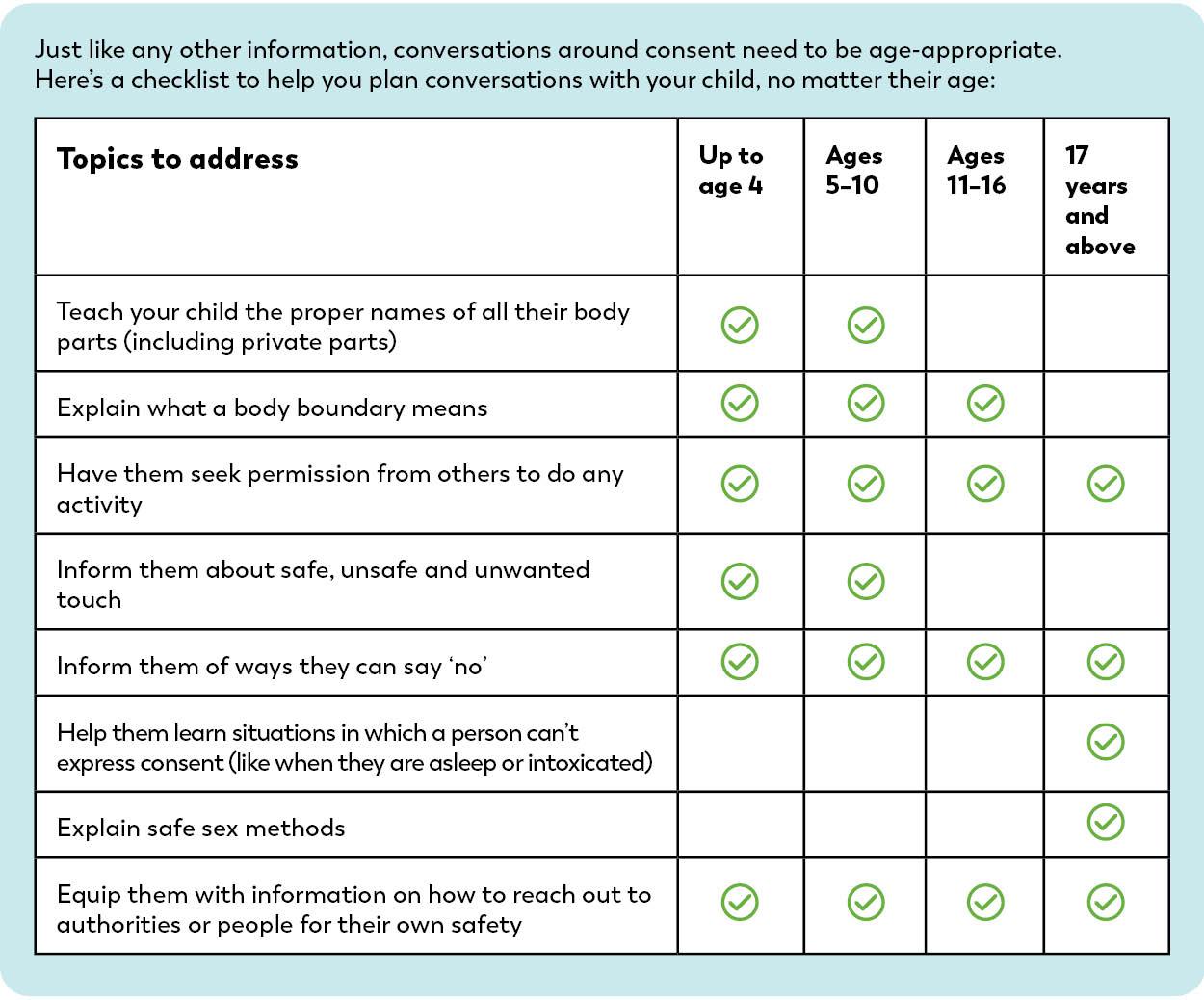
Parent checklist for teaching consent to kids
- Talk about body boundaries using simple, relatable examples
- Teach your child that their body belongs to them
- Encourage open conversations without fear or shame
- Help your child identify trusted adults they can turn to
- Use daily routines to reinforce consent (hugging, sharing)
- Respect your child’s privacy and personal space
- Watch for teachable moments in stories, movies, and real life
- Avoid forcing physical affection with others
- Encourage your child to speak up when uncomfortable
- Stay calm and non-judgmental when your child shares concerns
Discover how to teach your child about consent with simple, real-life strategies that build confidence, respect, and safety every day.
Saakshi Kapoor Kumar is a psychologist, educator, and Head of The Dot Learning Experience, a comprehensive early childhood education ecosystem. She works closely with schools and teachers to create joyful, child-centered learning environments and has extensive experience in teacher training, early childhood education, and social-emotional learning.
































Comments
Edit
Comment Flag
Cancel Update