
How To Teach Your Child To Be Assertive And The Benefits Of Confidence And Communication
Parul Agarwal
Being assertive will help your child to be successful in life. Read on to understand what is meant by assertiveness, the benefits of being assertive, and some assertiveness activities for kids.
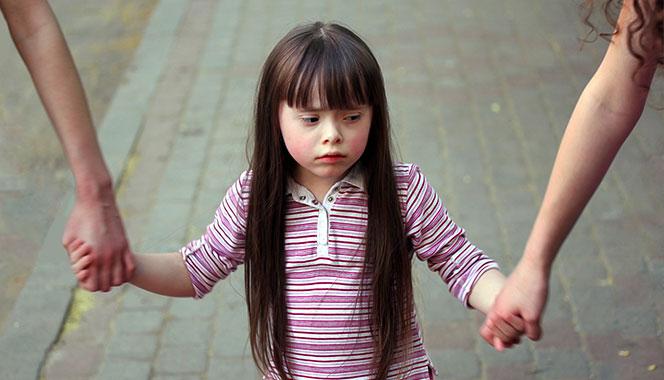
I was once at the playground with my friend Anand and his two-and-a-half-year-old little daughter, Ananya. While Ananya went to play, we stood around talking. Suddenly the little girl came rushing to us, saying that there were some Didi's using the slide and she was afraid that they wouldn’t let her use it. Even though the older girls didn’t actually tell her that they wouldn’t let her join in, she realised there was some kind of turn-taking among the participants.
In this situation, what should Anand as a parent do? Should he speak to the other children and let Ananya have her turn, or should he ask Ananya to speak assertively to the older girls and get herself a turn?
Pros and cons of being assertive versus passive
Both the options have their own pros and cons. If Anand chooses the first option and speaks to the older girls, Ananya’s turn may come earlier, thus resolving the situation. But she won’t learn to articulate her thoughts and feelings and stand up for herself. Moreover, she will perhaps expect her father to come to her rescue in similar situations in the future. Where Anand is concerned, choosing the first option will mean he will get some free time for himself and to speak to me as well while Ananya is engaged in playing.
If he chooses the second option, Ananya will have to speak to the older girls, who are completely new to her, and will probably have to wait for her turn. She will very likely be scared to do this and will need more of Anand’s conscious attention and support. Anand may even have to deal with Ananya crying if the older children refuse to listen to her and give her a turn. For Anand, letting Ananya do the talking will mean that he will have to pay more attention to her and won’t be able to either talk to me or on his phone.
The benefits of being assertive
If Ananya’s ability to express herself is encouraged, in the long run, it will help her to be assertive and this will pay off more than her father resolving the situation for her. It will help her understand her own feelings and respect them. She will have faith in herself and be able to express herself with ease. When faced with a situation in which she is uncomfortable, she will be able to share her feelings with others. An assertive child is also respectful of differing opinions, and is less likely to feel threatened by them.
Anand chose the second option. He asked Ananya to speak to the older girls and request them to give her a turn. In Ananya’s life, her parents have consciously chosen to involve her totally in her learning.
What exactly is assertiveness?
Assertiveness is the ability to stand up for oneself and express one’s own thoughts and feelings with honesty, firmness and calmness. It is a healthy way of communication, where someone expresses their opinion without being passive or aggressive about it. Children, as young as two-and-a-half to three years of age, who are preschoolers, can be taught this skill, as Anand demonstrated with his daughter.
Assertiveness is the positive form of aggressiveness. Assertive people are strong enough to ignore negative influences. They think independently and are ready to speak up for themselves and ask for what they want.
Assertiveness is the ability to act in harmony with one’s self-esteem without hurting others.
How do you teach your kids to be assertive?
Let’s take a look at how you can teach your preschool-going child this skill.
1. Model assertive behaviour: What you model is what your child learns. Children learn a lot through observation. Your preschooler is very likely to learn and imitate your style of communication, which is why you should be aware of how you are communicating yourself. You could display assertive behaviour when you are speaking to the child; for instance, while negotiating when to go home after a visit to the park; or during your interactions with your spouse, household help or colleagues.
2. Ask your preschooler’s opinion on things: One of the healthiest ways of helping a child learn to communicate assertively is to ask them for their opinion on things that involve them. You can do this through simple ways; for example, asking the child, “What would you like to eat for breakfast?” If you think that’s too open-ended a question, you could give them a choice and ask “Would you like to eat porridge or roti for breakfast?” or “Which dress would you like to wear?” If they say they don’t like the dress they are wearing and ask you to take it off, you could ask, “You said you don’t like this dress, does it poke you or is it something else?” Encourage them when they share their view by listening to them attentively and following through on their opinion.
3. Teach your preschooler to listen: Asking your child for their opinion is likely to have a larger impact on them as they will also learn to listen to another person’s point of view. You could also encourage your child to ask for the other person’s opinion, or when asking for their opinion, you could share your opinion on matters you are discussing. You could also encourage them to check with you by saying “Would you like to know how I feel about it?”
4. Teach them to recognise their feelings: Teach your preschooler the names of basic feeling words such as happy, sad, angry, and scared. Use pictures with facial expressions, if you’d like to make it more visually appealing. Encourage them to use these words to express how they are feeling and teach them that everyone has feelings. For example, Ananya would often say “Ananya went swimming, Ananya is soooo happy.” She sounded confident when she expressed herself, and often in situations when she was upset, she would express herself clearly as well. “Ananya fell down from the swing today and she cried so much.” “Papa went to Delhi, Ananya misses Papa.” To teach them to share their feelings, you could also tell your preschooler to imagine the feelings of their toy while they are playing with it. Say, while playing ‘Doctor-doctor’, you could tell your child, “Oh, Pluto has fever, how is he feeling?”, “How is his Mama feeling?” Teaching your child how to express their feelings will help them relate to the internal experience of the feeling and create a fertile ground for building perspective taking behaviour and empathy skills. This will help your child respect themselves and others who are different from them and accept differing opinions more readily.
5 .Teach your child to say ’No’: A child needs to know when to say no, and that saying ‘no’ is ok. The message that needs to go across to them is that they will not be rejected or humiliated for saying no. For instance, if your child is uncomfortable with sitting on the lap of a particular relative or a stranger or giving somebody a kiss, it is important to listen to them instead of forcing them to do so. It is equally important to speak to the child and ask them the reason for their refusal, perhaps at a later point in time.
Learning to say ‘no’ is also helpful for your child; it helps them develop a healthy body image. They will learn to have a say in who touches their body and speak up when they don’t like the manner in which they are touched. On the other hand, disregarding a child’s opinion continually and forcing them to do something will give them the message that their opinion doesn’t matter and could result in lower self-esteem and self-doubt. Then if the child faces abuse, they will find it difficult to talk to you about it.
The problems of not being assertive
To help deepen your understanding of how being assertive will help your child, let’s look at how your preschooler will be impacted if they lack assertiveness.
People who struggle with this skill often behave in either a passive or aggressive manner. You could look closely for such behaviour in your child as well.
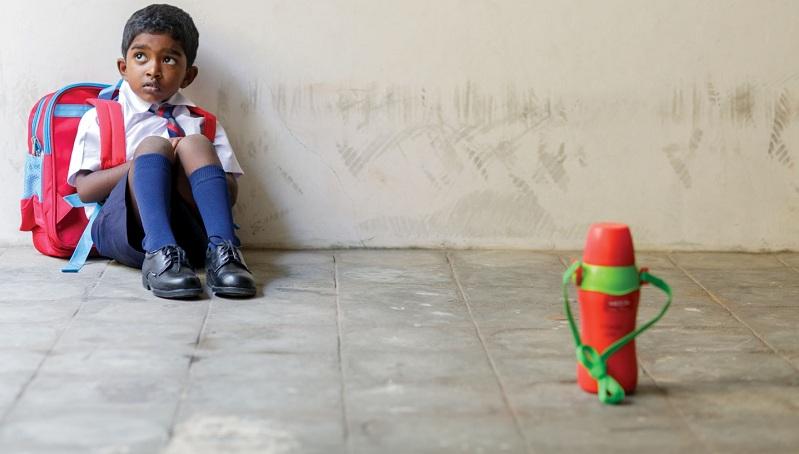
When preschoolers behave in a passive manner, they share their opinions in an extremely timid way and, more often than not, are either ignored or persuaded to change their view. In the hope of making friends, they seek to please others and are afraid of being disliked and rejected if they express views that differ from those of others. They have low self-confidence, bottle up their feelings, feel irritable and cry easily. They are also more prone to being made the butt of jokes at school, and may even be bullied. Their physical health may be affected and they may have difficulty sleeping and have a lower level of immunity. They also absent themselves from school often.
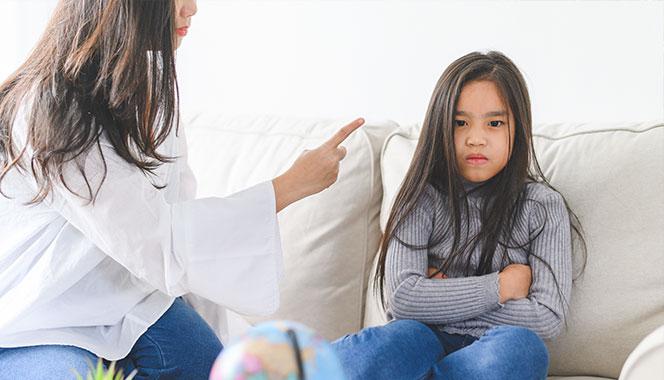
Children who display aggressive behaviour dominate others and are not open to hearing others’ points of view. They are more likely to use force to get what they want. They don’t understand their own feelings well and, as a result, find it difficult to communicate them to others. Your child would be more likely to throw tantrums, shout or hit to make themselves heard and feel that their opinions are taken more seriously if they behave more aggressively. Research states that children who engage in high levels of aggression are impulsive and experience a delay in language development.
Assertiveness rests upon open and respectful communication, and in families where it is practised, parents and children share a healthy trusting relationship as they know that the opinions of both sides matter. As you can see, being assertive is an extremely important skill in life; so, go ahead and help your preschooler to develop this skill.
The author is a psychologist.





















Comments
Edit
Comment Flag
Cancel Update