
Embracing Positive Parenting For Your Child's Well-being And Development
Arun Sharma
There can't be a more rewarding experience than adopting positive ways to guide your child towards growing up into a well-rounded individual. Read on to know more about positive parenting.

Most parents try to bring up their child in the best possible way. However, few pay attention to the methods they adopt. As a result, not every parent is successful in grooming their child into a balanced individual.
Positive parenting can help you raise a child who is emotionally intelligent. Let's read on to understand it better.
What is positive parenting?
Positive parenting is an approach which helps parents increase their self-awareness, and try to make a conscious effort to know what, how and where they want their children to be in the future. It encourages parents to participate in and support their children's physical, mental and behavioural growth.
What are the main elements of positive parenting?
Positive parents possess these eight attributes. They:
- Have an Essential understanding of child development.
- Listen to their child and are aware of their child's feelings, behaviour, actions and words. This helps them understand their child's needs and act accordingly.
- Provide Effective emotional, cognitive and behavioural guidance to their child to help them develop well.
- Master emotional stability to help their child understand and correct their behaviour, emotions and feelings.
- Are able to Empathise with their child's feelings, needs and wants.
- Nurture the parent-child relationship.
- Think of disciplining as an opportunity to teach instead of punish.
- Provide a Supportive environment for the child to explore their feelings, nurture their emotions, try out their cognitive abilities and display appropriate behaviour.
How can parents switch over to positive parenting? How difficult is it to adapt to the change?
Our childhood experiences, and what we observed our parents do, play a vital role in shaping our parenting style. But, we can add to our parenting abilities if we have a clear understanding of the type of parent we want to be. You can begin by analysing your own relationship with your parents and try to understand -
What went right? To know this, ask yourself the following questions: Were your parents involved with you during your childhood? Did they empathise with you? Did they listen to what you had to say?
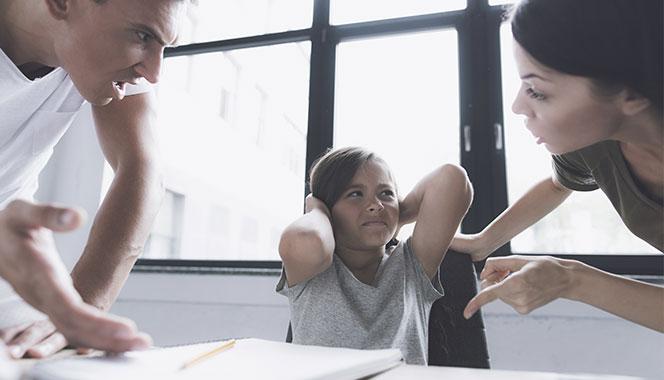
What didn't go so well? For example, your parents used to yell at times, they had the habit of comparing you with other children, or they resorted to hitting when you didn't live up to their expectations.
How would you do things differently for your child? I am going to understand why my child made a mistake and then help them rectify it.
If you were raised by parents who were very strict and used punishment as a tool, it might be a little difficult for you to switch over from your acquired parenting style to positive parenting. But, by consciously trying to be different, you can come up with your parenting style. You can do that by -
- Being prepared and ready to try out something new.
- Organising your emotions and being in control of yourself.
- Trying to be a role-model.
- Being aware of what you want your child to learn from their mistakes.
- Teaching your child about their feelings by helping them identify and name them.
- Ensuring your child knows that you are trying to change to a more positive approach, so that they don't feel confused. This way, you will be able to elicit their cooperation as well.
What changes do positive parenting bring in a child, and the family?
Adopting the positive parenting approach allows you to shower your child with unconditional love, support, and care. Consequently, your child feels loved, safe, cared for, heard and respected. This results in:
Your child -
- Having a higher sense of self-esteem
- Being able to maintain good and healthy relationships
- Feeling encouraged to try out new things
- Trying to find solutions to their problems
- Being able to perform better in academics
Your family-
- Experiencing a positive environment
- Learning to support each other
- Beginning to trust each other and developing a healthy relationship
- Feeling more attached and bonded to each other
What are the few important qualities that parents should try to inculcate in themselves?
- Show unconditional love: A child needs lots of love and affection from parents to realise his full potential.
- Develop trust: When your child trusts you, they will come back to you even when they have done something wrong.
- Nurture understanding: It leads to a healthy and smooth parent-child relationship.
- Show support: Your child desires your support for everything they do. You can do it by just being there for them. Guide them only when it is necessary.
- Offer encouragement without overdoing it: Encouragement helps to boost your child's self-esteem. It would also motivate them to explore their talents by trying out new things.
- Be patient: Although it's difficult to manage your emotions when your child behaves in an unreasonable manner, being calm and patient is the most appropriate approach.
- Show empathy: Remember that you were also a child once. So, try to look at things from your child's perspective. This will help you understand why they indulge in something and connect with them in a better way.
Parenting mantra for modern-day parents
Connect with your child. Connecting with your child will help you understand them, cement your relationship and guide them towards being a better individual. Let's place you and your child in a difficult situation to understand this point better.
You are attending a party. It is way past your child's usual dinner time, and this is making them irritable. All of a sudden, they push another child away.
How would you react?
Like most parents, would you ask your child to apologise 'right away'?
If your answer is yes, then you should try out a different approach. Take your child to a quiet corner, give them a hug and ask them why they acted that way. This will help you establish a connection, encourage your child to confide in you, and help you get to the root of the problem.
If your child gives reasons like, "I am hungry and tired, and they kept irritating me," you can explain to your child why it is inappropriate to push someone no matter what the reason is.
If they say they were hungry and tired, and that their friend kept pestering them to play with them, you could apologise to your child saying that it is your fault to not have noticed that it is past their dinnertime. Tell them to remind you the next time they feel hungry. Then, ask them how they would have felt if someone had pushed them.
Give them a few moments to answer. If your child says, "I wouldn't have felt good," ask them, "I forgot your dinnertime, so I said sorry. Is there anything that you would like to tell your friend?". This question would help them realise what they need to do when they make a mistake. Also, instead of directing the child to apologise for wrong behaviour, it would help them reflect on what they need to do and act on their own.
With these points in mind, happy positive parenting!
With inputs from Geethapriya Manoharan, Counselling Psychologist.

























Comments
Edit
Comment Flag
Cancel Update