
Parenting A Strong-Willed Child: Positive Strategies For Nurturing Independence And Cooperation
 Arundhati Swamy 7 Mins Read
 Arundhati Swamy
Mother, grandmother, family and school counsellor
Raising a strong-willed child can be challenging yet rewarding. Discover effective strategies to foster independence, set boundaries, and build a positive parent-child relationship.

“A small body of determined spirits fired by an unquenchable faith in their mission can alter the course of history.” – Mahatma Gandhi
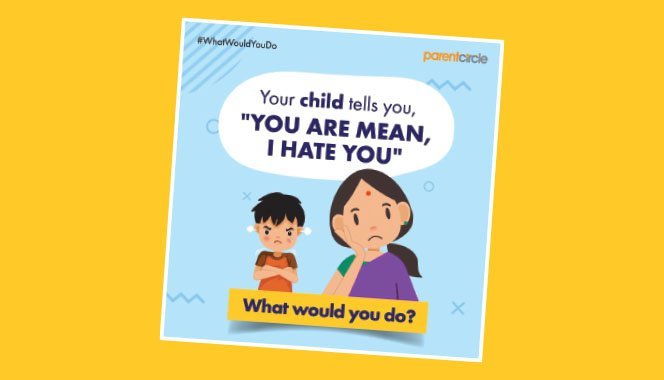
How often have you heard your child say, “I will not do this,” when you request them to do something? Don’t let that get on your nerves. After all, your child is perhaps just strong-willed, and you can certainly nurture them the right way. The Oxford Dictionary defines ‘strong-willed’ as, 'determined to do what you want to do, even if other people advise you not to.' While at the outset it may sound negative, it all comes down to how your child chooses to channel this behaviour. Take Nelson Mandela for example. He inherited his dad’s virtue of standing for what is right. Being rebellious from a young age, Mandela took it upon himself to fight apartheid, and he succeeded!
Strong-willed children have always been looked upon as non-compliant and disobedient. But, being strong-willed isn’t a bane. If you work on your child’s strong-willed behaviour, you can help them use it to their advantage, commanding great respect as a leader in the organisations they will work at in future. It could well seal the deal for professional success. Like many things in life, strong-willed children have their strengths and weaknesses.
Rewind to the past…
Before we move further, let’s take a look at how obedience was perceived in the past. Obedience was a prized virtue until two generations ago. It offered privileges, praise, acceptance and favouritism not just in the family but in the school too. To gain the title of ‘the good child’ at home/school, one needed to be obedient, with no questions asked!
Such ‘obedience’ gave parents an irrevocable position of power and control, albeit from fear and justified only by the belief that they knew what was best for their children! Thus, independent thinkers, risk-takers, leaders and creative individuals were considered to be liabilities rather than assets. The few who dared to challenge this norm were labelled and branded as troublesome children.
Cut to the present…
This is the age of information, liberal attitudes and transformed mindsets, all offering exciting challenges and ample scope for innovation and discoveries. In such a scenario, can we afford to be passive participants, while we wait for some wise decision-maker to solve problems? Will we let opportunities disappear before we even realise that they have come and gone?
Those who made stunning discoveries in the bygone era were the emboldened ones. Imagine what can be achieved in a connected world where people, in real-time, can collaborate, deliberate, and share ideas across continents, fuelled by intuition and instinct, knowledge and open-mindedness. This is the present world and the future world that our children will grow into, where there is no place for meek obedience.
So what do we do?
We have to redefine the term obedience in the present and future. We do not want to do away with obedience - not at all. But, can we transit from a mindset of blind, ‘passive obedience is good’ to ‘obedience built on trust is better’? This will make children believe us when we say, “Trust me, I know what’s good for you.” They will believe and learn to trust only when they understand and accept what we say.
Looking at obedience in different contexts
So let’s take a look at ‘obedience’ in two different contexts – ‘broken will’ and ‘trust’. First of all, we cannot choose the temperament of our child. What the child is born with is what we get. Genetic inheritance cannot be changed! What we can change, though, is how we understand strong-willed children, the kind of environment we offer them, and our choice of responses to their behaviour. So we have two choices here.
- To perceive strong-willed children as being difficult, stubborn, obstinate, demanding and headstrong, and parent them to break their spirit.
- To know that the strong-willed child, although difficult to manage in the present, holds great promise in the future, if only we value their individuality, creativity, curiosity, perseverance and spirit. And build trust in the parent-child partnership.
In the former, the parent uses unquestionable fearful authority which only aggravates and intensifies the child’s desire to be more aggressive. In the case of this choice, the battle lines are drawn and conflict escalates.
In the latter, the journey is arduous. It helps a great deal when parents accept that the child has a particular temperament. It’s a tough job that requires parents to be resolute, stoic, and perseverant. On parenting a strong-willed child, Dr James Dobson, PhD, in an article titled, The Strong-Willed Child, published on the website Dr James Dobson’s Family Talk, has said, “You simply have to be tougher than he is, but do it without being angry and oppressive.”
Channelling your strong-willed child’s traits
While understanding the concept one should remember that traits are predetermined behaviour patterns. We use them to negotiate our world. When we use them to benefit the self as well as other people, we will be perceived as being positive. When we use them to benefit only the self and no one else, we will be perceived as being negative. This can be understood better with the following examples:
- If I use my trait of being strong-willed to get what I want or to manipulate people and situations for personal gains without a care as to how it may impact other people, I will be judged as being arrogant, stubborn and selfish.
- If I use my trait of being strong-willed to pursue a truth that will absolve innocent people, I will be judged as being fair, persistent, and brave for taking risks.
So, in effect, help your child choose what they want to achieve out of their strong-willed trait. The more your child uses this trait for mutual benefit, the more the appreciation.
Strong-willed children, despite their ‘difficult’ behaviour in childhood, are naturally predisposed to meeting the needs of their future. They are self-motivated to raise the bar and rebellious enough to question the status quo.
They are also:
- Curious enough to infuse creative thought
- Adventurous enough to take brave risks
- Persistent enough to achieve breakthroughs
Thus, the traits and temperament of the strong-willed child can be turned into enviable assets that will enable higher achievement and success in the future.
Let them free, within boundaries
Strong-willed children enjoy experiential learning and therefore travel the risky path. Deprived of it, they will go into defiance mode to assert what they feel is right. So, establish your parental right to lead, guide and protect by offering such children a fair amount of freedom. Rules are their anathema. They make them feel offended, oppressed and stifled. So, have an open dialogue with your child and establish what is acceptable.
It’s not easy, but imperative. It’s a long haul. Each day can bring a new challenge for parents. The mantra is simple - De-stress and rejuvenate, over and over again.
The future
The good news is that strong-willed children can grow to become good leaders, innovative thinkers, and high-energy individuals who will fit in well with high-profile power jobs in the future. And, remember that parents can make a foreseeable outcome by taking charge, using discretion, making the effort to understand, having loads of patience and possessing a never-say-die attitude.
So, cheers to the obedience that comes from a place of trust!
Arundhati Swamy is a family counsellor and Head of the Parent Engagement Program at ParentCircle.


























Comments
Edit
Comment Flag
Cancel Update