
Managing Your Childs Fear Of Animals - Tips to Help Your Child Befriend Them And Stay Safe
Team ParentCircle
Helping your child overcome their fear of animals does not have to be a daunting task. All it takes is some understanding, conversations sprinkled with confidence and empathy, and some simple steps to follow.
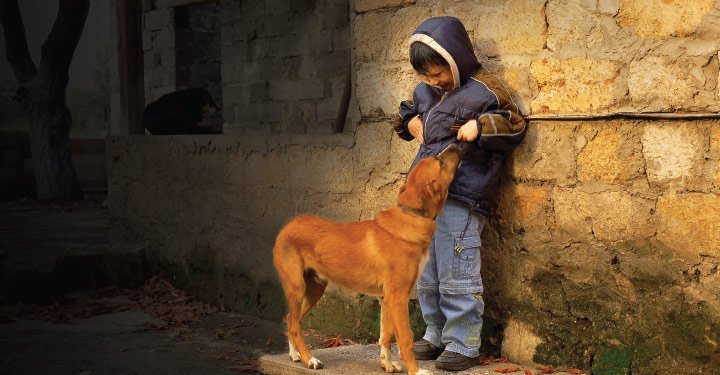
One of the most common fears among children is the fear of animals, right from dogs and cats to cows and goats. Arundhati Swamy, Counselor, and Head - Parent Engagement Programs at ParentCircle, provides insights into how you can help your child overcome such fears.
Advaith, we appreciate how considerate you are of your daughter's feelings. While your child likes dogs, she's also afraid of them. So, she's probably confused because of these conflicting feelings inside her. An added stress such as having a dog at home at this time may complicate the matter. It's best to avoid the risk of turning your good intentions into a traumatic experience. The more pleasant the experience, the greater the trust.
Helping a child get over fears calls for patience, sensitivity and prudence. Therefore, we recommend a plan of gradual exposure to dogs so that your daughter feels safe and protected.
Here's a step-by-step approach:
Prepare your child
- Showing empathy is an effective way to start because it lets your child know that you understand her fears. Say to your child, "I know how scared you feel when you see a dog. I used to feel the same way when I was young." Then go on to share a story of one of your childhood fears. This will let your daughter know that you're on her side and that it's okay to talk about all her mixed thoughts and feelings about dogs. While you talk, try to find out more about the scary messages your child may have picked up from people's conversations and experiences with dogs. Help her break them down into real and imagined fears.
- Introduce your child to dogs in a phased manner. Create pleasant experiences. As your child already likes dogs, she could make a scrapbook with pictures of dogs she likes, give them names, write in her comments, or have the dogs speak to her through the speech bubbles she draws for them.
- Introduce your child to dog language—a panting dog or a wagging tail says that the dog is in a happy and playful mood; a tail hanging low or a show of teeth says the dog is angry. Whenever your child sees a dog, ask her to interpret what it is saying. The practice will let her know when it is safe to let a dog come near her.
- Dogs check out people by sniffing them, so let your child know in advance that it's best to stay still while a dog sniffs her. The dog will either walk away or invite her to touch and play with it.
Build the trust
- Ask your child permission to arrange for a playdate with a friend who has a pet dog. This step could help her become comfortable with a dog in the same room, under your supervision. Ask that the dog be kept on a leash, so your child feels safe. After every such visit, talk to your child about her experience and appreciate even the tiny steps she takes. It could be a moment she may not even be aware of. For example, "You didn't step back when the doggy tried to sniff you." You could make visits to a vet's clinic for a similar experience. (You'll need to explain the reason for your request to the people in charge and get their consent and support.)
- Getting close to a dog and touching it is the biggest challenge. Usually, a face-to-face encounter with a dog scares a child. So, you could demonstrate by petting the dog from the side and when your child is ready for it, have her do the same. Stroking a dog from the side feels safer than touching any other part of the dog.
- Show your child how to be gentle and respectful of dogs. Help her understand that it's not fun to pull a dog's tail, or to tease or hit a dog.
- Respect your child's pace so that you don't rush her into making friends with dogs. Most importantly, let her take her time to get comfortable with dogs before you bring home a pet dog. She'll tell you when she's ready for it.
- Some people love to dress their dogs in clothes and accessories, such as caps and bandanas. This helps fearful children take to them more easily, as clothes are associated with humans.
Advaith, we look forward to the day when your daughter will welcome a dog into your home!
Raagini, you must be so tense every time you go out with your son. I know of a parent who wished she had a magic wand to make all dogs disappear because her child was afraid of dogs! Fear of dogs is quite common among children and more so among children who are sensitive to new experiences. It may seem like an irrational fear to you, but your child's fear is real. The sight of a dog releases cortisol, the stress hormone in the brain, prompting him to panic and flee for survival.
For some children, the sight of a dog may be just an unreasonable phobia or a trigger of some unpleasant and fearful memory. I wonder if your son has had a bad encounter with a dog. To be chased by a dog is a truly horrifying experience, especially for a child. To help him uncover possible bad memories, first ask him to tell you all the happy and pleasant experiences he can remember. Follow this up with memories of things that have scared him. If recalling bad memories makes him uncomfortable, give him a warm hug and continue the conversation another time.
All too often boys are expected to be brave and are told, "You're a boy. Stop being a sissy." Imagine the struggle within when he must hide his fear and pretend to be brave. Such comments will only make him feel ashamed. So, be mindful of what you say to your child about his fears. Show lots of empathy and patience to build your child's confidence.
Helping a child get over fears calls for patience, sensitivity and prudence
Raagini, the plan we lay out for you starts with small steps that will eventually add up to significant gains.
- Your priority must be to stop your child from running away in panic whenever he sees a dog. But just telling him not to do so doesn't address the intense fear he feels. The key is to connect with his fear. You could say, "I know you're feeling very afraid right now. Hold my hand tight. I'll keep you safe." Then get him to take slow deep breaths. Give him a moment while the fear inside him reduces to manageable levels. The tense muscles and his tight grip on your hand will slowly relax. Take him through this routine every time he panics on seeing a dog. Your calmness in the situation will help your child regulate his emotions.
- You may also use a process of desensitization at home. Begin with showing your child pleasant pictures of dogs and point out their different features. Pictures are less threatening, as they don't come alive. Notice which pictures make your child feel uncomfortable. Help him name the feelings he associates with some of the pictures. Ask him to describe what he feels and what he thinks about them. Validate your child's feelings. "I can see this picture makes you feel uncomfortable." Encourage him to talk more about what is running through his mind. Don't brush aside his feelings. Your child needs to know you acknowledge his real feelings.
- Show pictures of dogs with different expressions that let your child know if they're friendly or not.
- Relate stories of dogs that reveal their love and loyalty for their masters.
- Gradually, start watching dog-themed movies together. Begin with animated movies and move on to films that show dogs with human features, such as dogs that talk, do funny things, and have a trusting relationship with children.
- Next, get your child to observe real dogs from a safe distance. Always stay by his side to make him feel safe. Adult dogs are preferable because puppies are usually very excitable, playful and unpredictable. Then you could ask him to try and identify doggy expressions in real dogs, from a safe distance.
Out-of-control fears may also prevent your child from doing normal things, such as visiting the homes of relatives and friends who have pet dogs. Or he could miss out on playing in the park because he may encounter dogs on the way.
Raagini, we hope your son's fear of dogs will soon be just a memory.
Priya, so many people feel a similar discomfort with animals. There could be several reasons but for now, let's focus on two important points you have mentioned. You want to feel comfortable with animals, and how to ensure your child doesn't pick up your fears.
Let's explore the first point. A good place to start is to ask yourself what 'want' means to you. Is it a genuine need to feel comfortable with animals or is it a need arising from social expectations and wanting to do the right thing, or perhaps a bit of both? Mull over these questions for a while to tune into your deeper thoughts and feelings. Spend time reflecting on them. This could help you discover the source of your fears. Perhaps a negative experience you may have had with animals in your childhood, or certain instructions and messages you received from people. It's possible that these messages became your core beliefs. Beliefs form your attitude and influence your behavior. You could now question those beliefs and choose to alter them or discard them.
Priya, it's also possible that your fears are inexplicable or irrational. What's important is your comfort, so if your fears persist, acknowledge and accept them as part of the person you are. You don't even need to put yourself down because these fears are just one part of you. Play up to your strengths and be aware of your limitations. No one is perfect.
Show lots of empathy and patience to build your child's confidence
Next, it's great that you want to be proactive and not let your child absorb your fears. Here's a list of things you could do:
- Give your child a straightforward explanation about your fear of animals. Avoid dramatizing your experiences, or else your child's imagination could conjure scary images in his mind.
- Let your child tease you lightly about your fears. Play along and say something like, "I know, I'm such a fuddy-duddy!"
- Laugh at yourself, infuse humor into situations. "Gosh, the cat looked like it wanted to laugh out loud at me!"
- Admire and appreciate your child's ability to do the things you are afraid to do, such as going near animals and touching them.
- Appoint your child as your chief bodyguard. Let him feel important about protecting you. It allows him to empathize with you and accept your feelings.
- Give funny names to dogs, cats, lizards and other animals in your neighborhood. It makes animals seem more friendly and easy to talk about.
- Lighthearted conversations about things you fear are a stress-free way of befriending animals in your mind.
Priya, if your son happens to have a few fears, don't be quick to feel guilty and blame yourself, as you may overreact instead of empathizing with him. His fears may be completely unrelated to your experiences. Give him the same support and understanding that help you deal with your fears.
We hope you and your son will have lots of fun moments together, with and without animals!
If your child is struggling to overcome fear, write to editorial@parentcircle.in

























Comments
Edit
Comment Flag
Cancel Update