
Boosting Parent-Child Bonds With Positive Communication: How Language Shapes Relationships
Amrita Gracias
The words we use with children shape how they see themselves and respond to us. This article explores how replacing harsh or negative language with calm, respectful, and positive communication can improve cooperation and strengthen your parent-child bond
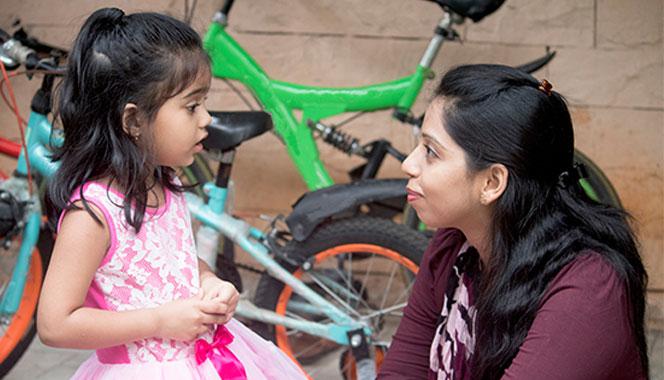
'No'. 'Don't'. 'Stop it'.
We often use these words with our children, without realising the impact they could have on their self-esteem and confidence.
Setting limits is an essential part of parenting. How we communicate those limits and what we say matters. Harsh or disrespectful language can affect how children feel about themselves. Because the way we speak to children shapes how emotionally safe and supported they feel.
Why positive language matters in parenting
- Helps protect the child's self-image while correcting behavior.
- Makes the child more receptive to guidance.
- Makes it clear what behavior is expected of them.
Here are a few tips to help make your conversations build a stronger parent-child bond.
Replace negative words with clear, positive instructions
Say what you want your child to do
Negative words often tell children what not to do, but not what to do. Clear positive instructions tell your child what to do instead.
For instance, your child is running on the road, and you want them to walk. When you say, "Don't run," it tells them what not to do, but not what to do instead. However, "Please walk" is a clear alternative they can understand.
So, use words that help your child self-correct instead of 'no' or 'don't.'
Here are a few positive alternatives to negative phrases:
Instead of saying | Try saying |
| Don't shout | Talk softly, please |
| Stop hitting them | Please be gentle with them |
| Stop crying | It's okay to be upset |
| Don't touch anything | Please keep your hands to yourself |
| You can't play with that | Maybe we can play with that later |
Young children respond better when instructions are simple, clear, and focused on the behavior you want to encourage.
Use words that invite cooperation
Offer choices and collaboration
Words like 'let's,' 'may,' and 'can' are better alternatives to 'no.' For example, if your child wants to paint while having food, instead of saying, "No, not now," say, "Let's paint after we finish our lunch."
This assures your child that they can do the activity at a certain time. It also makes them feel pleased as their wish is being acknowledged, and encourages them to cooperate.
Do remember to appreciate and praise your child when they cooperate with you. Use positive phrases like:
"I'm so pleased that you waited to finish your lunch before starting to paint."
"Thank you for being patient."
Using negative words with older children may make them less receptive to what parents are saying, or lead to arguments.
Protect your child’s self-esteem through respectful communication
Correct behavior without hurting the child
Sometimes, anger comes in the way of respect. Respectful communication does not mean avoiding correction. It means using respectful language to set limits, ensuring the child's dignity is respected, thereby maintaining the relationship.
Using polite words while giving instructions or asking your child to do something encourages positive responses. For instance, "When you finish playing, please put back your toys in the basket."
If your child has behaved inappropriately, use words that denounce the behavior and not them as a person. Also, when you speak disrespectfully to your child, they are more likely to pick up the habit and use similar language with others.
Also, avoid remarks that show a gender bias, such as "Don't cry like a girl." Such remarks can cause children to suppress their emotions. Instead, you can say, "It's okay to be upset and cry."
Avoid fear-based parenting
Why threats damage trust
When children behave badly, scaring them with phrases such as "I will leave you and never come back" or "I will never forgive you" can undermine their sense of safety and trust in their parents.
Although scaring a child gives you control of the situation, it causes them immense distress. And in time, the words may lose their effectiveness as children become used to them. As they grow older, fear could fill them with anger and resentment, leading to conflict and power struggles.
Children are more likely to cooperate when they feel respected, included, and heard.
Your tone and body language matter as much as your words
Calm communication creates better listening
Your body language, tone, and manner of speaking contribute greatly to the message you wish to convey and significantly influence your child's behavior and response.
To help you connect and make the conversation more engaging:
- Use a pleasant and polite tone when you talk
- Use a firm tone to convey your displeasure
- Use a neutral tone when making enquiries
- Get down to your child's level and make eye contact as you speak.
A smile or a pat on the back can reinforce your words.
Role-model the communication you want your child to learn
Speak to your child with the respect you expect back
It's natural to feel annoyed when children whine or speak rudely. However, they learn how to communicate by watching the adults around them. So, model the behaviour you want them to learn.
If your child raises their voice:
- Don't raise yours in the hope that it will make them listen.
- Take a deep breath and pause. Wait until they have calmed down, then continue the conversation.
- Speaking after tempers have cooled increases the chances of a respectful conversation and helps you model positive communication.
Positive communication does not mean leniency or giving in to children all the time. It means setting clear boundaries while guiding children firmly, calmly, and respectfully.
Children may cooperate out of fear in the moment, but respectful communication builds trust and self-regulation skills.
The words you use can strengthen your relationship with your child and help them feel understood, respected, and confident.
Use ‘no’ when you need to set a clear boundary, especially in unsafe situations. Later on, follow it with a simple explanation or tell your child what they can do instead.
What the experts say
Positive parenting is built on listening, affection, constructive discipline and respectful communication. UNICEF India recommends positive parenting approaches that encourage open conversations and support children's self-esteem, while WHO guidance highlights parenting approaches that strengthen parent-child relationships and reduce harsh parenting.
Parent checklist: Positive communication habits to build at home
- Use clear instructions instead of repeated “don’t” statements
- Pause before reacting in anger or frustration
- Speak calmly when correcting behavior
- Focus on correcting the behavior, not labeling the child
- Replace threats with guidance and conversation
- Offer simple choices whenever possible
- Maintain eye contact and use a warm tone while speaking
- Appreciate cooperation and positive behavior regularly
- Use a firm “No” when you need to set a clear boundary, especially around safety.
- Model the respectful language you want your child to use
Need more information? Trusted resources:
UNICEF India Parenting resources
WHO parenting guidelines
Last updated on: August 06, 2026
The social and emotional learning program at The Dot Learning Circle emphasizes values such as respect, honesty, kindness, and empathy essential for building and maintaining healthy relationships. Children also learn how to learn and grow from their mistakes.




























Comments
Edit
Comment Flag
Cancel Update