Answered by Team ParentCircle
Sibling fights are a common part of growing up. We look at how you can mediate and bring about peace.
"I'm trying to study here and he's playing loud music!"
"Look, she scribbled all over my notebook!"
"Mom, my sketch pens are missing. I know who the culprit is."
Endless fights among children sometimes lead to a mighty wrestling match! It's hard to listen to this bickering day in and day out. But here's some consolation. You are not alone. Let's hear from other exasperated parents and then turn to Arundhati Swamy, Head of Parent Engagement Programs at ParentCircle, to learn how you can handle these situations with minimum stress and disappointment for everyone involved.
My children, 6 and 10, are always fighting—for the TV remote, books, the toilet, and whatnot. I am exhausted and don't have the time to sort out their problems. My elder one feels that I support her brother. I guess I do that sometimes because I feel, as the older one, she's more mature and should give in. I would love tips to manage these fights better. |
I think fights are an integral part of growing up. As children grow up, siblings often become best buddies. When my children fight, I ask them to spend a minute thinking about how the other one feels—sometimes this works. But I would like more tips. |
My children, 8 and 11, are always fighting. Both of them complain that I am partial to the other. I would like them to be close and be there for each other when they grow up, but I am worried that they'll never bond. Help! |
We get it. Sibling fights can sometimes get big and physical. It can leave everyone in the house grumpy and hurt, and that's not a nice feeling. Here's what Arundhati has to say.
Ruchi, being a referee to endless squabbles over petty things, can be annoying and tiring. To top it all, you get blamed for taking sides! But despite the chaos, you can learn to manage your children's behavior.
First, please attend to your feelings of exhaustion. Even if it's only for a few minutes, set aside some time every day to recharge your batteries. A rested, calmer mind is less reactive and better ready to deal with stressful situations. Also, it would help to let go of some of the routine but less important tasks.
You said you often support your son because he's the younger one. It seems to be a common belief among parents that older children ought to give in to their younger siblings, well, just because they're older! So, how do older children feel about this? "Not fair!" It just makes them feel less loved when parents favor their younger ones. Unable to vent their anger on their parents, they seize the slightest chance to get even with their siblings. Thus, more quarrels ensue.
Ruchi, expecting your daughter to give in to her brother, empowers him to gain an upper hand over his sister, as he knows perfectly well that he has your support. He'll use this false sense of confidence to manipulate situations, get his way, escape responsibility, or get his sister into trouble. Instead, this is a crucial age when he must learn to get along with people, take correction gracefully, and feel responsible for himself. Without these life skills, your misguided support may turn your son into an entitled, demanding, and aggressive individual.
Mohit, how you must long for those blissful moments when your children are at peace with each other! But alas, those precious moments are all too often shattered when you must intervene to break up a fight between them. By this time, even you are angry and frustrated. Now there are three angry people in the arena, each trying to have their say. The children are blaming each other, and you're yelling at them. Caught in this melee, you arbitrarily settle the issue, leaving the children filled with hurt because each one believes you've been unfair. Quiet is restored but short-lived, for those suppressed emotions from the last fight are again easily triggered by the smallest of provocations. And the whole cycle repeats itself. Here are a few tips to break this chain of events:
Give each child regular special time with you so that they don't compete for your attention.
Lasya, it's true that occasional sibling quarrels are an unavoidable part of growing up. Some of these quarrels become stories grown-ups recall with much amusement. So, despite the quarrels, what can you do to ensure that love and warmth abound in the sibling relationship through the growing years?
When children fight, they're seeking your attention to help meet a primal need for survival and safety. You're on the right track when you ask them to empathize with each other's feelings. But they will first need your empathy one-on-one to help them settle lingering hurt or anger from a quarrel.
Here are a few tips on how you can help your children resolve a fight:
Dear parents, we hope we have helped you understand the why and how of building healthy sibling relationships. May all your children remain buddies now and forever!
Help your kids build stronger bonds and create lasting memories. Dive into our expert guide on sibling bonding now!
This answer is helpful for 1 parents
Related Article
Toddler to Parent • 12 Mins Read • 27.5K Views
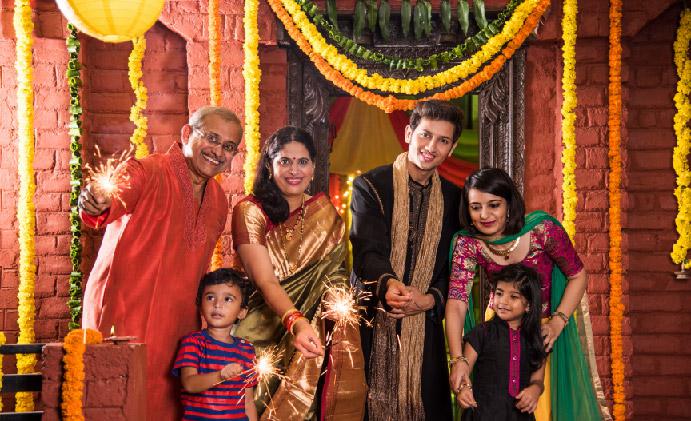
This Diwali, discover warm, joyful, and meaningful ways to strengthen family bonds and create moments your child will treasure forever. Festive celebrations are the most fun way to instill family values, traditions, and build your child's life skills



Primary to Pre-teen • 4 Mins Read • 32.8K Views
We worship Lord Ganesha as Vinayak (the leader) and Vighnaharta (the destroyer of obstacles), and there are many values that all of us, especially children, can learn from him


Pre-schooler to Teen • 3 Mins Read • 22K Views
Our children can learn a lot from the god of wisdom and the remover of obstacles, Lord Ganesha. Here are six important lessons your child can learn