
Dos and don'ts of dealing with sibling rivalry. Valuable tips for parents to build sibling bonds
Amrita Gracias
As a parent, how do you get your children to value each other and sort out their differences amicably? Here are some simple tips to help you deal with sibling rivalry
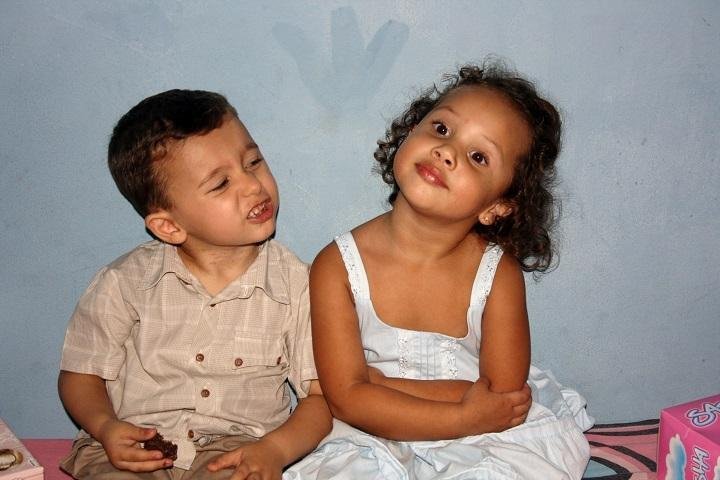
One common challenge most parents face is rivalry among their children. Although it is normal for siblings to experience some disagreement and opposition, intense rivalry could destroy family harmony.
So, although you dread being dragged into seemingly silly quarrels or a war of words, these conflicts between your children must be dealt with appropriately.
First, let us look at some of the causes of sibling rivalry:
- Personality clashes
- Jealousy - vying for parents' attention
- Inequality - feeling that one is given preferential treatment over the other
- Need for personal space
- Competing with each other
- Different ages and stages of development, hence different needs
How parents can deal with sibling rivalry
When you are forced to deal with the constant bickering between your children, you probably feel helpless and stressed. So, how could you deal with this issue and inspire your children to share a more loving bond?
Ms. Arundhati Swamy, counselor, and Head - Parent Engagement Programs at ParentCircle says that children often feel that their parents' reactions to conflict situations don't help or support them. She explains that rather than being a judge of the situation, parents could use a more effective approach to manage the situation. "Empower your children to problem-solve rather than solve their problems all the time," she says.
Here are a few dos and don'ts from Ms. Arundhati that could help parents deal with sibling conflicts:
Sibling rivalry among preschoolers:
- Observe your preschooler and listen to them to understand their physical needs like rest and nourishment; and emotional needs of comfort and safety when distressed.
- The arrival of a new sibling may rob him of the much-needed attention he will crave from you. Have special time(one-on-one interaction) every day with them even if it's only for a few minutes. It makes them feel important and loved.
- Connect with your older child as you attend to the younger child. Pretend to be a superhero or a favorite cartoon character in conversation with your children.
Sibling rivalry among primary schoolers:
- Give the children equal attention by listening to their individual experiences in a situation.
- Never compare the siblings with each other. Comparisons only discourage a child and make them more angry with their sibling.
- Be fair and firm with the children. The younger child tends to be pampered and is often excused while the older child is held responsible.
Sibling rivalry among tweens:
- Arbitrate as fairly as possible when one complains about the other. Allow them to explain themselves one at a time, without interruptions from the listener. It helps each child see the other's point of view.
- Set appropriate boundaries and privileges according to their age. Tweens are developing their routines with activities that interest them. Your younger one will want to imitate the older sibling and even insist on having the same things. This can lead to quarrels and resentment.
- Giving hurtful labels to your children will only encourage them to use them on each other, giving way to hostility and hatred.
Sibling rivalry among teenagers:
- Allow your older child to enjoy the personal space they need with friends, activities, and interests. Their younger sibling may intrude by insisting on hanging out with them or doing the same things.
- Explain that it is fair that your older teen enjoys certain privileges and why this must be so.
- Encourage your children to pursue their abilities and talents. There might be self-perceived pressure on either one to 'perform' or 'achieve' as the other sibling.
- Reassure your children that they are special. Body issues often cause jealousy towards the sibling perceived as being more attractive.
- Encourage your teens to be responsible for themselves. Do not expect your older teen to take on the parental role and be responsible for the younger teen.
Beware of the traps
Gender bias - It certainly is no easy task dealing with bickering children. Arundhati explains that parents are vulnerable and may give one child preferential treatment. "Sometimes, even gender biases can lead to rivalry. Or, just being more emotionally, physically, or verbally expressive towards one child and less with the other."
Parent conflicts - In cases where parents conflict with themselves, they look to their children for support. "By drawing children into the conflict, parents establish a subtle or obvious partnership with the children. This conflict spills over to the children," she adds.
Special Needs - A child with special needs will require extra attention. Explain to their sibling the condition and the extra efforts you must make for the child. Otherwise, they would be clueless about why their sibling must receive all the extra attention. Help them understand how you can all help and support each other.
Fun and togetherness go a long way in building bonds among siblings. In his book, 'The Whole-Brain Child'' Dr Daniel J Siegel says that sibling rivalry can be balanced out when enjoyment together is greater than the conflict between them, thus strengthening their bond.
Although your children's disputes and differences are good learning experiences for problem-solving and relationship skills, they are best learned through cooperation and respectful communication.
Celebrate the Special Connection: Cherish the Unbreakable Bond Between Brother and Sister!
Build Lasting Connections: Try These Tips for Sibling Bonding!
































Comments
Edit
Comment Flag
Cancel Update