
FEATURED
DIY Golu Dolls: 6 Easy Navratri Crafts And Lasting Memories To Make With Your Child
Kerina De Floras
Author
Bring the joy of Navratri home with six easy Golu doll crafts for children. From clay figurines and coconut-shell dolls to miniature kitchens, these creative ideas help families celebrate tradition, reuse everyday materials, and make festive memories together
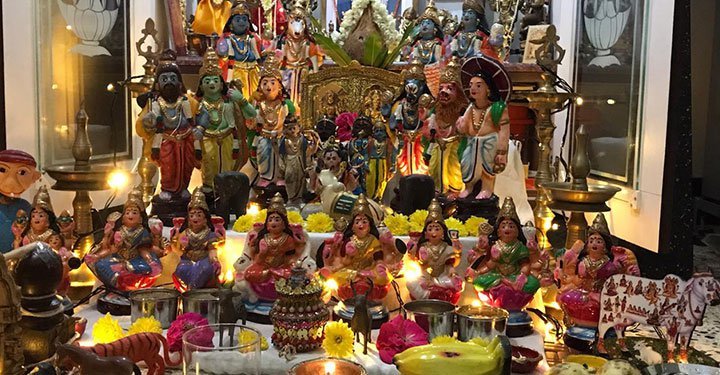
'Bommai Kolu' (Tamil), 'Bombe Habba' (Kannada), or 'Bommala Koluvu' (Telugu) are names for the traditional display of dolls and figurines during Navratri. Celebrated mainly in Tamil Nadu, Karnataka, and Andhra Pradesh, this tradition brings families together through creativity, storytelling, and shared festivities.
On the first day of Navratri, families arrange an odd number of steps, known as padis, and display dolls of different sizes. Deities usually occupy the topmost steps. The others display scenes from mythology and everyday life, such as a village, a royal court, a wedding procession, miniature kitchen utensils, and anything your imagination allows.
Several stories showcase the significance of Golu dolls in Navratri celebrations. One traditional account links the practice to promoting desilting of irrigation canals. During this season, people were encouraged to make dolls from the desilted clay.
Another story tells how the gods transferred their powers to Goddess Durga to help her defeat the demon Mahishasura. According to this legend, the gods became motionless like statues. Displaying their figurines during Navratri honors their contribution to the goddess's victory.
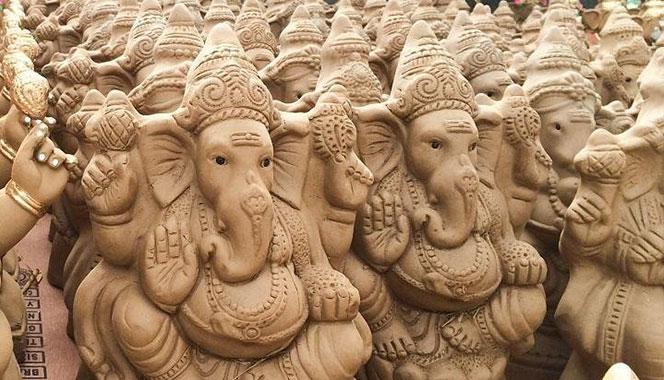
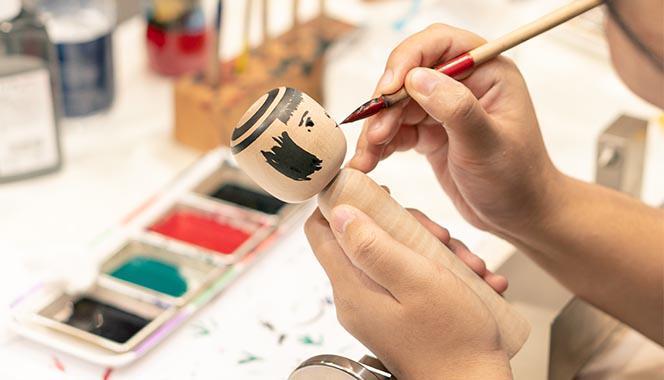
Traditionally, skilled artisans make Golu dolls from clay and hand-paint them. Families treasure these dolls for years, passing them down through generations and restoring or repainting them when needed. Many also add a new doll to their collection each year.
This year, you can learn how to make simple golu dolls at home. And these six easy Golu craft ideas will help you create a display that reflects your family's creativity and imagination.
Golu: A tradition that brings families together
Golu is as much about displaying dolls as it is about welcoming guests, sharing food, singing devotional songs, and strengthening community bonds.
Jyothi, a resident in Chennai talks about how Golu is a special part of their Navratri celebrations.
"Golu is an integral part of Navaratri celebrations in south India - especially Tamil Nadu. Dolls of gods and goddesses are arranged artistically over decorated makeshift 'steps'. Other dolls are also included.
Apart from hand-me-down dolls, which are carefully preserved by every family through generations, it's also a custom to buy one new doll to add to the collection each year, before the golu is arranged. In 2021, a masked lady is the hot favourite golu doll in the market.

The dolls are offered prasadam three times a day, and in the evenings, women visit each other's homes to exchange tamboolam (also called haldi/sindoor up north). A tamboolam is a set of auspicious items like kumkum, turmeric, gift items, coconut, bangles, steel vessels, etc. They sing songs to entertain the gods and goddesses, and also catch up with each other."
The tradition also brings back fond childhood memories. Sharada Sriram recalls how her family prepared for Navratri:
"As a kid, Navratri was exciting, with people going about the arrangements for the festival. Setting up the Golu was my favourite part. I loved how the whole family took part. Back then, there were no ready-made stands, so we arranged big suitcases and boxes to make the padis.
I loved going out with my cousins to buy the decor and plan how to place the dolls. We also repurposed old dolls from our grandmother's collection—one was the Krishna doll, which we repainted and made shine like new!
These memories remind us that a Golu display need not be elaborate or expensive. What matters is the joy of creating something together and keeping family traditions alive."
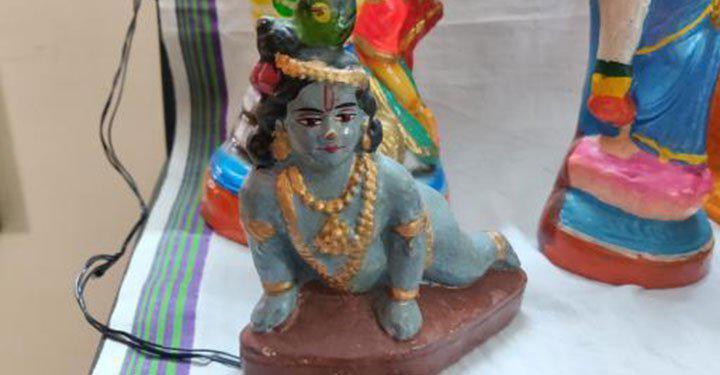
6 easy Golu dolls and display ideas to make with your child
Gather a few simple materials and let your child's imagination lead the way. Talk about Navratri, traditional occupations, family memories, and the stories behind the dolls.
1. How to make Golu dolls with clay
Clay is a wonderful material for making simple figurines. You need clay, acrylic paints, paintbrushes, and toothpicks for adding details. Help your child mould the clay into a person, animal, or favourite character. Once the clay is completely dry, decorate the doll with colours and patterns.
You can make dolls in different shapes and sizes and arrange them together to create a personalised Golu display.
Parent-child activity: Ask your child to invent a character and tell you a story about it. This encourages creativity, imagination, and storytelling.
Watch the video to learn how to make simple clay Golu dolls.
2. How to make a Tanjore-style doll with a plastic ball
Traditional Tanjore dolls are known for their rounded bases and distinctive rocking movement. They are often made from terracotta and designed to wobble when nudged.
This video demonstrates how to make a simple, Tanjore-style rocking doll using a plastic ball and glue. Your child can help decorate the doll and experiment with its rounded shape.
Once it is complete, gently nudge it and watch it wobble back and forth before adding it to your Golu collection.
Watch the video to learn how to make a rocking doll.
3. How to make dolls with coconut shells
This is probably the simplest art-from-waste doll you can make with your child. All you need are empty coconut shells and a few decorative items.
Use clean, dry shells as the base, and add simple decorative materials to create faces, clothes, and accessories. Depending on the shape of the coconut shell, you can make a person, an animal, or a character your child chooses.
Let your child decide how to decorate each doll. You can make several dolls with different expressions, colours and accessories to add variety to your display.
Parent-child activity: Talk about reusing everyday materials creatively, and encourage your child to create an original design.
How to make dolls with plastic bottles
Got a few empty plastic bottles of different sizes at home? They can become the base for colourful Golu dolls. Clean and dry the bottles before you decorate them with paper, paint, and other suitable craft materials.
Invite your child to choose what each doll will look like: its clothes and ornaments, hairstyle, and facial expression.
Keep younger children away from sharp cutting tools, and adults handle any cutting.
Parent-child activity: Create a family of dolls, a group of villagers or characters from a favourite story. Give each character a name and invent a story about how they know one another.
How to make a kitchen with cardboard boxes
Step into a South Indian traditional kitchen as you make this golu display piece. Use the boxes to create shelves, counters, and storage spaces. Add small vessels and handmade kitchen tools to complete the scene. Recreate a traditional kitchen from your childhood or give it a modern look.
Encourage your child to decide what the kitchen needs and where to place the items. You could also include a tiny dining area or a vegetable stall.
Parent-child activity: Share stories about your parents' and grandparents' kitchens. Discuss how cooking utensils, storage methods, and family routines have changed over time.
Watch the video to learn how to make a miniature kitchen for your Golu display.
How to make Golu dolls with tissue paper
Use tissue paper, string, and a few basic craft supplies to create interesting shapes and figures.
This video shows how to use these simple materials to make a coconut seller. Add a lively life scene to your display. What a fun addition!
Your child can help arrange the tissue paper, choose the details, and think of other characters to include in the scene.
Parent-child activity: Talk about different community helpers, such as vegetable sellers, farmers, cleaners, and shopkeepers. Encourage your child to make another handmade doll representing another occupation.
Make your Golu special with handmade creations
Golu is a beautiful way to bring together festive traditions, art, and storytelling, and make family memories. The dolls may be small, but the special memories you create while making them together can last for years.
Last updated on: October 15, 2026























Comments
Edit
Comment Flag
Cancel Update