
How To Help Your Child Deal With Mean Friends And Friendship Challenges
Divya Sreedharan
Is your child struggling with a mean friend? Learn effective ways of supporting children in difficult friendships by guiding them with empathy and building their confidence. Discover what to say to your child when friends are mean to help them respond assertively and kindly. This approach focuses on helping kids handle hurtful friends while fostering resilience and emotional strength

When Siyali gets off the school bus one evening, she looks downcast and upset.
"Are you okay, Siyali?" her mother, Reema, asks, wondering why the nine-year-old is not her chatty self. Usually, Siyali regales her mother with stories of what happened in school, who said what, the games she played, and so on. Today, however, she is silent.
"No, Mama. Nothing interesting or exciting happened in school", the girl replies, in a low voice.
"What about the bus journey home?" the astute mother asks gently.
Siyali goes to school by bus and has a group of 'bus friends' that she loves to spend time with.
From the child's expression, the mother realizes something did happen on the bus journey.
"Today, Rohan and Arya started playing a word game when we were coming home. But they wouldn't let me join in. They said I am stupid and cannot spell words properly. All the other kids in the bus laughed when they said that," Siyali says sadly.
Reema is horrified. So, she holds her daughter close and lets her cry. Truth be told, Reema herself is very upset by what happened to her darling daughter. Are there more ways Reema can help her child deal with such situations?
As a parent, have you faced this too? Has your child come home crying because friends were mean to them?
Bullying or mean behavior?
Parenting experts believe that to address this issue the right way, you need to first check if your child has experienced bullying or whether it is plain mean behavior on the part of the other kids. It is important to define the two terms, as both are different, observes Arundhati Swamy, Head, Parent Engagement Programs, at ParentCircle.
For instance, when children decide to exclude a child from a game or say unkind things to them, it is considered to be mean behavior. On the other hand, there is a very specific definition for bullying according to Eileen Kennedy-Moore, a US-based psychologist whose work focuses on children's emotional and social development. "Bullying involves deliberate meanness targeting a particular individual and is usually, over some time," the psychologist has written in a 2017 article for a health-based website.
What's more, parents too need to keep certain points in mind:
1. Listen without being judgmental: Just as Siyali's mother did, make sure you are there for your child. Listen without interrupting or passing judgmental remarks as your child narrates what happened to her. Be empathetic and try to reassure your child that you love her, no matter what. To show empathy, you could say, "Oh no. Those words must have hurt you a lot. I can imagine how awful you must be feeling. And yes, I would have felt the same, too." If the upsetting situation is a one-off incident, ask your child gently what else happened that day. Try and find out the whole story. This means you have to help your child understand if she unknowingly or unwittingly did something hurtful herself, and did that provoke a retaliatory reaction from a classmate or friend? Getting your child to understand why something happened is part of the learning process.
2. Is it teasing, banter, or jokes? "Sometimes, children form groups and exchange banter about a classmate or another child. So, before you storm off to complain to the class teacher or school principal, or their parents, find out if your child has simply misunderstood a joke. Or were they simply being teased by the others? At times, your child may consider another child to be 'mean' for not sharing a candy, not letting them participate in a game, and so on. Besides, your child must also be able to take things in the right spirit," says Arundhati.
3. Did it involve physical meanness? Mean behavior can be verbal or physical. So, ask your child if they were pushed or shoved by the others? Was the fall accidental while running or playing a game? If your child was deliberately tripped or shoved and hurt by another, then it is something to worry about. As a parent, it is your right to seek an intervention and bring the matter to the notice of the adults concerned, be it school authorities or parents of the offending children. This is especially worrying if it is repetitive and happens to your child quite often," says Arundhati. "If it is a one-off incident, it's not of such concern," she points out.
So, how can you help your child?
1. Help your child build interpersonal skills: According to Arundhati, "It is essential to help your child express empathy, and build interpersonal skills. Role-model these at home." This, of course, means that your child will learn from watching how you and your spouse communicate with each other, interact with the domestic help, and others around you. She explains, "A child's first lessons about relationships begin at home, where they keenly observe how their parents relate to each other. Are they respectful of each other, do they respond to each other in appropriate ways?"
"Help your child understand what somebody else is going through. Mime different expressions and have your child try to guess the emotions they convey. An empathetic child is least likely to tease or say hurtful things to another child. Similarly, it is equally important that your child knows how to be part of a group, be a team player, to share and care.
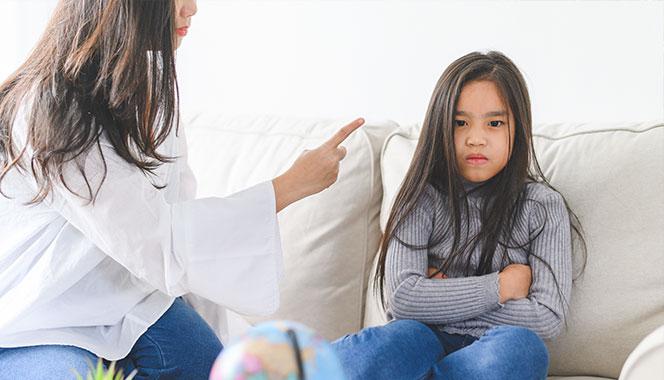
2. Should you (or your child) ignore being teased or bullied? "Not at all," stresses Arundhati. Parents have a huge role here," she says. "Apart from being empathetic and listening to the whole story, you need to teach your child positive coping skills—to stand up for themself and be assertive, which is very different from being aggressive! Also, make it clear that they must seek help (from an adult) when necessary. "For your child, 'assertive' in this context, means the ability to stand up for themself when someone is being mean or saying hurtful things," explains Arundhati.
3. Use role play: Another good way to help your child handle such incidents is to 'role play' these at home. So, you could take on the role of the 'mean' child and say or do something unkind and get your child to respond appropriately. And you could switch roles too, letting your child be the 'mean' child and how it feels to boss over someone, to leave another child out of a game, so on. This will give them a better perspective on the whole situation. "Role play can certainly help. It gives the child first-hand experience in practicing assertiveness. As a parent, you must model for your child what it means to be respectful and how to listen to others. However, it is equally vital that your child can tell the 'mean' child, 'I don't like what you are saying to me. You can keep it for yourself.' Being able to do so requires self-confidence," Arundhati observes.
Being an effective parent means taking the time to listen and be there for your child. It is also about preparing your child the right way— after all, when adults can be unkind to each other, why not children? So, model assertive behavior at home and equip your child with social and emotional skills that will help them to thrive, not just survive.
Connect with us on Facebook | Instagram | YouTube

























Comments
Edit
Comment Flag
Cancel Update