
Why Do Young Children Often Talk To Themselves?
Pulkit Sharma
Does your child talk to themselves? Worry not! Private speech is common in preschoolers and often serves important functions of communication, self-guidance and self-regulation. Read on to find out more.
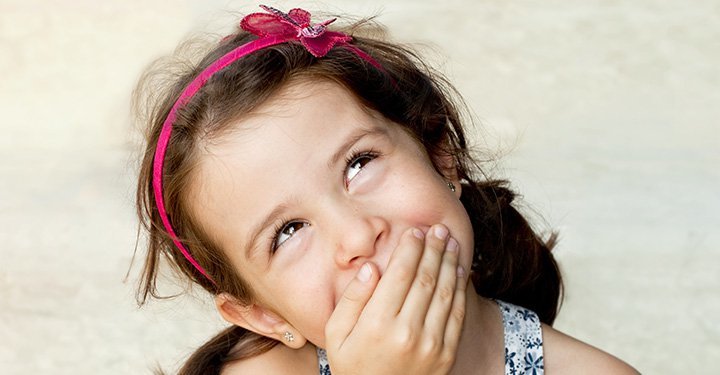
Priyam wanted to be the best mother. Her standards of motherhood were quite high and so were the expectations of herself. So, when Inaya was born, Priyam had an exhaustive mental checklist for being the perfect mother. Life as a parent was new, exciting, blissful, confusing, troubling, and annoying—all at once.
Priyam was a devoted and well-read mother. Everything Inaya did was carefully recorded in photos and videos and proudly shared on family groups and friends’ groups. By age 2, Inaya reached all the required milestones and was discovering the new joys of attending preschool. She talked enthusiastically about her friends and the games they played. At home, she was curious and full of energy. With Inaya, there was never a dull moment.
Priyam was beginning to relax. Suddenly, one day, she discovered a behavior pattern that deeply shook her. That afternoon, as Priyam was finishing lunch, Inaya gathered her stuffed animals and began her usual games. Normally Inaya would teach school lessons to the toys, but today was different. When Priyam came to the living room she noticed that Inaya wasn’t talking about school at all. In fact, she was not even involved with her toys. Instead, Priyam heard a small giggle here and a little laughter there. Then she overheard Inaya chattering about her favorite Peppa Pig moment when the friends jumped into muddy puddles. Priyam listened as Inaya talked about how she was looking forward to her video call with Nana. But who was she talking to? Oh no! She was lying upside down on the living room couch and talking to herself! Priyam panicked. She promptly booked an appointment with a child psychologist to rescue Inaya from what she thought was a bizarre phenomenon.
Was Priyam overreacting? Was there really something wrong with Inaya?
Research shows that young children (mostly preschoolers) tend to talk out loud to themselves. Children interact with themselves just as they interact with the people around them—through talking. This self-talk has often been termed “private speech.” In fact, the pioneering work done by the Soviet psychologist Lev Vygotsky explains that this private speech in children is primarily meant for self-direction and that this very language becomes the foundation for complex mental activity and thought processing later in life. His theory also suggests that private speech indicates early cognitive processing and it gives us the opportunity to know how children comprehend their own behavior. As the child grows up, this “private speech” transforms into silent inner speech.
How private speech benefits your child
Private speech isn’t a problem. It is in fact just another developmental stage your child will step through. Here are some important benefits of private speech:
It is a Sign of Creativity and Imagination
Daugherty and White (2008) conducted research on the relationship between private speech and creativity in Head Start and low-socioeconomic-status American preschool children. According to them, “Early creative tendencies via private speech were apparent in low-socioeconomic status children. Advanced problem-solving characteristics during activity performance were identified in young creative children’s private speech. For example, creative children’s private speech demonstrated planning, describing, and finding solutions to problems. Parents and teachers need to be informed about the potential of private speech for understanding early creative thought, especially with children from cultural and economic backgrounds who are under-represented in gifted education.”
If your child is engaging in private speech it means that you are likely to hear what they are thinking. To give you a better perspective, if you hear your little one talking excitedly about two friends at school, it shows how those children made an impression on your child. The topics your child talks about, such as games or jokes, show their interests and where they prefer to invest their mental energy. Sometimes, you may also observe your child having conversations, which implies terrific imagination. This is indicative of the creative mind being put to use.
As a parent, listen closely and quietly observe what your child is really drawn to and then encourage them to explore those areas of interest. So, if your child often speaks of colors or food during their private speech, you could don a creative hat yourself and introduce your child to the joys of painting different things, or join them in cooking without fire, like making sandwiches.
Helps in Learning the Steps of a Complex Sequence of Tasks
When Priyam took Inaya to see a child psychologist, one of the things they wanted to observe was how Inaya was absorbing information around her. Inaya was given a set of toys to play with. She was asked to finish her games and then begin coloring the rainbow in the coloring book.
Even at that age, Inaya displayed her ability to play as instructed and showed that she understood the significance of conclusion. The young child was able to follow instructions. The odd smile on Inaya’s face on finishing one game after the other only reiterated that she understood the sequence to be followed. Only after completing the other games did she start on the final task of coloring the rainbow, and this task of coloring brought her great joy. Priyam observed Inaya’s slow lip movement as she finished each of her tasks. The session helped Priyam understand that private speech was only helping Inaya in many ways, not deterring her growth and understanding.
Helps in Memory Recall and Serves as a Retrieval Cue
Private speech is often seen to be a replay of the day’s events and experiences. A young child tends to revisit the thoughts that the mind has already engaged in. Talking out loud can significantly help in creating a memory recall. Take for instance how children, when they come back from school, unconsciously start reciting a rhyme or a poem they learned in school that day. Talking out loud is a great way of memorizing, and private speech only helps strengthen memory.
One of the most common ways of observing your child using private speech is when you hear them humming a song they heard on the radio, or when you notice them acting out a certain sequence they watched in a movie. At first glance it may appear that private speech has nothing to do with memory work, but this is where it all begins.
Helps Regulate Emotions
Dealing with emotions is a complex task for many people, and children are no different. Young children often feel confused about what they are feeling and how to react to a certain situation. It has been noticed that private speech goes a long way in helping young children regulate their emotions.
Take for instance a little boy who is trying to put himself to sleep in his own bed. It’s common for children in this situation to remind themselves aloud of a comforting term or thought that may have been offered by their parents. Repeating those words of comfort out loud helps the child calm down.
Every day, there are several situations in a child’s life that could lead to warranted or unwarranted stress. Many children tend to indulge in private speech during school hours too. Daily life situations that may seem “normal” for us can be quite disturbing for the young ones. A dear friend being absent from school, disliking the food in the lunch box, a favorite pencil gone missing or even a small scowl from the teacher—these are all potential emotional challenges for a child. It has been observed that children often use private speech in school to deal with these situations, making it a sort of a comforting activity.
What Does Research Say About Private Speech? A 2008 study published in Early Childhood Research Quarterly showed that 5-year-olds who talked to themselves did better on motor tasks than when they were silent. The researcher who conducted the study said that when children start talking to themselves, “their communication skills with the outside world improve.” |
How to enhance your child’s cognitive and emotional skills
Now that we’ve seen how private speech benefits children, let’s dive deeper and look at some unique ways in which you can help your child improve their cognitive skills and learn emotional regulation:
Boosting your child’s imagination
- Imagination and creativity are to the brain what oil is to a bicycle chain. Keeping your child engaged in fun-filled yet slightly challenging activities will do wonders for his creative mind.
- Offer plenty of safe supplies, and be patient. A person’s creativity is never a product of force, so let your child decide what activity he wants to do.
- Offering too much help can also take away the opportunity for the child to think for himself. Be tolerant toward ideas that may appear below-average to you. Remember, creativity gestates best when left alone.
Learning a complex sequence of tasks
- Offering step-by step guidance while the child is performing a task can be a real game changer.
- Language plays a big role in communicating and helping your child understand what is being told. Try offering instructions in an easy-to-understand language so that your child isn’t thrown off guard, and she feels that the tasks on hand are very much within her area of expertise.
- Once you see slight progress, make sure you are giving your child enough practice. Don’t forget to praise her for the effort and progress made. In fact, consider practice, appreciation and encouragement as three magical words that could motivate your child to keep at a task.
Improving memory
- Visualization plays a major role when it comes to enhancing memory. Encourage your child to take a mental picture of what he is trying to memorize. Children often respond well in memorizing through card games. A nice picture with a word or two on a card is a classic example of creating a mental memory. You can quiz your child later and check how much has been memorized. Try and repeat this exercise with your child a few times until he gets it right. Referring to the mental pictures taken can become a habit if practiced enough.
- Children love playing the teacher-student game. Turn the table around—become the student and let your child become your teacher. Becoming the teacher is an excellent way for your child to memorize things.
- Encourage your little one to read more and more. Bring in exciting and colorful story books, and don’t be upset if they aren’t left in the original state. Let your child highlight and underline portions as he likes. This can boost his memory significantly.
- Memorizing smaller portions is relatively easier for the human brain. For instance, you can teach your child to break a complex word or sentence into two or three parts. Remembering each part is a step closer to the target, and it gives your child a sense of achievement.
Helping your child regulate emotions
- When your child is struggling with big emotions or is having a meltdown, put yourself in your child’s shoes. Try to understand what may be causing your child to feel that way. Don’t brush aside or belittle her feelings. Instead, acknowledge her feelings and let her know you understand how she feels, “I know, it is so upsetting,” “That must make you so mad,” or “I can see why it is so frustrating.”
- Children often have to deal with complex emotions, and they don’t understand how to make sense of them. Help your child to become aware of her feelings by naming them, “I see you are angry.” Just being aware of her feelings can help your child calm down. Once she has settled down, you can engage with her and coach her on how to handle similar situations. This way you are helping her learn to problem-solve for herself.
- When your child is overwhelmed with emotions, she needs a way to empty those big feelings. She may need to cry and will need someone to comfort and soothe her. It’s okay to allow your child to cry to let out her pent-up emotions. Be nearby to comfort her as needed, and if she allows you, gently touch or hold her until she is able to calm herself down.
Be patient and have open conversations with your child. If she has discovered this new way of talking to herself, then be assured, all going well.
In a Nutshell
- Young children tend to talk out loud to themselves. This self-talk is termed private speech
- Private speech serves important functions, such as problem solving, self-regulation of emotions and behaviour, aids creativity and imagination, and improves memory
What you can do right away
- Pay attention to your child’s private speech and encourage the areas of interests she talks about
- Play the teacher-student game with your preschooler, giving your child the chance to play the role of a teacher and teach you what he likes
About the author:
Pulkit Sharma is a clinical psychologist and spiritual counselor in Puducherry, India. He amalgamates contemporary psychology with ancient spiritual perspectives in his psychotherapeutic practice. He is the author of the book, ‘When the Soul Heals – Explorations in Spiritual Psychology.’




















Comments
Edit
Comment Flag
Cancel Update