
Healthy, Happy, and Laughing Out Loud: The Benefits of Laughter for Parents and Children
Team ParentCircle
ParentCircle empowers parents to raise successful children through holistic parenting.
Laughter boosts children’s mental and physical health and brings families closer. Why not try these tips and have a good laugh with your kids?

As parents, we all want our children to be healthy and happy. While we all know the value of a healthy diet, exercise, and adequate rest, there is one powerful tool that we may be overlooking: Laughter. Laughing aloud has been shown to have numerous physical and mental health benefits, and it can be a great way for parents to connect with their children.
In this article, we’ll look at the science of laughter and how it affects our health. We’ll look at how laughing aloud can improve heart health, reduce stress, and even act as a natural pain reliever. We’ll also look at the positive effects of laughter on mental health, such as how it can reduce anxiety and depression, improve social connections, and alleviate feelings of loneliness. Finally, we’ll give you some practical advice on how to incorporate laughter into your daily routine with your children.
The science of laughter
Laughing aloud is a pleasurable and enjoyable experience. This is because when we laugh, our brain produces endorphins, which are natural feel-good chemicals that can help with stress and pain relief. Laughter also stimulates the production of serotonin, which can improve your psychological well-being.
How laughter improves our physical health
Laughing is a simple way to improve our physical health in addition to our mental health. Studies show that laughter boosts the immune system by increasing the production of antibodies and immune cells, thereby lowering the risk of illness. Laughing aloud also improves heart health by lowering blood pressure, decreasing inflammation, and increasing blood flow. In fact, studies have shown that laughing for a few minutes a day can be as effective as some types of exercise in improving our cardiovascular health. Furthermore, laughter acts as a natural pain reliever by releasing endorphins, which can help reduce pain and improve mood.
Mental health and laughing out loud
Laughing aloud is not only good for our physical health, it also improves our mental health and well-being. Laughter has been shown to reduce stress and anxiety by decreasing cortisol levels (cortisol is the main stress hormone) and increasing endorphin release, which can improve mood and promote feelings of happiness. Furthermore, laughing aloud can help reduce depression symptoms by improving social connections and decreasing feelings of loneliness. Humor and laughter have also been shown to improve cognitive function and memory recall in older adults. We can improve our mental health and well-being by incorporating laughter into our daily routine, and by adopting a more positive outlook on life.
Laughter can help you connect with your children
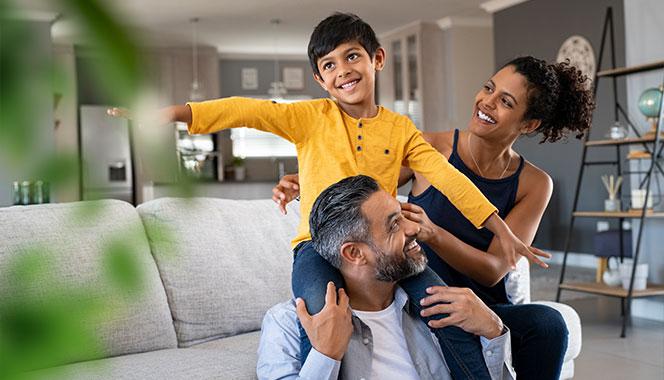
Laughing aloud is a great way for parents to connect with their children. We can build a happier and more positive home environment for our children by incorporating laughter into our daily routine, which in turn will help create happy memories that will last a lifetime.
Tips to make your children laugh out loud
Now that we know about the magic of laughter, let’s look at a few ideas you can try to make your kids laugh:
- Make time for fun activities and games. For example, you can do an impression of Popeye the Sailor or Dora and ask your kids to join in the fun by imitating their favorite cartoon characters or superheroes.
- Crack a joke with your kids now and then. Buy a child-friendly joke book and tell jokes to your kids. Gift them joke and riddle books, and encourage them to share with you some jokes and riddles.
- Watch a cartoon or a funny movie together. Or read a funny book together.
- Share embarrassing incidents with your kids and encourage them to do the same. Maybe you were busy shopping at the supermarket when you suddenly realized you were wearing your T-shirt inside out. Share this with your kids and watch them laugh!
- Come up with a funny story together. You can start with a sentence like, “On a hot day, Mr. Green Frog went to the shop to buy an ice cream.” Now, ask your children to come up with the next sentence and build a story. This is sure to bring on the giggles!
Whenever possible, use humor to defuse tense situations or to turn a negative experience into a positive one. Try to model a positive attitude and sense of humor, as children learn by example. So let’s embrace the power of laughter and incorporate it into our daily lives. After all, laughter is the best medicine, as the saying goes.
























Comments
Edit
Comment Flag
Cancel Update