
4 Simple Ways To Build A Strong Parent-Teacher Relationship And Support Your Child
Maya Thiagarajan
author parentcircle author parentcircle author parentcircle author parentcircle author parentcircle author parentcircle
Building a positive relationship with your child's teacher can make school life easier for everyone. Learn how to communicate openly, listen to concerns, handle differences respectfully, and work together to support your child's learning and well-being
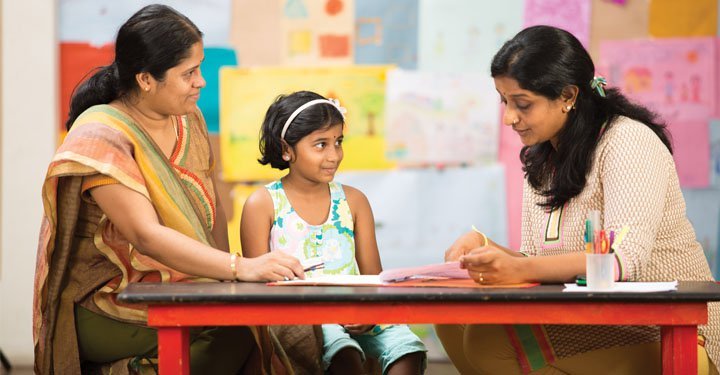
When Sarita walked into her daughter Priya's parent-teacher meeting, she could feel her heart rate accelerate. Her hands felt clammy as she greeted the teacher. Earlier, she was told that Priya was lagging in reading skills, and that she suspected the child might have ADHD (Attention Deficit Hyperactivity Disorder). Sarita felt nervous and wondered what the teacher would say. She was also very angry that the teacher had evaluated her daughter in this manner. Did the teacher really know the child well enough and what she is capable of? Did she even care?
Sarita is not alone in thinking like this. Many parents have mixed emotions about their children's teachers. When a child is struggling at school for any reason, some parents may blame the teachers. In turn, the teacher may view parents as part of the problem.
Note: A teacher may be the first to notice changes in a child's attention, learning, or behaviour because of the time spent observing them in a classroom. However, such observations are not a diagnosis. If a teacher has concerns, it is more helpful to share specific behaviours or learning difficulties with parents and suggest that they seek appropriate professional guidance if needed.
The key to resetting this dynamic, I believe, is to realise that parents and teachers can work together towards a common goal: the well-being and growth of children.
Research supports the value of strong family-school partnerships. A meta-analysis of family-school engagement interventions found positive effects on children’s academic achievement, social-behavioral competence, and mental health, highlighting the value of collaboration between families and schools.
How to build a positive parent-teacher partnership
Approach the relationship as a partnership
If you think of your child's teacher as a partner who shares your goals—your child's all-round healthy growth and development—then you can approach them with trust and respect.
Parents and teachers see children in different settings. A teacher may notice behaviour and learning patterns at school that a parent may not see at home. Parents usually have important information about their child's personality, experiences, and behaviour outside school. Sharing these perspectives can help parents and teachers better understand the child. So, treating your child's teacher like a valuable partner allows you to work closely with them.
However, partnership does not mean agreeing on everything. If you have concerns about a teacher's observation or approach, ask questions and share what you see at home. If a concern involves your child's safety, well-being, repeated distress, or possible learning or developmental difficulties, it is appropriate to seek further information or support.
Listen to your child's teacher with an open mind
Teachers bring professional training and experience working with children. Your child's teacher has experience observing children in classroom settings and may notice patterns that are not immediately visible at home. So, try to listen with an open mind.
Communicate concerns respectfully
If there is an issue, tell the teacher that you are concerned about your child, and then share your observations calmly. Ask questions to understand what the teacher has noticed and discuss what could be tried at school and at home.
Give your child space to learn from setbacks
Teachers know that children can benefit from age-appropriate challenges, setbacks and opportunities to recover. Your child can learn important skills from learning to manage setbacks when they have appropriate support.
For example, you may want to intervene if your child doesn't get selected for a play or a team. Instead, help your child process the disappointment and think about what they can learn from the experience.
Keep in mind
- Approach the teacher as a partner.
- Listen before responding defensively.
- Share concerns respectfully and specifically.
- Work together on practical next steps.
- Give your child opportunities to handle age-appropriate setbacks.
- Step in when your child genuinely needs support.
A positive relationship between parents and teachers means communicating openly, respecting each other's perspectives, and keeping the child's well-being at the centre. When parents and teachers share observations and work together, children are more likely to receive the consistent support they need to learn and grow.
Maya Thiagarajan is a global educator, author, and Founder and Education Director of TREE, an organisation that recruits, develops and inspires teachers. She has taught in India, the US and Singapore and has conducted teacher-training workshops in India and Singapore. Maya holds a Master's in Education Policy from Harvard University. She is the author of Beyond the Tiger Mom: East-West Parenting for the Global Age.
Last updated on: August 12, 2026
The social and emotional learning program at The Dot Learning Circle emphasizes values such as respect, honesty, kindness, and empathy essential for building and maintaining healthy relationships. Children also learn how to learn and grow from their mistakes.























Comments
Edit
Comment Flag
Cancel Update