
How To Reduce Sibling Rivalry: Building Strong Sibling Bonds Of Love And Connection
Divya Ramesh
author parentcircle author parentcircle author parentcircle author parentcircle author parentcircle author parentcircle author parentcircle author parentcircle author parentcircle author parentcircle
Sibling fights over toys, clothes, or attention are often a natural part of growing up together. With a few mindful parenting strategies, learn how to stop sibling fights and build healthy sibling relationships that lasts a lifetime
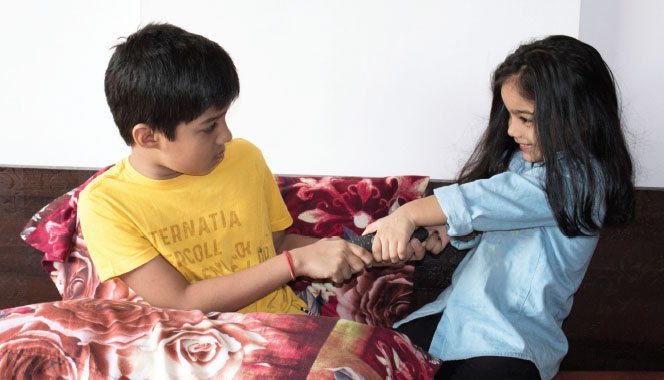
One evening, more than a decade ago, my twin sister and I raced home from school. Once we were home, we pushed each other as we ran toward our clothes cupboard. There was a pretty red skirt in there, which both of us pulled out at the same time.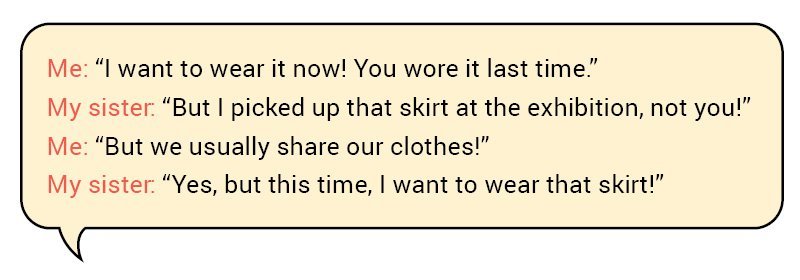
Grrr. Neither of us could wear the skirt that evening!
This was not a one-off brawl between us. We've had lots of fights over books, clothes, and snacks.
Why sibling rivalry is a normal part of growing up
But today, as 30-somethings, we are very close. So, while growing up, why did we fight so often? Dr. Akhila Keshav, a child neuropsychologist based in Bengaluru, offers an interesting answer. Fights and disagreements are a part of having a sibling. Just because siblings fight, it doesn't mean it's an unhealthy rivalry, she explains.
When your children share a positive relationship, they have earned a lifelong friend and probably their biggest pillar of support! But sometimes sibling rivalry can become unhealthy. Here's some good news, though: Parents can greatly help in promoting a healthy relationship between their kids.
Read on for some simple pointers. And start now, when your children are young.
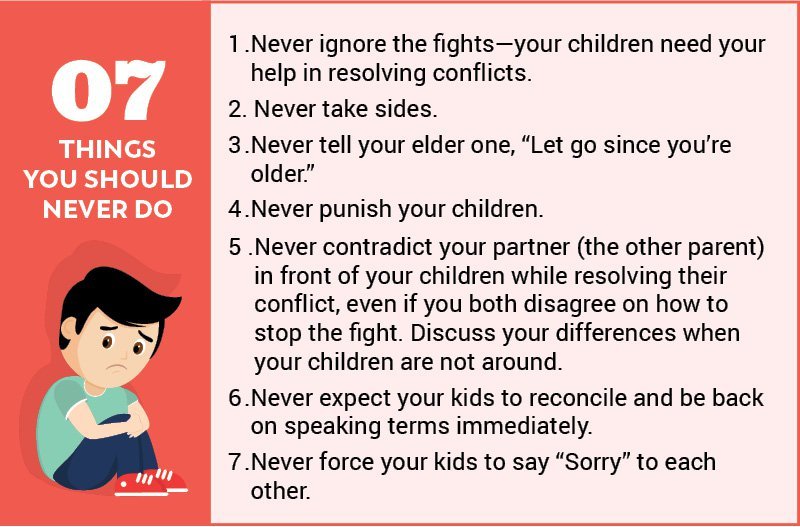
How can parents reduce sibling rivalry?Sibling rivalry is common, but you can guide children toward healthier relationships. Simple ways to reduce sibling rivalry include:
|
6 practical tips to foster good sibling relationships
Now, let's see what you can do to help your children develop a loving relationship with each other.
1. Spend one-on-one time with each child
Schedule at least 10 to 15 minutes with each child. This makes your child feel important and loved. You could make a list of all the things each child enjoys doing and rotate all those activities. It's best to avoid digital devices during this special bonding time.
Most older siblings feel neglected after the arrival of their new sibling, so it becomes even more important to spend some time with your older child. As Dr. Keshav says, "Make sure you spend quality time with your elder child. Also, involve your elder child in newborn-related chores like nappy-changing or powdering the baby."
2. Avoid comparing siblings
Karthik (32), a software professional from Chennai, shares his personal experience. "I have a twin sister. When I was a child, I had some health issues. So, I wasn't great at sports, extracurricular activities, or studies. But my sister was a star in every field. She was an athlete, a dancer, and a topper. Everyone compared our achievements. I just wanted to run away from her. When we finished school, I insisted that we go to different colleges. I couldn't wait for the comparisons to end. But today, my sister and I share a cordial relationship, even though we may not be great friends.
When you compare your children, they may start viewing each other as opponents. Such comparisons also stress out your children and damage their self-esteem and self-worth. Instead, keep reiterating to your children that they are different, each with their unique personalities and talents, and that is completely fine, as we all have our identities.
Quite often, we tell our relatives or friends things like, "My daughter is very smart and very enterprising, but my son is lazy and lacks initiative". What's worse, we even tell our children similar things: "Look at your brother. He's so friendly with everyone. But you are such a shy girl!" Do not label your kids smart or brilliant or dull or selfish. Both positive and negative labels serve as unhealthy comparisons.
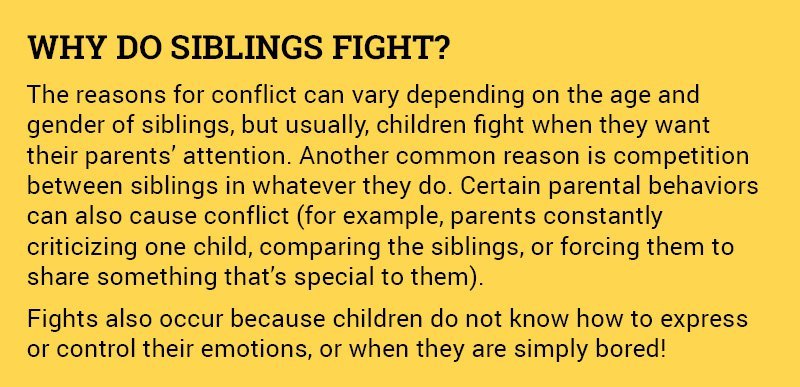
3. Create basic family agreements
Some basic family agreements help lay the foundation for your children to resolve conflicts respectfully. Also, decide on the consequences for not adhering to these agreements and ensure your children understand the consequences.
Some family agreements to consider:
- No physical violence
- No verbal abuse (including name-calling, threatening, belittling, swearing)
- No physical damage to things
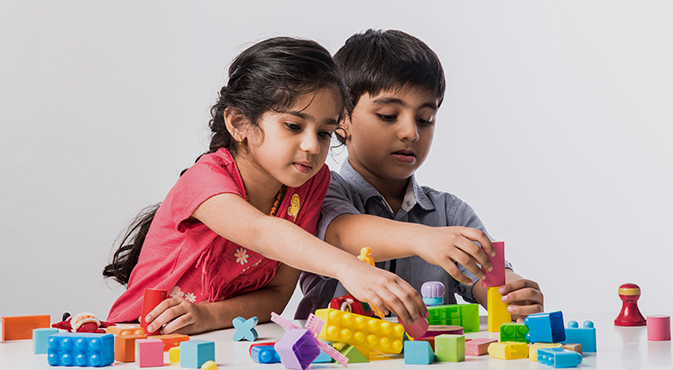
4. Encourage shared activities
Identify activities your children enjoy and encourage them to do them together.
Prerna (25), a data scientist from Seattle, shares her experience. "My brother is 8 years younger than I am. Growing up, we didn't have any shared hobbies, and the age gap didn't help either. Although we never fought much, we never became friends. Even today, I'm closer to my cousins than my brother."
If your children don't enjoy spending time together, try these tips from Dr. Keshav. "Organize fun family activities and games that you can all play together. Once the family activity is underway, excuse yourself and ask your children to continue. This is a gentle way of introducing your children to things they can do together," she advises.
Dr. Keshav adds that this may not always work, as your children may discontinue the activity when you step away. Nevertheless, regular family time is a great way to get your children to bond. Also, eating together as a family at least once a day will greatly help your children bond well.
5. Be mindful of what you say in front of your children
What you say has a deep impact on your children. Some points to keep in mind:
- Talk positively to your children about each other.
- When a child has achieved something, praise them privately and not in front of their sibling. (The same goes for rebuke.) If you do praise, focus on your child's effort, not their talent.
- Always resolve conflicts with your partner respectfully, especially in front of your kids.
- Make a list of impolite phrases (Get lost, shut up, etc.) that everyone in the family must avoid at all times. Together, come up with other family agreements.
- Show empathy in your parenting. For example, when your child is overwhelmed, be empathetic ("I know it's really hard.")
6. Help siblings work as a team
- When playing games, let your children be on the same team.
- Have them plan vacations or parties together.
- Encourage them to do projects together, such as solving puzzles, cooking, building something, or volunteering.
Books that help children understand sibling relationships
It's a great bonding exercise when siblings read together. Encourage your older one to read to their younger sibling. If your older child is too young to do that, pick books that all your kids will enjoy and read them aloud. In particular, books that discuss healthy sibling relationships can help your children bond with each other.
Some popular options:
- Lola Reads to Leo by Anna McQuinn (2 to 5 years)
- Maple and Willow Together by Lori Nichols (3 to 5 years)
- Peters Chair by Ezra Jack Keats (3 to 5 years )
- When Miles Got Mad by Samantha Kurtzman-Counter (3 to 7 years)
- Snow Sisters! by Kerri Kokias (3 to 7 years)
- You Were The First by Patricia MacLachlan (4 to 8 years)
- Little Miss, Big Sis by Amy Krouse Rosenthal (4 to 8 years)
- Gone Fishing by Tamera Will Wissinger (6 years)
- Beezus and Ramona by Beverly Cleary (8 years)
- The Lemonade War by Jacqueline Davis (9 years)
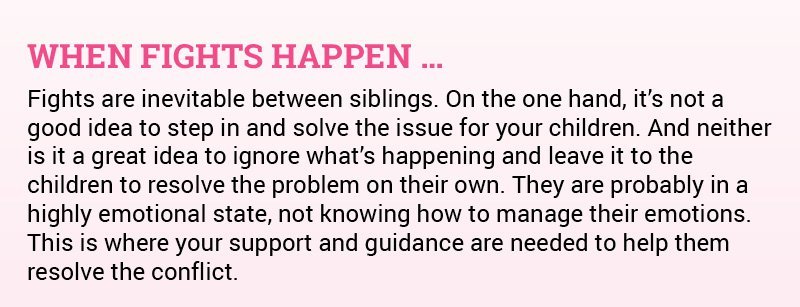
How parents can teach children to resolve sibling conflicts
1. Use the P.E.A.C.E. method to guide conflict resolution
Equip your children with conflict resolution skills by guiding and supporting them when they get into a fight. This will go a long way in promoting a positive relationship between them. By following the ParentCircle P.E.A.C.E. (Pause, Empathize, Await, Communicate, Engage) process, you can help your children learn about conflict resolution.
PAUSE
- First, calm yourself.
- Check to see if anyone is physically hurt. If so, attend to the wound without blaming anyone.
EMPATHIZE
- Describe what you see. "I see that both of you are fighting over the TV remote. Riya, I saw you snatching the remote from your brother. Rishab, you hit your sister."
- Empathize with your children. "Rishab, you must be angry that Riya took the remote from you. And Riya, you must be upset that Rishab hit you."
AWAIT
- Wait for your empathy to take effect. Empathy helps calm big emotions. Once they are calm, they will be more receptive to what you have to say. Comfort, hug, or hold them close till they feel better.
COMMUNICATE
- Let your children take turns to express their concerns and disappointments. Guide them to communicate with prompt questions: "Rishab, can you tell your sister how you felt when she grabbed the remote from you?" "Riya, would you like to say something to your brother?"
- Encourage them to listen to each other without interrupting. You can mediate the discussion without passing judgment.
- Help your children empathize with each other. Try using role play. They can switch roles and recreate the scene. You could also ask each of them to think about how the other person is feeling.
ENGAGE
- Help your children think about how they could have handled the situation differently.
- Ask each of them what they can do to make their sibling feel better.
2. Sometimes humor can diffuse sibling fights
When there's too much tension in the air, and when all else fails, use humor to diffuse the hostility. For example, if your children are fighting over a toy, grab the toy and run. See if they can catch you, so they become partners against you!
Remember that siblings can become lifelong friends
A sibling can be a lifelong friend. You have the power to make it happen. By following these simple tips, your children will reap the benefits of having a loving, caring sibling!
This article was featured in the March 29, 2026, edition of The Free Press Journal
Last updated on: March 11, 2026


























Comments
Edit
Comment Flag
Cancel Update