
Fine motor skill development: Top activities to enhance your child's fine motor skills
Mina Dilip
Have you ever paid attention to the little hands of your child trying to do things? Wonder what gets them moving? Read on to know all about fine motor skills and how to hone them
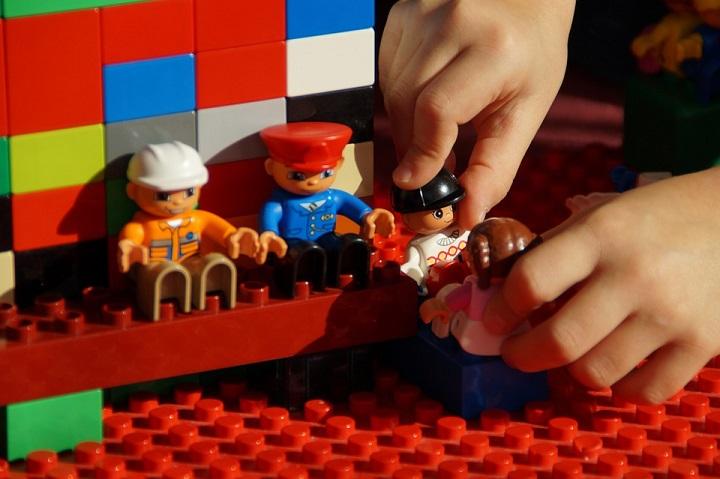
Watching your infant pick up her toys or your toddler flip the pages of a book or your preschooler write the letters of the alphabet can make you wonder about their increasing dexterity. All these are fine motor skills that your child develops as she grows up.
What are fine motor skills?
Fine motor skills, also referred to as dexterity, imply the coordination of small muscles in movements. Fine motor skills usually involve the synchronization of hands and fingers with the eyes. When fine motor skills are well-developed, children are able to write better, and also able to do detailed tasks requiring minute manipulations.
Here are some fine motor activities for kids that focus on motor skill development by improving the muscles in the fingers and hands, strengthening hand grip, and developing wrist movement.
5 activities using objects in the kitchen
1. Maida to the rescue!
Many experts recommend playdough or synthetic clay for this activity. However, maida (all-purpose flour) is a great substitute, and has the added advantage of being natural and safe, even if it enters your toddler's little mouth.
Materials required
- 2 cups of maida
- Some water
- 2 large-enough bowls to knead the dough
Method:
Sit with your toddler in a safe place with minimal distractions. Put one cup of maida into each bowl. Then, demonstrate to your child how to knead the dough by sprinkling water and gently kneading the powder until it reaches the consistency of firm dough that resembles play dough. Your child may not get it right immediately. Resist the urge to jump in and knead the dough for her. Allow enough time and several attempts for her to slowly learn and master the art of kneading the dough to the perfect consistency. You can repeat this exercise once every two to three days. Once your child learns to knead the dough, encourage her to create shapes like little balls, a snake, etc.
How it helps
The kneading action helps build strength in the wrist muscles. Later, rolling the dough into shapes enhances the flexibility of the child's fingers.
What are the fine motor skills your child must develop by age 2? Click here to find out.
2. Toothpicks in the salt-shaker
This is another simple fine motor skill exercise, that most young children enjoy.
Materials required
- Identical salt and pepper shakers (preferably made of some unbreakable material)
- Some toothpicks
Method
Most salt and pepper shakers come with tiny holes at the top. Make sure you have two with the same number of holes. Invite your child to a contest of 'who can put toothpicks into all the holes first'. Children love challenges like these, and if you lose once in a while, your toddler will remain motivated enough to continue playing this game.
How it helps
Aligning the sharp end of the toothpick to the tiny openings on the salt-shaker and pushing them in without breaking the toothpicks requires precision. Doing this repeatedly enhances the finger manipulation and coordination skills of your child.
3. Tongs aren't for cooking alone
Kitchen tongs are a part of most households' cooking supplies. If you do not have one, it might be worth investing in a pair of inexpensive aluminum tongs.
Materials required
- A pair of kitchen tongs
- Some marbles
- 2 small containers
Method
You can set a target of a minute for your child to pick up marbles, one at a time, using the tongs from one container, and drop them one by one into the other container. If your child succeeds, have a small treat or some other game waiting as a reward. Children enjoy this activity, especially when you introduce a 'prize' element.
How it helps
Along with better coordination, focus, and fine motor skills, this activity can help in improving processing speed and emotional resilience. This is because, when a child does not succeed the first time and keeps trying, desirable emotional strengths of perseverance and patience begin to develop in the child.
4. Stacking paper cups
All kinds of stacking activities help with the development of fine motor skills. Paper cups are the simplest and most inexpensive prop to use.
Materials required
- About 25 to 30 paper cups of the same size
Method
Demonstrate to your toddler, the art of stacking the cups in different patterns and invite your child to try the same.
How it helps
Besides fine motor skills, this activity also improves concentration.
5. Okra printing
Vegetable printing is a creative activity that can be used with children of any age group. Toddlers find it particularly fascinating.
Materials required
- One okra (ladies finger) cut into two pieces
- Paint or liquid food color
- A sheet of paper
Method
Hand a piece of okra to your child while you keep one for yourself. Demonstrate dipping the cut side into the paint (or food color) and pressing it (like a stamp) on the sheet of paper to create an impression. Invite your child to do the same. Together, you can create a colorful pattern because okra prints look like flowers.
How it helps
Gripping the vegetable and pressing it on the paper helps with fine motor skills and creating colorful patterns is a creative and imaginative activity that helps young children feel relaxed.
5 more fun activities
1. Beads, beads, beads!
Beads are available in various sizes. They are a good resource for developing your child's fine motor skills.
Materials required
- A set of play beads of different sizes
- Shoelaces or twine to string them together
Method
Invite your child to join you in making a 'necklace', and demonstrate how to string the beads together. Most toddlers love to do this, especially when they are told that they can play 'shopkeeper' and sell the necklace afterward.
How it helps
The act of stringing beads together requires good finger grip, hand-eye coordination, and patience. When your child begins to master the art of beading, you will have tangible proof that all of the above skills have been mastered.
2. Sorting buttons
I recommend this game to families that have plenty of sewing supplies, particularly buttons of various different shapes, sizes, and colors.
Materials required
- Buttons in different sizes, shapes, and colors
Method
Invite your child to sort the buttons into different piles of similar ones.
How it helps
Along with fine motor skills (which develop as a result of picking up and manipulating small buttons), this exercise also aids in developing concentration, observation, and organizational skills.
3. Crepe collage
Crepe collage is a fun game that involves creativity and imagination.
Materials required
- A couple of sheets of white paper
- Several sheets of colored crepe paper
- Glue
Method
Join your child in tearing the crepe paper into small bits. You can then create a collage together on a white sheet of paper by sticking the little bits of colored crepe paper using glue to form different patterns or images.
How it helps
The act of tearing paper using the fingers is developmentally significant because this helps with improving finger dexterity and doubles up as a cathartic exercise as well. Applying glue and pasting the bits of paper to form patterns or designs help in enhancing fine motor skills, creativity, and a sense of aesthetics.
4. Doctor doctor
Toddlers and preschoolers love to pretend play (also known as make-believe play). Make-believe play not only helps with developing imagination and creativity but also teaches children social skills and introduces them to problem-solving concepts.
Materials required
- An old syringe (without the needle)
- Medicine dropper
- A couple of dolls or stuffed toys
Method
Take turns with your toddler playing doctor and patient. When you are the doctor, invite your child to bring a doll or a stuffed toy to your 'clinic', where you fill out the syringe with water and pretend to inject the toy. You can also use the medicine dropper to pretend to give oral medication to the toy. When it is your child's turn to play doctor, you bring the toy and tell your little doctor the 'symptoms' (you can make these up as you go along, getting as creative as you would like to be). Your toddler is bound to copy you in using the syringe and the dropper.
How this helps
Drawing water into the syringe or dropper requires precision, attention, and finger dexterity. Performing such actions repeatedly helps in developing fine motor skills.
5. Sort-n-drop
An activity that engages many senses, sort-n-drop can keep your toddler constructively occupied, while at the same time assisting in the development of various skills and abilities. Since small objects and parts may be a choking hazard for your toddler, please ensure that you are always around to supervise this activity.
Materials required
- Small pebbles
- Small-sized beads
- Buttons
- Small marbles
- Four identical bottles or jars (preferably unbreakable ones)
Method
Mix up the pebbles, beads, buttons, and marbles in a basket. Invite your child to sort them by category and put them into a separate bottle or jar, labelled accordingly.
How it helps
Gripping small objects enhances fine motor skills. Observation skills develop as your child notices the different types of objects, and organizational skills develop with the act of classifying the objects into different categories and putting them into the appropriate bottles or jars.
All the above are activities that I use with young children who come in for play therapy. The materials are inexpensive and easy to source, and all these activities are simple, yet effective. These fine motor activities for toddlers at home can be used safely, provided an adult is overseeing the child engaging in them. This is because, with materials like buttons and marbles, which are a possible choking hazard for toddlers, and toothpicks that might accidentally prick little fingers, it is a must that all of these activities are done under adult supervision only.
Sometimes, even after their best efforts, parents find that their child's fine motor skills are not on par with those of other children of the same age group. In such cases, I strongly recommend that they approach an Occupational Therapist for professional guidance and support.
See how The Dot movement and coordination program for kindergarten aids LKG and UKG students in developing their fine motor skills. The program ensures they gain the precision and dexterity needed for detailed tasks.































Comments
Edit
Comment Flag
Cancel Update