
Questions Children Ask And How To Answer Them
M Jeyamary
author parentcircle author parentcircle author parentcircle author parentcircle author parentcircle author parentcircle
Questions! Questions! Questions! A never-ending stream from our ever-curious young children. It requires patience to answer their questions. Read on to find out how.

As the saying goes - 'a child will ask questions a wise man cannot answer'. Conversations with young children, especially in the age group of three to five, are not only cute, but also thought-provoking. The best thing is that they'll always have a thousand questions at the tip of their tongues and will not hesitate to ask them!
Your child asks you questions because she is curious and wants to learn more from you or a person she trusts. This way she is taking an active part in her own learning. Research shows curiosity will make learning a rewarding experience for your child and will directly contribute to improved outcomes.
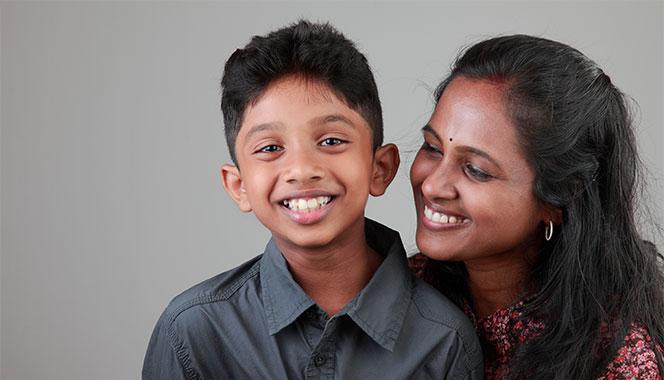
Recently, while travelling by train, I came across a curious eight-year-old boy, high on energy and restless. He was running around shooting question after question at his father. "Appa, do the trees move with the train? Why does that big man have a big belly? Does he have a baby inside? Does the moon appear in every city? Just like we have holidays, does the moon have one too? Is that why it doesn't come out for one day?"
The number of questions the boy was asking was increasing by the minute. The father patiently answered each question even though he appeared overwhelmed. The child's curiosity and his father's patience made me smile. I was thoroughly entertained by their interaction. However, the lady who was sitting next to me was irritated.
In an angry voice, she said, "Look at the number of questions this child is asking. Children these days are very talkative." She turned to the boy's father and said, "Why are you patiently answering all his questions? In a stern voice, ask him to keep quiet, and he'll stop asking questions." The boy's father simply responded with a smile.
Many a time, we, as parents and elders, lose our patience and refuse to answer questions asked by children. We get frustrated because we don't know how to deal with children's questions.
Why do children ask so many questions?
A study done by University of Michigan researchers, published in the Child Development issue (November/December 2009), shows that curiosity plays a key role in preschoolers' lives. Children ask several 'why' questions because they are driven by a need for explanation. The research shows that children seek information and not attention. They ask questions to get to the essence of the matter as opposed to the common assumption that they do so to prolong the conversation. So, the next time your child asks you a question, remember to respond.
Common Questions Children Ask and How to Answer Them
Challenging Questions
- Papa, Why don't we have a big house?
- Why don't you tell me stories like Vasanth's amma does?
- Have thatha and paati gone up to God?
- Why does Mummy get angry when that aunty talks?
- Why are you playing only with my little brother?
- Daddy, why do you and Mummy fight?
- Why doesn't that man have a home?
- Why does she have more toys than I do?
- Will my sad feelings go away?
- Why can't I be awake as long as you are?
How to respond:
When your child asks you such questions, understand they are observing what you do. Be watchful of your actions and reactions to situations in front of your child.
Instead of getting angry when questioned, give your child simple, non-opinionated answers. Do not give your child more information than he can process. If you are busy, tell him in a polite manner, that you'll get back to him once you finish your work.
Awkward Questions
Mummy, why is your tummy so big?
How did I get into your tummy when I was a baby and how did I come out?
On seeing a sanitary napkin advertisement on television: Ma, what is that?
Appa, why did the police uncle ask you to stop?
In front of Grandpa: You said Grandpa doesn't know anything. Why are you listening to him now?
Why is Shree aunty's house so messy?
How to respond:
Compose yourself and don't react to the question negatively. Give your child a simple, straightforward answer that he can understand for his age.
Information-seeking Questions
- What is air made of?
- Why is the sky blue?
- What is night? Why is it black?
- Pa, why is the beach water salty?
- Why do my nails grow?
- Is there really a man on the moon?
- Why is the moon called the moon?
- Why are we born young and then grow old? Why can't we be born old and then grow young?
- Why don't we spin if the Earth spins?
- Why do girls wear frocks unlike boys?
- Why do we live on earth?
How to respond:
When your child asks you information-seeking questions, answer them then and there. If you do not know the answer, tell them that you don't know and that you'll get back to them.
Refer to books or the Internet in front of them so they understand the importance of seeking guidance from books when they have a doubt.
Funny Questions
- Who discovered homework?
- Why am I not there in your wedding photo?
- In the olden days, was everything black and white?
- Why do I have two eyes if I can see only one thing?
- Why can't I see my own eyes, nose, lips or ears?
- Do Tom and Jerry also eat spinach like Popeye?
- Is Dad having a baby too?
- Will we turn into apes again?
- Where did Grandma's teeth disappear?
- Do those who have blue eyes see everything blue?
How to respond:
Avoid giving a straight answer. Children like to be led up to an answer. Sometimes, it is good to put the question back to your child. This helps her to think on her own. Be patient while she thinks. Show genuine interest when she responds.
Here's why you should encourage your child to ask questions:
- It helps her make sense of her world
- Questions like Why? What? How? help him gather knowledge
- It develops her thinking skills - to build concepts, skills, vocabulary, and understand the unknown
- It encourages active learning
- It helps her understand the difference between cause and effect
- A lot of inventions and discoveries happen on the basis of questioning
- It strengthens the bond between the parent and child
Why you shouldn't simply dismiss the questions
When you dismiss your child's questioning and ask him to keep quiet and not ask silly questions, he may obey you for some time. But sooner or later, curiosity will get the better of him. He might ask someone else the same questions and they may not guide him the right way. There is a possibility of your child not understanding the answers. So, when your child comes to you with a question, be patient and handle the situation with care.
Encourage your child to ask as many questions as possible. Remember, questioning is the stepping stone to developing an unquenchable thirst for knowledge and intelligence.
Why We Get Frustrated When We Are Asked Too Many Questions
- Why you get upset?
Your child may be interrupting something else you are doing.
- How can you handle this?
If you are unable to attend to your child's queries immediately, let your child know you are busy right now, but you will answer her questions as soon as you are done. Else, pause what you are doing and answer your child.
- Why you get upset
You don't know the answer, so you don't want to appear stupid in front of your child.
- How can you handle this
It's alright to not know the answer and admit it to your child. It demonstrates how human you are. Assure him that you will find out the answer and get back to him. Even if you forget, he will ask again if it is important to him. Also, you and your child can research and explore together by reading books, browsing the Internet, asking a friend who knows the subject or by experimenting. This will introduce him to different ways of learning while helping you bond with your child.
- Why you get upset
Your child's questions may appear to go against your thoughts, beliefs and instructions. For example, if you have a strong belief in God and prayer, and your child says, "I can't see or hear God, so how can there be a God? Why you should I pray?"
- How can you handle this
Questioning a thought or instruction may appear like he is challenging you. The question may arise from a genuine curiosity to understand. So, instead of reacting with anger, take your time to explain. You can put the question back to your child and get him thinking. Be open-minded and add humour when things get tense.
- Why you get upset
You may be in a bad mood.
- How can you handle this
Be honest about your mood. It helps children understand that adults too experience difficult emotions. Make sure you get back to his questions when you are feeling better.
Parents Speak
How do you handle the 'whys' of preschoolers without getting annoyed? We asked a few parents on Facebook and here are some smart, witty and hilarious replies.
Kanika Srivastava: Decide the number of questions you want to answer and stick to it.
Ganesh K: By asking them why in return. They get the gist.
Chandra Raj: Keep answering, and for other busy times set a rule... Like I have a "no questions in the car" because I need to drive.
Manohar V: Can't suggest how to answer the hows but ask them to keep them coming! Whys means curiosity. curiosity means learning! :)
Keerthi Saravanan: It is simple for me ..... if I am free I do answer their questions... otherwise just tell them that .... "Go and ask Papa"....
Kavitha Manickam: My seven-year-old has oodles of questions to ask every now and then. Sometimes I have to look up in google...so many questions he has but am happy he's got so much of curiosity and is learning
Sarvesh Kumar: Let them keep asking. Enjoy and yes set rules..
Pritha Nair: By remembering that you also did that once and how lovingly your mom handled those questions...
Nisha Jaiswal: Must answer them all because that's how they learn... I know it's easier said than done... And secondly once they are big you'll miss their questions because they will be Mr and miss know all.... They'll be busy in their own world
Radha M: The Whys will keep coming. Sometime later, Why Nots shall also follow!
Lalitha Moorthy: By patiently reminding yourself that your mom did the same for you!!!!
Prakrithi Anand: Just try to change the topic to something that interests her.
This article is reviewed by Arundhati Swamy on Nov 26 2018
With inputs from Arundhati Swamy, Counsellor and the Head od Parent Engagement Programs at ParentCircle. Translated by Deepika Mohan
Looking for expert tips and interesting articles on parenting? Subscribe now to our magazine. Connect with us on Facebook | Twitter | Instagram | YouTube





























Comments
Edit
Comment Flag
Cancel Update